
We are reader supported. When you purchase through links on our site, we may earn an affiliate commission. Also, as an Amazon affiliate, we earn from qualifying purchases.
Indian almond leaves, also called catappa leaves, are one of the simplest upgrades you can add to a betta or shrimp tank. They tint the water a warm tea color, release natural compounds that support fish and invertebrate health, and turn into a steady source of biofilm and grazing for shrimp and fry. Used well, they stabilize behavior, support breeding projects, and make maintenance easier. Used poorly, they can cloud the tank and throw off your routine. This guide shows how to get real results with clear steps, safe dosing, and troubleshooting that beginners can follow.
What Indian Almond Leaves Do and Why They Matter
Natural Tannins and Humic Substances
Indian almond leaves release tannins, humic and fulvic substances, and mild acids. These compounds gently condition water, buffer it toward slightly acidic, and can inhibit some microbes. The leaf surfaces also become a home for biofilm, which is a key food source for shrimp and fry. None of this requires chemicals or complicated gear. The leaf does the work slowly and naturally.
How Leaves Change Water Chemistry
In low carbonate hardness water, tannins can nudge pH down by a few tenths and soften the feel of the water. In hard water with high KH, pH may barely move, but you still get the color, biofilm, and other benefits. Tannins bind some metals, reduce light penetration slightly, and add a stable organic buffer that many blackwater fish recognize.
Why Bettas and Shrimp Respond Well
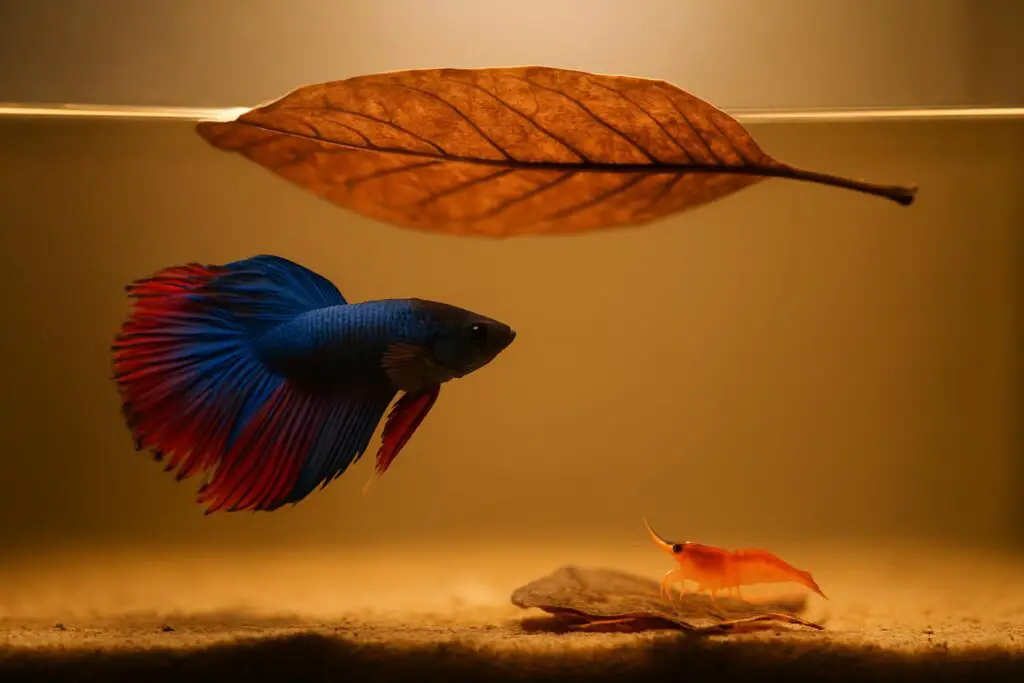
Bettas come from still waters under leaf litter. A leaf-stained tank reduces glare and visual stress. It supports bubble nest building and calm behavior. Shrimp thrive anywhere biofilm grows. As the leaf softens, it becomes both habitat and food. The same leaf can serve a betta above and a shrimp colony below.
Benefits for Bettas
Stress Reduction and Natural Habitat Cues
The tea tint calms skittish fish. Bettas display richer color and explore more when glare is reduced. The mild acidity helps them feel at home. The result is steadier appetite, smoother transitions after moves or water changes, and fewer stress-driven nips or clamped fins.
Fin and Skin Support Without Medications
The compounds from Indian almond leaves can suppress some opportunistic microbes on surfaces. They are not a medicine and they do not cure disease, but they foster cleaner surfaces and steady water chemistry. Many keepers see clearer scale edges and fewer minor abrasions progressing into problems when a leaf is present.
Breeding and Bubble Nest Stability
Male bettas often build larger, more persistent bubble nests under a floating leaf. The still water under a leaf and the organic film help nests hold together. Slightly acidic, low-mineral water also helps eggs and nest films behave as expected. A single floating leaf can be the best breeding trigger you add.
Fry Rearing and Microfoods
As the leaf breaks down, it grows microfauna and infusoria that fry can pick at between feedings. This does not replace proper feeding, but it fills the gaps so weak fry do not starve between meals. In small rearing tanks, a single leaf can be the difference between scattered growth and consistent early gains.
Benefits for Shrimp
Biofilm Buffet and Constant Grazing
Shrimp graze a leaf from the moment it softens. Bacteria and microalgae coat the leaf in a day or two, and shrimp harvest it all day without fouling the water. This steady trickle of natural food smooths molting cycles and stabilizes behavior.
Molting Support and Mineral Balance Notes
Indian almond leaves do not add calcium or magnesium. They do not replace minerals. They do, however, help maintain stable, low-stress conditions that make clean molts more likely. Keep GH at suitable levels for your shrimp type, then use leaves for comfort and biofilm. For neocaridina, many keepers aim for moderate GH. For caridina, soft, slightly acidic water is typical. The leaf complements both when you match the mineral baseline first.
Shelter and Colony Behavior
A leaf stack creates shade and microcaves where shrimplets hide from current and tankmates. Adults pick and fan through the layers. This structure reduces stress in active community tanks and increases visible activity because shrimp feel secure.
Shrimplet Survival
Newborn shrimp need continuous access to small food. A decomposing leaf supplies biofilm 24 hours a day. That constant supply boosts survival without blasting the tank with powdered feeds that can foul the water.
Practical Dosing and Setup
Choosing Quality Leaves
Buy brown, fully dried leaves from a reputable aquarium source. Avoid leaves from roadsides or sprayed trees. Look for intact leaves without moldy patches. If you collect your own, only use leaves that dropped naturally and have dried completely, then clean and store them dry.
How Many Leaves to Use
Start small and adjust. A common starting point is one standard catappa leaf per 10 to 15 gallons for general conditioning. For a darker blackwater effect, use one leaf per 5 gallons. For nano tanks, use a quarter to a half leaf. For shrimp-focused tanks, one small leaf per 5 gallons provides a steady food source without overwhelming the system. Increase only after you see how your water and livestock respond.
Preparation Methods
You can use leaves in four simple ways. First, rinse and add them dry. This gives the strongest tint and full lifespan. Second, pre-soak in dechlorinated water for 24 hours to help them sink faster and reduce the initial burst of tannins. Third, boil for 5 to 10 minutes to sterilize and soften. Boiling releases tannins into the pot, so the leaf will tint less once placed in the tank. Fourth, brew a tea by boiling leaves for 10 to 20 minutes, cool, strain, and dose the dark liquid to your tank in small measured amounts. The tea method is useful for precise, repeatable dosing in nanos and breeding setups.
Timeline of Effects and Replacement
Tint appears within hours and deepens over one to three days. A leaf softens within a week and begins to curl and break by week two. Shrimp can skeletonize a leaf in two to four weeks. In fish-only setups, full decomposition can take three to eight weeks. To maintain a stable tint and biofilm supply, add a new leaf every two to four weeks and remove old leaf skeletons as needed.
Placement: Floating, Sinking, or Bagged
A floating leaf gives bettas a nesting platform and shade. A sunk leaf creates a shrimp grazing bed. To sink a leaf immediately, pre-soak, boil briefly, or wedge it under wood. You can also tuck shredded leaf pieces in a fine mesh bag and place it in your filter for a consistent tea effect without leaf litter in the display. Each method works. Pick the one that fits your goals and maintenance style.
Combining with Other Botanicals and Wood
Catappa pairs well with alder cones, guava leaves, and driftwood. Add items slowly and observe. Each botanical contributes tannins and organics. Layer changes over weeks, not days, to avoid sudden parameter swings.
Managing Water Parameters
pH, KH, and GH Interactions
Leaves have more effect when KH is low. In soft, low KH water, you may see a pH drop of 0.2 to 0.5 or more with heavy use. In hard, high KH water, pH may not budge. GH and KH do not increase from leaves. If you keep shrimp or fish that need minerals, maintain GH with your usual remineralizer and let the leaves handle organics and comfort.
Soft Water and Hard Water Strategies
In soft water, add leaves slowly and test pH and KH weekly. If pH falls faster than you like, remove some leaf material or add a small amount of buffering substrate or crushed coral. In hard water, use leaves for color, biofilm, and behavior benefits and accept that pH may stay stable. The fish and shrimp still benefit.
Blackwater Clarity and Lighting
Tea tint reduces light intensity. Bettas often show richer color in this light. Plants that prefer high light may need longer photoperiods or higher output to compensate. Clear water is not cleaner than tinted water. Judge water quality by parameters and livestock behavior, not by color alone.
Safety, Risks, and Troubleshooting
Avoid Overuse and Low Oxygen
Too many leaves at once can add a heavy organic load. In small tanks, this can reduce oxygen and cause a smell or film. Maintain good surface agitation, especially in warm betta setups. Add leaves gradually and watch fish for gasping or lethargy. If you see signs of low oxygen, remove some leaf material and increase aeration.
Mold, Fungus, and Decomposition
White fuzz on a new leaf is common. It is biofilm and fungus that is harmless to shrimp and typically harmless to fish. Shrimp will eat it. If it looks unsightly, gently siphon it off or remove the leaf and try a shorter pre-boil next time. Cloudy water usually clears on its own once bacteria populations balance. If cloudiness persists, reduce feeding and perform small, frequent water changes.
Pests and Contaminants
Use pesticide-free leaves. If you are not sure of the source, do not use them. Boiling helps sterilize but does not remove systemic pesticides. When in doubt, buy from trusted aquarium vendors. If you worry about hitchhikers, pre-boil and cool the leaves, then add them.
When Leaves Are Not Enough
Indian almond leaves support a healthy environment, but they do not replace medication when you face an active infection or parasite. If fish show disease symptoms, follow an appropriate treatment plan and keep the leaf in place only if it does not interfere with the medicine. Remove activated carbon during treatment if the medication requires it.
Compatibility With Tankmates and Plants
Leaves are safe for bettas, shrimp, snails, and most community fish. They are also safe for live plants. Activated carbon and fresh Purigen will strip tannins quickly and reduce the tint. If you want the color, use less chemical filtration or accept that you will need to replace leaves or add tea more often.
Maintenance Routine That Works
Cleaning, Water Changes, and Replacement
Plan a routine. Replace or add a leaf every two to four weeks. Remove leaf skeletons as they stop providing structure. Perform regular water changes based on stocking and feeding. Leaves do not replace water changes. They make the water more stable between changes.
Monitor Behavior and Parameters
Test pH, KH, GH, and ammonia, nitrite, nitrate when you change your leaf load. Watch betta activity, fin posture, and appetite. Watch shrimp grazing, color, and molting. Stable, active behavior is your best sign that you used the right dose.
Storage of Leaves
Keep dry leaves in a sealed bag away from moisture and direct sunlight. Properly stored leaves last a year or more. If they get soft or moldy in storage, discard them.
Advanced Uses and Tips
Quarantine and Acclimation
Acclimating a new betta or shrimp with leaf-infused water helps reduce stress. Prepare a small container with tank water and a piece of pre-soaked leaf. Drip acclimate as usual. The leaf adds cover and tannins to smooth the transition. Do not rely on this alone if other quarantine steps are needed.
Breeding Projects
For betta breeding, float a leaf in a gentle current, keep the water shallow, and maintain warm, clean conditions. For shrimp breeding, create a leaf zone in a low-flow corner, add a bit of wood, and let it mature for a few weeks before introducing shrimplets. A mature biofilm garden is more reliable than bottled foods for tiny mouths.
Seasonal Adjustments
Indoor tanks often evaporate more in winter. Tannin concentration can increase as water level drops. Top off with remineralized or matched water and keep your leaf count steady. If you add many new leaves at once in a small tank, match it with an extra test of pH and KH and a smaller feeding day to keep balance.
Cost and Sourcing
Indian almond leaves are inexpensive and go a long way. A small pack can maintain a nano for months. Look for aquarium-grade products from trusted sellers. If you experiment with other botanicals, add them one at a time and give each change a week before deciding on the next step.
Conclusion
Indian almond leaves simplify care for bettas and shrimp. They add tannins and humic substances that promote calm behavior, support breeding, and feed biofilm without complicating your routine. The keys are clean sourcing, cautious dosing, and steady maintenance. Start with a small piece, observe your livestock, and adjust over weeks. Once you see the difference in color, activity, and stability, a leaf will become part of your standard setup.
FAQ
Q: How many Indian almond leaves should I use for a betta tank
A: A common starting point is one standard catappa leaf per 10 to 15 gallons. For nano tanks, use a quarter to a half leaf and adjust based on tint and fish behavior.
Q: Will Indian almond leaves lower pH
A: In soft, low KH water they can lower pH by a few tenths. In hard, high KH water pH may barely change, but you still get the tint and biofilm benefits.
Q: Are Indian almond leaves safe for shrimp and fry
A: Yes. They are safe for shrimp, snails, and most community fish. As the leaf breaks down it grows biofilm and microfoods that help shrimplets and fry.
Q: How often should I replace Indian almond leaves
A: Add a new leaf every two to four weeks to maintain tint and biofilm. Remove old leaf skeletons once they stop providing structure.
Q: Do I need to boil Indian almond leaves before use
A: Boiling is optional. It sterilizes and helps the leaf sink but reduces tannin release. Rinsing and adding the leaf dry provides the strongest tint and longest lifespan.