
We are reader supported. When you purchase through links on our site, we may earn an affiliate commission. Also, as an Amazon affiliate, we earn from qualifying purchases.
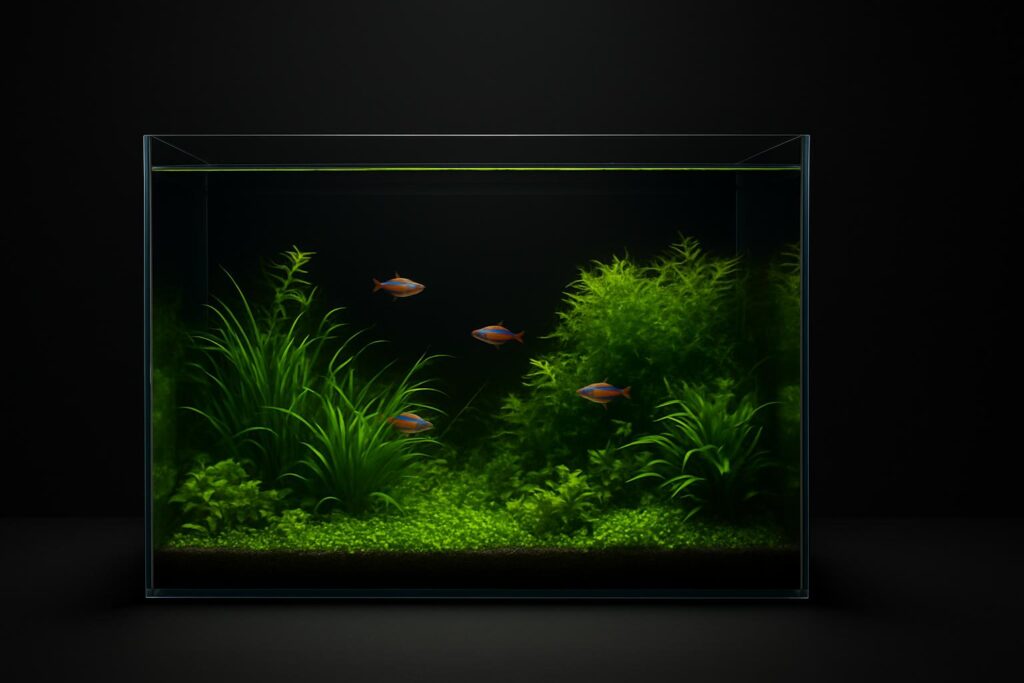
Blackout backgrounds do more than make a tank look clean. They hide cords and overflows, cut visual clutter, reduce reflections that can spook fish, deepen plant and coral colors, and limit stray light that fuels algae. If your aquascape looks washed out or your fish pace along the glass, a true black background is one of the simplest, highest impact upgrades you can make.
How to choose a blackout background in 2026
Material and finish
Pick materials that are fully opaque and water resistant on the outside of the glass: double‑sided aquarium films, static‑cling window films, or adhesive vinyl wraps. Matte finishes reduce glare and reflections. Gloss finishes look sleek but reflect room lights more.
Application method
Static‑cling films are easy to reposition and remove. Adhesive vinyl is the most durable and deepest black but is less forgiving during install. Traditional aquarium background sheets often benefit from a mounting solution to look seamless.
Opacity and coverage
Look for films labeled blackout or total privacy, or black vinyl wraps with no light transmission. Measure your panel height and length and add extra for trimming. Seams are fine if you overlap cleanly.
Tank style and layout
Rimless tanks and peninsula builds show edges more, so choose a clean, bubble‑free install. Bowfront or curved glass needs highly flexible cling film or narrow strips applied carefully.
Maintenance and reversibility
If you expect to move or resell tanks, favor static‑cling or double‑sided sheets. For set‑and‑forget displays, adhesive vinyl is stable for years.
4 Best Aquarium Blackout Backgrounds for 2026
1) Marina Double‑Sided Black/White Aquarium Background
This simple, proven sheet gives you a pure black side and a white side in one roll, so you can flip if you ever change your look. It is easy to cut to size, and when paired with a clear mounting solution or tape on the edges, it lays flat without wrinkles. It is a reliable choice for standard framed tanks and quick upgrades.
Why it helps: Fully opaque black hides equipment and cleans up the scape view instantly. The white side can boost brightness if you ever shift to a different aesthetic.
Best for: Beginners, budget setups, standard size tanks up to medium height.
Setup tips:
- Measure twice, cut once, then apply with a thin layer of background mounting solution for a seamless, bubble‑free look.
- Squeegee from center out; trim edges with a sharp blade.
Potential downsides: Sheets have fixed heights, so very tall tanks may need a seam. The film can reflect room lights more than matte vinyl if not mounted flush.
2) Fluval Black/White Double‑Sided Background
Another dependable double‑sided option with a clean black face and a bright white reverse. The film is sturdy enough to handle repeated positioning during install, with sizes suitable for many common aquariums. It works well behind canopies and with framed rims.
Why it helps: Gives tanks an instant blackout wall that makes fish colors pop. The white side is useful if you want high‑key photography or a minimalist hardscape later.
Best for: Community tanks, planted setups under canopy lighting, hobbyists who want flexibility without committing to adhesive vinyl.
Setup tips:
- Use a wet application with mounting solution, not dry tape alone, to avoid trapped air.
- Wipe the outside glass spotless before applying to prevent dust bumps.
Potential downsides: Like most sheet films, it is less conformable around curved glass. A glossy room behind you can show in reflections if the film is not fully wet‑mounted.
3) Rabbitgoo Blackout Window Film, Static Cling, Black
This non‑adhesive static‑cling film delivers true blackout performance with zero light transmission. It bonds with water only, so it is fully removable and reusable. For aquariums, that means deep, even black, strong privacy, and a clean install that can be redone anytime.
Why it helps: Total opacity eliminates backlight bleed that can wash out aquascapes or encourage algae. Static cling is beginner‑proof and renter‑friendly.
Best for: High‑light plants where you want to control stray light, rimless displays where edges must look crisp, and photographers who need a neutral, nonreflective backdrop.
Setup tips:
- Spray the glass generously with soapy water, lay the film, then squeegee firmly in overlapping passes.
- Trim 1–2 mm inside the rim line to avoid long‑term edge lifting.
Potential downsides: Edges can lift on textured silicone or curved panels if not trimmed precisely. Dust shows under cling films, so clean prep is essential.
4) VViViD Matte Black Adhesive Vinyl Wrap
This automotive‑grade wrap is extremely opaque and has air‑release channels for bubble‑free installs. The matte finish cuts glare and reflections better than glossy posters. Once applied, it is stable for years and resists humidity around sumps and canopies.
Why it helps: Deep, uniform black that minimizes mirroring and visual noise. Air‑release adhesive makes large panels manageable when you take your time.
Best for: Permanent displays, large tanks, overflow‑heavy backs you want totally concealed.
Setup tips:
- For small tanks, a dry install with a felt squeegee works. For large panels, a light mist of soapy water increases forgiveness.
- Warm gently with a heat gun on low to conform around trim and bracing, then post‑squeegee.
Potential downsides: Repositioning is limited once adhesive grabs. Removal can leave residue that needs mineral spirits on the exterior glass.
Installation checklist: bubble‑free and seamless
1) Measure and cut with margin
Measure the visible glass only, add 1–2 cm on each side, and rough‑cut the film. Final trim after squeegeeing gives clean edges.
2) Deep clean the exterior glass
Use glass cleaner, then isopropyl alcohol to remove oils. Any lint or dust will telegraph through blackout films.
3) Wet application for most films
Use a sprayer with water and a drop of dish soap. Flood the glass lightly. This step prevents trapped air and lets you slide the film square.
4) Squeegee in overlapping strokes
Start from center, work to edges, then top to bottom. Use firm pressure and a felt‑edged tool to avoid scratches.
5) Trim and seal edges
Trim along the rim with a new blade. For adhesive vinyl, warm edges slightly and press again. For cling films, ensure no water remains at the border.
When should you not use pure black
In brightly lit rooms with glossy glass, a matte black film is better than glossy black to avoid mirror‑like reflections. Very skittish fish can sometimes react to reflections; in those cases, a matte finish and a good wet mount reduce mirror effects significantly.
Conclusion
Blackout backgrounds are a fast, affordable way to improve color contrast, reduce distractions, and create a calmer environment for fish. Choose a double‑sided aquarium sheet if you want flexibility, a static‑cling blackout film if you value removability and perfect opacity, or an adhesive matte vinyl if you want the deepest, most durable black. With careful cleaning, a wet install, and precise trimming, any of these options will deliver a professional result that elevates your aquascape.
FAQ
Q: Do blackout backgrounds help reduce fish stress?
A: Yes. A dark, nonreflective background cuts reflections and movement behind the tank, which helps many fish feel more secure.
Q: Which finish is better, matte or glossy?
A: Matte reduces glare and mirror effects. Gloss can look sleek but may reflect room lights more.
Q: Static‑cling or adhesive vinyl, which should I choose?
A: Choose static‑cling for easy removal and repositioning. Choose adhesive vinyl for the deepest black and long‑term durability.
Q: How do I avoid bubbles during installation?
A: Use a wet application with a light soapy spray, squeegee from the center out in overlapping passes, and trim after squeegeeing.
Q: Can I use window film or vinyl wrap as an aquarium background?
A: Yes. These films are applied to the outside glass and work well as fully opaque, clean‑looking backgrounds.