
We are reader supported. When you purchase through links on our site, we may earn an affiliate commission. Also, as an Amazon affiliate, we earn from qualifying purchases.
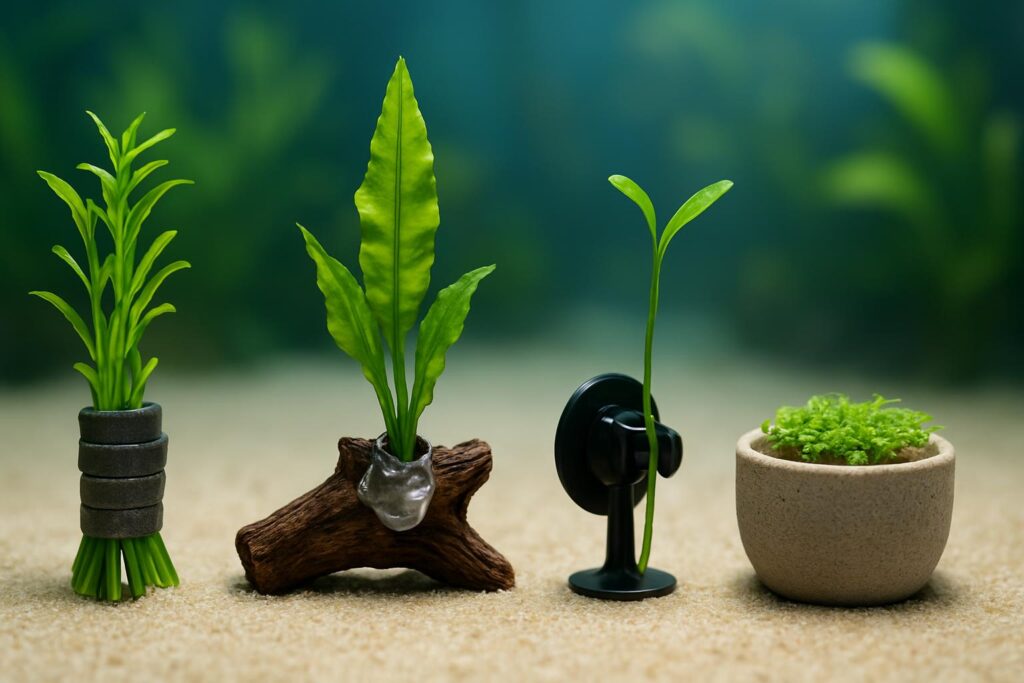
New plants that keep floating up can turn any aquascape into a mess. The right anchor solves this by holding stems and rhizomes steady until roots take over. In 2026, there are four anchor categories that consistently work: flexible strip weights, cyanoacrylate gel, suction-cup holders, and weighted ceramic pots. Each fits different plants, substrates, and maintenance styles. Below you will find clear picks, when to use each, and the key trade-offs so you can stop replanting and start growing.
What plant anchors actually do
Plant anchors add short-term weight or long-term attachment so the plant can root or grip hardscape. Good anchors should be easy to place, safe for fish and shrimp, and stay put during maintenance. Your choice depends on plant type:
– Bunched stems need quick wrap-around weight
– Rhizome plants need attachment to wood or rock
– Carpets and root feeders benefit from stable pots in loose sand
– Bare-bottom or ultra-clean tanks do best with holders that fix to glass
How we chose these anchors for 2026
These picks are based on simplicity for beginners, broad compatibility across freshwater tanks, reliable materials, and real-world durability. The focus is on solutions that reduce replanting and survive water changes and light rescapes with minimal fuss. Each option includes clear use cases, downsides, and tips for a clean install.
The 4 best aquarium plant anchors for 2026
PIVBY Aquarium Plant Anchors, 20-Pack Lead Strip Weights
Flexible strip weights are the fastest way to stop stems from floating. These soft, wrap-around anchors fold gently around the base of stem plants or small bunches without crushing tissue. They drop plants straight to the substrate and stay put while roots form.
Why it helps: Instant stability for stems like Ludwigia, Rotala, Bacopa, and baby Amazon sword pups. The strips conform to different stem sizes and make quick replanting simple.
Best for: New stem bundles, rescapes, and tanks with coarse gravel where stems otherwise slip out.
Potential downsides: Lead-based weights should be handled with care. Do not crimp so tightly that you cut stems. Remove the strip after the plant anchors itself to reduce long-term metal in the tank.
How to use: Trim the stem bottoms clean, group 2–4 stems, wrap one strip loosely 1–2 cm above the cut, and push the group halfway into the substrate. After 2–3 weeks, gently pull the strip off as roots take hold.
Seachem Flourish Glue, Cyanoacrylate Gel
For rhizome and epiphyte plants that should not be buried, gel cyanoacrylate is the cleanest anchor. It bonds Anubias, Bucephalandra, Java fern, and moss to wood, rocks, and ceramic without thread. It sets quickly and is aquarium-safe once cured.
Why it helps: It attaches plants exactly where you want them on hardscape, prevents rhizome rot from burying, and works even with low light and flow.
Best for: Wood- or rock-based layouts, shrimp tanks, and nano aquascapes where precision matters.
Potential downsides: White residue can appear if you overapply or use on damp surfaces. Apply tiny dots and press for 20–30 seconds. Heavy moss mats may need several contact points.
How to use: Pat the hardscape contact area dry with a towel, add 2–3 small gel dots, press the plant rhizome or moss pad firmly, and hold until it grabs. Submerge to finish cure. Avoid gluing over the growing tips.
hygger Aquarium Plant Holder Suction Cups, 6-Pack
Suction-cup plant holders clamp stems or small bunches to glass. They shine in bare-bottom tanks, hospital tanks, temporary holding, or ultra-clean displays where you do not want substrate displaced.
Why it helps: Fixed position on the glass keeps plants upright for photosynthesis and root development in a pot or small media cup nearby.
Best for: Bare-bottom setups, breeding or quarantine tanks, and minimal-substrate aquascapes.
Potential downsides: Suction cups can lose grip on algae-filmed or dusty glass. They are not ideal for very heavy plants or thick driftwood attachments.
How to use: Scrape and wipe the glass until squeaky clean, moisten the cup rim, press out trapped air, and clamp the stem. Re-seat weekly if you notice slipping.
UP AQUA Ceramic Plant Pots for Aquascaping, Set of 2
Weighted ceramic pots with side slits hold substrate and keep roots oxygenated. They are perfect for carpeting plants, crypts, or stems that struggle in very fine sand. The added mass prevents float-ups during water changes and vacuums.
Why it helps: Pots localize nutrients, shelter delicate roots, and give stable footing in tanks with active fish or strong flow.
Best for: Shrimp tanks, sand-bottom aquariums, and anyone dosing root tabs for heavy root feeders.
Potential downsides: Pots add visual mass and can trap debris around the base. Plan placement to allow gentle flow and occasional gravel vacuuming.
How to use: Rinse the pot, add a plant-safe substrate mix, insert the plant, and cap loosely with fine gravel. Place on a level spot and lift slightly during vacuums to release trapped mulm.
Quick tips for cleaner, longer-lasting anchors
– Rinse all anchors before first use
– Do not bury rhizomes; only roots should be under substrate
– Use the lightest anchor that does the job, then remove once plants root
– Clean glass before setting suction cups to avoid early failure
– Combine methods when needed, such as a tiny dot of gel plus a ceramic ring for heavy Java fern clumps
Which one should you pick
– For fast, beginner-friendly results: flexible strip weights are the most forgiving
– For hardscape-first layouts: gel wins for control and aesthetics
– For bare-bottom or temporary holding: suction-cup holders keep order without substrate
– For sand and shrimp tanks: ceramic pots make rooting dependable and tidy
Conclusion
Anchoring plants is about giving roots and rhizomes the time they need to secure themselves. Use strip weights for quick stabilization, gel for precise hardscape attachment, suction cups for substrate-free control, and ceramic pots for reliable rooting in fine sands. Pick the anchor that matches your plant type and tank style, set it up cleanly, and remove or adjust once growth takes over. Your plants will stay put, grow faster, and your scape will finally look the way you planned.
FAQ
Q: Which type of plant anchor is best for beginners?
A: Flexible strip weights are the most forgiving and give fast, beginner-friendly results for bunched stems.
Q: Are lead strip weights safe to use long term?
A: Handle with care, do not crimp tightly, and remove the strip after the plant anchors itself to reduce long-term metal in the tank.
Q: Will gel glue harm fish or shrimp?
A: Gel cyanoacrylate is aquarium-safe once cured; apply tiny dots, press to bond, and submerge to finish cure.
Q: How do I stop suction cup plant holders from falling off?
A: Scrape and wipe the glass until squeaky clean, moisten the cup rim, press out trapped air, and re-seat weekly if needed.
Q: Can I combine different anchor methods?
A: Yes, you can combine methods, such as a tiny dot of gel plus a ceramic ring for heavy Java fern clumps.