
We are reader supported. When you purchase through links on our site, we may earn an affiliate commission. Also, as an Amazon affiliate, we earn from qualifying purchases.
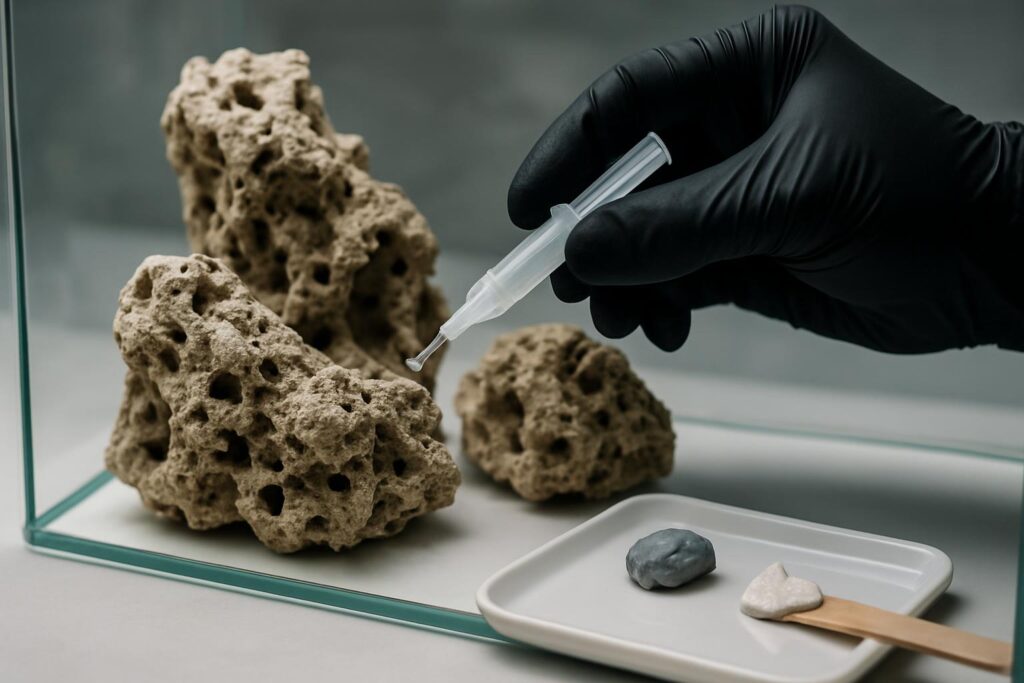
Choosing the right glue for aquarium rocks is the difference between a stable aquascape and a weekly rescue mission. In 2026, the top options fall into three categories that cover nearly every use case: cyanoacrylate gel for fast spot bonds, two-part epoxy putty for gap-filling and shaping, and structural mortar for permanent, load-bearing rockwork. Below are the four best products, how they differ, when to use each, and realistic tips to get clean, lasting results.
How to choose aquarium rock glue in 2026
Safety first
Only use adhesives labeled as aquarium safe once cured. The four picks below are designed for reef and freshwater systems when used as directed.
Bond strength vs speed
Cyanoacrylate gel grabs in seconds but is brittle under heavy load. Epoxy putties fill gaps and cure solid, ideal for medium joins. Structural mortar is for large, dry builds that need long-term strength.
Underwater performance
All four work in wet environments in specific ways. Gels and putties can be applied underwater. Mortar is best for dry scapes or with drained sections before refill.
Aesthetics and cleanup
Color-matched putties and mortar blend into rock. Gels are nearly invisible in thin layers. Epoxies may temporarily film surfaces if overworked; plan placements and use minimal amounts.
The 4 best aquarium rock glue products for 2026
1. Seachem Reef Glue — fast, thick cyanoacrylate gel for quick mounts
Why it helps: A dense cyanoacrylate gel that sets in seconds, even underwater. It is easy to control, holds frags, small rock bits, and attaches aquascape accents with minimal mess.
Best for: Coral frag mounting, small rock nubs, quick fixes where you want an instant hold without mixing.
How to use: Clean the contact points. Apply a pea-sized dab to a dry or damp surface. Press and twist for 10 to 20 seconds until it grabs. For heavier parts, use multiple small dabs rather than one large blob.
Potential downsides: Brittle under shear and not ideal for heavy rock joins by itself. The nozzle can clog if left uncapped. Use in thin layers to avoid white frosting on nearby surfaces.
- Sets: seconds to a minute
- Full handling strength: a few minutes
- Use alone for light tasks or pair with epoxy putty for bigger joins
2. Two Little Fishies AquaStik Epoxy Putty — Stone Gray or Coralline Red
Why it helps: A kneadable two-part epoxy putty that bonds to live rock, ceramic, plastic, and glass. It fills gaps and lets you sculpt support where irregular rocks touch. The color options help the repair disappear.
Best for: Medium-sized rock joins, securing base rocks, blending seams, and mounting frags where the surface is uneven.
How to use: Cut the amount you need, knead until the color is uniform and warm, then press firmly into both surfaces. Turn off pumps for 10 to 30 minutes so the putty is not blown around. It can be used underwater.
Potential downsides: May cause temporary skimmer overactivity and light clouding. The initial grab is weaker than gel, so hold pieces in place for a few minutes. Slightly sticky on fingers; wetting fingertips helps.
- Work time: about 5 to 10 minutes
- Initial set: around 20 to 30 minutes
- Full cure: about 24 hours
3. Instant Ocean HoldFast Epoxy Stick — reliable all-around reef-safe putty
Why it helps: A proven two-part epoxy stick that cures underwater and works on rock, glass, and plastic. It is firm enough to prop rockwork, yet moldable to anchor frags or create saddles and shelves.
Best for: Reinforcing rock stacks, pinning loose pieces, building support feet under base rock, and pairing with gel for a hybrid bond.
How to use: Slice, knead to a uniform color, then pack it into grooves or voids. Press hard against both surfaces to wet it in. Hold for a few minutes. If your tank has a protein skimmer, expect a reaction and plan to disable the skimmer for a few hours.
Potential downsides: Similar to other putties, the first 15 to 30 minutes are the most fragile, so avoid bumping the area. Use thin sausages rather than thick blobs so it cures evenly.
- Work time: about 3 to 7 minutes
- Initial set: roughly 20 minutes
- Full cure: 24 hours; safe once cured
4. MarcoRocks E-Marco-400 Aquascaping Mortar — structural strength for big builds
Why it helps: A high-strength mortar system designed for permanent rock structures. It bridges large gaps, locks arches, and supports cantilevers in a way gels and putties cannot. Once cured, it forms a rock-like bond that blends into natural aquascapes.
Best for: Building open arches, negative space structures, and consolidated bases outside the tank or in drained sections before refilling.
How to use: Mix powder and liquid to a peanut-butter consistency. Apply to dry rock contact points, assemble, and brace as needed. Allow a solid set before moving. Rinse dust from finished structures before placing in the display.
Potential downsides: Not a quick underwater fix. Longer cure time, and any mixed batch has a limited pot life. Plan the build and mix only what you can place within the working window.
- Work time: roughly 15 to 20 minutes
- Initial handling: hours to overnight depending on thickness
- Full strength: 24 to 72 hours
Pro tips for stronger, cleaner aquascapes
Use the gel plus putty sandwich method
For in-tank joins, press a thin layer of cyanoacrylate gel on the rock, add a small pad of epoxy putty, then another thin layer of gel on the outer face. The gel gives instant tack while the putty cures and fills gaps, creating a durable bond.
Control flow and skimming
Turn off wavemakers near the work area for 10 to 30 minutes. With epoxies, temporarily disable the protein skimmer to prevent overskimming. Resume normal flow once the initial set holds.
Prep contact points
Brush away slime or algae and roughen smooth areas. Clean, textured surfaces greatly improve adhesion, especially for gels.
Build outside when possible
For arches and heavy structures, assemble dry with mortar, let it set, then place the finished piece in the tank. This avoids long in-tank cure times and prevents collapses.
Conclusion
There is no single glue that does everything best. Use Seachem Reef Glue when speed and precision matter. Choose AquaStik or HoldFast when you need to fill gaps and shape support that also cures underwater. Reach for E-Marco-400 when you want a permanent, load-bearing structure with open negative space. Combine methods for the strongest results and follow the curing tips above so livestock stays safe and your aquascape stays put.
FAQ
Q: Which type of adhesive should I use for underwater rock bonding
A: Use cyanoacrylate gel for small parts and quick sets, epoxy putty for gap filling and medium weight joins, and structural mortar for large dry builds that need long-term strength.
Q: Are these glues safe for freshwater and saltwater tanks
A: Yes. All four are designed to be aquarium safe once fully cured and can be used in freshwater and saltwater systems.
Q: How long should I let the bond cure before restoring full flow
A: Gel grabs in seconds and handles in minutes. Epoxy putty needs about 20 to 30 minutes for initial set and around 24 hours to fully cure. Mortar needs hours to overnight before moving, and 24 to 72 hours for full strength. Turn off nearby pumps for 10 to 30 minutes during placement.
Q: Will epoxy putty affect my protein skimmer
A: It can cause temporary overskimming. Disable the skimmer for a few hours and run carbon if needed until the reaction settles.
Q: What is the best method to mount heavy rocks or build arches
A: Build the main structure outside the tank with E-Marco-400 for strength, then use a gel plus putty sandwich in-tank to reinforce connections and fine-tune placements.