
We are reader supported. When you purchase through links on our site, we may earn an affiliate commission. Also, as an Amazon affiliate, we earn from qualifying purchases.
Keeping up with calcium and alkalinity is the hardest part of running a thriving reef. SPS corals, clams, and coralline algae pull calcium and carbonate from the water every hour. Once weekly dosing cannot keep up on busy systems. A well-tuned calcium reactor delivers a stable, automated supply around the clock with less daily work. Below are three proven calcium reactors for 2026 that balance stability, maintenance ease, and long-term running costs. Each pick targets a different tank size and budget so you can match the right tool to your reef.
How a calcium reactor works
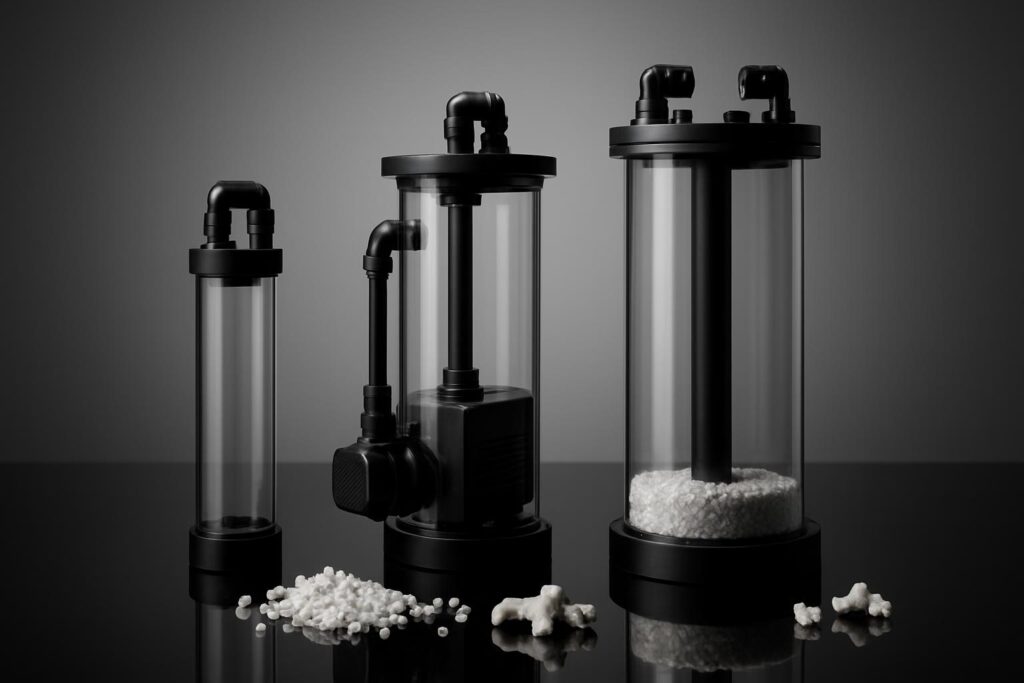
A calcium reactor circulates tank water through a chamber of aragonite media while adding controlled CO2. The CO2 lowers pH inside the chamber to slowly dissolve the media, releasing calcium, alkalinity, and trace elements. The effluent then drips back into the tank. A reactor reduces dosing swings and can scale with coral growth by adjusting CO2 and effluent rate.
What to look for before you buy
Size and capacity
Match reactor size to your real demand, not just tank volume. Mixed reefs with LPS and soft corals use less than dense SPS systems. Oversizing slightly is fine and reduces how often you refill media.
Recirculation pump quality
A reliable, quiet pump keeps pH stable inside the chamber and prevents channeling. Solid pump brands reduce maintenance and noise.
Build and maintenance
Thick acrylic, clean welds, easy-lift lid, true-union fittings, and a built-in bubble counter help. A pH probe port and clear effluent control make dialing in simpler.
Controls and safety
Plan to use a CO2 regulator with a solenoid, a pH controller or monitor, and a dependable feed method. Many hobbyists use a peristaltic pump for a steady effluent rate.
Best Overall: Reef Octopus CR140 Calcium Reactor
Why it stands out
The CR140 balances sturdiness, predictable performance, and straightforward service. Reef Octopus pairs thick acrylic with a dependable recirculation pump and clean plumbing. The reactor has a pH probe port and a bubble counter that make tuning less guesswork for new users.
Best for: Mixed to SPS-dominant tanks up to roughly 180 to 200 gallons depending on coral load.
Key features and capacity
Large media capacity supports higher demand as your corals grow. The recirculation pump maintains consistent internal flow, which helps prevent media channeling. The union fittings and top flange make opening the reactor less of a chore during media changes.
Why it helps
Why it helps: Stable alkalinity and calcium with fewer day-to-day adjustments. The CR140 keeps a steady internal pH, so output alkalinity remains consistent. That consistency prevents rapid dKH swings that stress SPS.
Setup tips
Start with a reactor pH of about 6.6 to 6.8 and a slow effluent drip. Target tank alkalinity in the 7.5 to 8.5 dKH range for SPS stability. Use a pH controller to cut CO2 if the internal pH drops too low. A peristaltic pump for the feed line makes dialing in easier than using a T off the return.
Potential downsides
Potential downsides: The footprint is moderate, so measure your sump cabinet. Like all reactors, you still need supporting gear such as a CO2 cylinder, regulator, and controller.
Best Compact Pick: AquaMaxx cTech T-1 Calcium Reactor
Why it stands out
The cTech T-1 fits tight sump spaces without giving up essential features. Its slim chamber and clear layout make it beginner friendly. Assembly and media changes are quick, which helps if you are installing a reactor for the first time.
Best for: Nano to mid-size mixed reefs and light SPS systems up to about 120 to 150 gallons, depending on coral density and growth.
Key features and capacity
The T-1 offers efficient recirculation in a small form factor. The acrylic build is clean, and the integrated bubble counter aids consistent CO2 dosing. Media capacity is sized for smaller systems, which keeps CO2 use low and running costs manageable.
Why it helps
Why it helps: It delivers the benefits of a reactor without demanding space or complex plumbing. Many users move from two-part dosing to the T-1 to reduce daily dosing work and stabilize dKH between tests.
Setup tips
Begin with a reactor pH near 6.7 and a slow, steady effluent. Confirm you have room above the chamber to lift the lid straight up during maintenance. Consider a peristaltic pump for the feed so the small chamber receives consistent flow.
Potential downsides
Potential downsides: Limited headroom for very dense SPS. If your system matures into a high-demand reef, you may upgrade to a larger reactor to avoid frequent media refills.
Best Budget Workhorse: Bubble Magus CR120 Calcium Reactor
Why it stands out
The CR120 focuses on core performance at a friendly price. It covers the essentials well, with a reliable recirculation loop and easy-to-read bubble counter. For many hobbyists moving off two-part in mid-size tanks, this is a cost-effective first reactor.
Best for: Mixed reefs and moderate SPS systems around 100 to 150 gallons that need steady alkalinity without premium pricing.
Key features and capacity
The chamber handles enough media for medium demand. The recirculation design is straightforward, and the fittings are simple to service. It integrates into common sump layouts without complex rerouting.
Why it helps
Why it helps: Smooths daily alkalinity and calcium consumption in growing reefs, reducing manual dosing. As demand increases, you can raise CO2 bubble rate and effluent slightly to keep up.
Setup tips
Use clean, coarse aragonite media and rinse lightly before loading. Start at a conservative reactor pH, test alkalinity every two to three days, and adjust in small steps. Add a pH controller for added safety.
Potential downsides
Potential downsides: Build and aesthetics are plainer than premium models. High-demand SPS tanks may reach its limits sooner, which means more frequent media refills.
Essential accessories you still need
CO2 regulator and cylinder
A reliable two-stage regulator with a solenoid prevents end-of-tank dumps and holds a stable bubble rate. Keep spare gaskets on hand.
Controller or monitor
A pH controller is the safety net that cuts CO2 if the reactor pH drops too low. At minimum, monitor the reactor pH during the first weeks.
Feed method
A small peristaltic pump provides the most stable effluent. If you use a T off your return, install a fine control valve to avoid fluctuations.
Tuning basics for the first 30 days
Start conservatively
Begin with a higher reactor pH and slow effluent to avoid overshooting alkalinity. Aim to hold your existing dKH rather than raise it.
Test and adjust
Test alkalinity every two to three days. If dKH trends down, slightly increase effluent or lower reactor pH by 0.1. If dKH trends up, reverse the change. Make one change at a time and wait 48 hours to evaluate.
Stability is the goal
Once dKH holds steady for a full week, lock in settings and extend testing intervals. Recheck weekly at a minimum and after any coral growth spurts.
Common mistakes to avoid
Rushing the tune
Large, frequent adjustments cause swings. Small steps work better.
Skipping maintenance
Clean the recirculation pump and lines every few months. Replace brittle tubing. Refill media before the chamber runs low.
Ignoring CO2 safety
Secure the cylinder upright, leak test connections, and use a solenoid controlled by a pH controller for failsafe operation.
Conclusion
The right calcium reactor removes daily dosing chores and keeps SPS happy with stable parameters. Choose based on your true coral demand and space. Reef Octopus CR140 is the balanced all-rounder for most serious reefs. AquaMaxx cTech T-1 is the compact choice for smaller systems and tight cabinets. Bubble Magus CR120 is the budget-friendly workhorse for mid-size tanks. Add a solid regulator, a controller, and a consistent feed, then tune slowly. Your reef will respond with steadier growth and fewer surprises.
FAQ
Which calcium reactor is best for a tight sump space?
AquaMaxx cTech T-1 is the compact choice and fits tight sump spaces without giving up essential features.
What size tank suits the Reef Octopus CR140?
It is best for mixed to SPS-dominant tanks up to roughly 180 to 200 gallons depending on coral load.
Do I still need extra equipment with these reactors?
Yes, you still need a CO2 regulator and cylinder, a pH controller or monitor, and a dependable feed method such as a peristaltic pump.
How should I start tuning a new calcium reactor?
Start with a higher reactor pH and slow effluent, test alkalinity every two to three days, and adjust in small steps with one change at a time.
What is a common mistake when setting up a reactor?
Rushing the tune with large, frequent adjustments causes swings, so make small changes and wait 48 hours to evaluate.