
We are reader supported. When you purchase through links on our site, we may earn an affiliate commission. Also, as an Amazon affiliate, we earn from qualifying purchases.
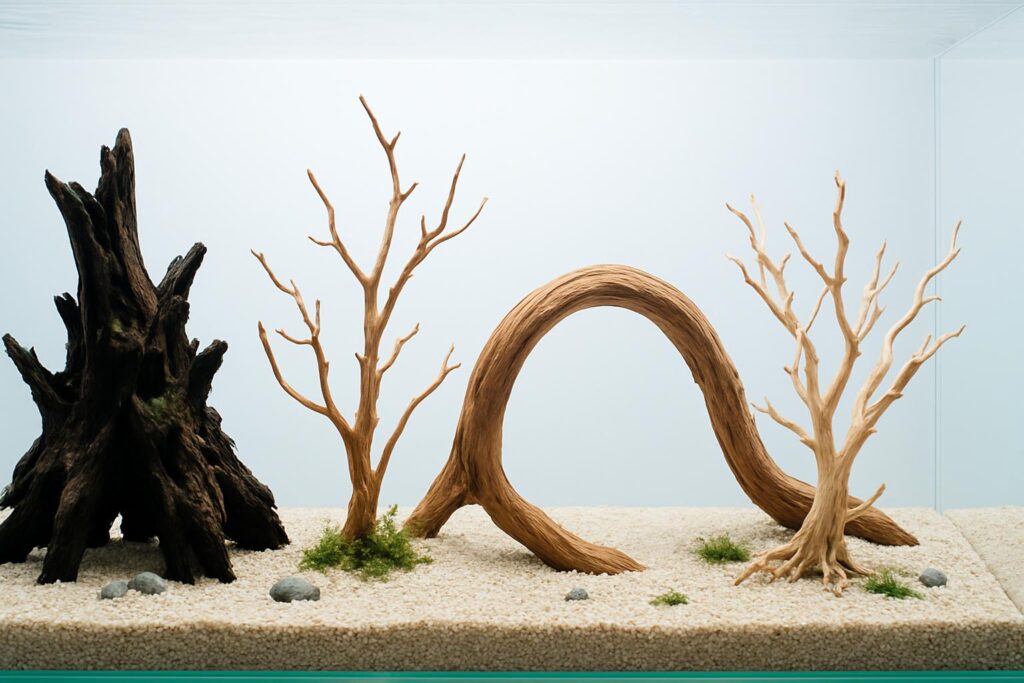
Good driftwood transforms a tank. It gives fish places to hide, supports beneficial bacteria, and completes a natural aquascape. The challenge is choosing pieces that look great, sink reliably, and do not create maintenance headaches. Below are four proven driftwood options that balance beauty, function, and beginner friendliness in 2026.
How to Choose Aquarium Driftwood in 2026
What matters most
Focus on water impact, buoyancy, shape, and consistency. Some woods release heavy tannins and tint the water. Others take weeks to sink. Branching pieces are ideal for shrimp and small fish. Dense hardwoods suit cichlids and larger species. Consistency by brand reduces surprises.
Setting expectations for new driftwood
Most natural woods need a pre-soak and a rinse. Mild white biofilm can appear in the first weeks. It is normal, not harmful, and grazers will eat it. Carbon and water changes control tannins if you prefer clear water.
Best Overall: Zoo Med Mopani Wood
Why it stands out
Mopani is dense, dual-toned, and sinks fast. It looks finished the day you place it. The grain offers strong visual focus in both planted and hardscape-first layouts.
Key strengths
Why it helps: Heavy hardwood that resists floating and gives territorial fish dependable cover. Its complex grain harbors biofilm and microfauna that benefit grazers and fry.
Best for: Community tanks, African and South American setups, hardscape-centered aquascapes, keepers who want instant sink without weights.
Water impact and maintenance
Tannins: Moderate to heavy. Expect a tea tint at first. Many fish thrive in it. If you prefer clear water, add carbon and increase water change frequency during the first month.
Biofilm: A light white film can appear early. It is harmless and usually fades as the tank matures.
Preparation tips
Rinse, then soak 1 to 2 weeks. A couple of short boils and cool-downs speed tannin release. Mopani generally sinks immediately, so you can aquascape without weights.
Potential downsides
Heavier tinting than most options and weight makes it harder to reposition in large tanks. Shapes can be more stump-like than branching.
Best Branching Look: Hamiledyi Natural Spider Wood
Why it stands out
Spider wood, also called azalea root, provides airy, branching structure that plants can wrap around. It creates depth without blocking flow or light.
Key strengths
Why it helps: The fine branches make instant microhabitats. Shrimp, otocinclus, and small tetras use it constantly. Mosses and epiphytes attach easily, turning the wood into a living centerpiece.
Best for: Nano tanks, nature-style scapes, shrimp colonies, keepers who want intricate shapes and easy plant attachment.
Water impact and maintenance
Tannins: Light to moderate. Most tanks see only a mild tint.
Biofilm: Common in the first month. It looks like white fuzz. Shrimp and snails love it. If needed, siphon lightly during water changes.
Preparation tips
Rinse and pre-soak 1 to 3 weeks. Spider wood is buoyant at first. Use rocks or stainless mesh to pin it down until it stays put. Short boiling sessions help it sink sooner and reduce organics.
Potential downsides
Can float for weeks without weights. Some pieces include thin tips that need gentle handling to avoid breakage during setup.
Best for Blackwater and Easy Sinking: Pisces USA Malaysian Driftwood
Why it stands out
Malaysian driftwood is a staple for a reason. It is dense, sinks quickly, and brings a natural forest-floor feel to the tank. The shapes vary from simple arcs to knotted pieces.
Key strengths
Why it helps: Reliable sinking and steady tannin release create stable, fish-friendly conditions. Corydoras, gouramis, and many tetras respond well to the soft, shaded environment.
Best for: Blackwater or soft-water themes, beginner-friendly scapes that need predictable behavior, tanks where you do not want to fight buoyancy.
Water impact and maintenance
Tannins: Moderate. Many keepers welcome the amber tone. If you want clear water, pre-soak longer and run fresh carbon for the first few weeks.
Biofilm: Typically light and short-lived. Grazers help keep it in check.
Preparation tips
Soak 3 to 7 days at minimum. Most pieces sink within a day. A brief boil can reduce initial organics and any surface silt.
Potential downsides
Shapes are less branchy than spider wood. Some small pieces can look blocky unless combined into a larger composition.
Best for Minimal Tint and Clean Lines: Pisces USA Ghostwood Manzanita
Why it stands out
Ghostwood is sandblasted manzanita. It delivers a refined, pale tone with elegant branching. It is a favorite in contest-style aquascapes and high-light planted tanks.
Key strengths
Why it helps: Very low tannin release preserves water clarity, so bright plants and active fish pop. The slender limbs create height and negative space without heavy shading.
Best for: High-clarity displays, Dutch and nature hybrids, Iwagumi add-ons, scapers who want branch structure that does not darken the water.
Water impact and maintenance
Tannins: Very low compared with Mopani and Malaysian. Water typically stays clear.
Biofilm: May appear in small patches early on. It fades with routine maintenance and clean-up crew activity.
Preparation tips
Rinse well and pre-soak 1 to 4 weeks. Manzanita can be buoyant. Use weights or pin under rocks until it settles. Try several orientations to lock in a natural look.
Potential downsides
Needs time to sink. Pale color shows algae sooner than dark woods, so manage light and flow to avoid buildup.
Setup Tips That Prevent Problems
Pre-soak smart
Soak wood in dechlorinated water and change the soak water daily at first. For heavy tannin woods like Mopani, aim for 1 to 2 weeks. Malaysian often needs only several days. Spider wood and manzanita need weights and longer soaks to defeat buoyancy.
Control tannins
Use activated carbon or Purigen in the filter for the first month if you prefer clear water. Keep up with weekly water changes until the tint stabilizes.
Expect early biofilm
Do not panic if you see white fuzz. It is a natural bacterial film. Most shrimp and many fish will graze it down. Gently siphon if it becomes excessive.
Which One Should You Choose
Quick guidance
- Want instant sink and dramatic grain: Mopani
- Want airy branches and easy plant attachment: Spider wood
- Want blackwater tone and reliability: Malaysian driftwood
- Want minimal tint and clean branching lines: Ghostwood manzanita
Conclusion
Driftwood is more than decor. It stabilizes behavior, supports biofilms, and ties a layout together. Zoo Med Mopani Wood anchors a scape with weight and character. Hamiledyi Spider Wood builds layered habitats for small species. Pisces USA Malaysian Driftwood delivers predictable sinking and gentle tannins for blackwater comfort. Pisces USA Ghostwood Manzanita keeps water bright while adding refined height. Pick based on water tint preference, buoyancy tolerance, and the look you want. Pre-soak well, manage tannins if needed, and let your clean-up crew handle early biofilm. The result is a healthier, more natural aquarium.
FAQ
Q: Do I need to pre-soak driftwood, and for how long
A: Yes. Mopani benefits from 1 to 2 weeks, Malaysian often needs 3 to 7 days, Spider wood needs 1 to 3 weeks with weights, and Ghostwood manzanita may need 1 to 4 weeks to overcome buoyancy.
Q: Will driftwood stain the water
A: Mopani releases moderate to heavy tannins and Malaysian releases moderate tannins. Spider wood is light to moderate, and Ghostwood manzanita is very low. Carbon and water changes reduce the tint.
Q: Is the white fuzz on new driftwood harmful
A: No. It is a harmless biofilm that appears early and typically fades. Shrimp and other grazers eat it, and you can siphon lightly during water changes if needed.
Q: Which driftwood sinks fastest
A: Mopani and Malaysian driftwood generally sink quickly. Spider wood and Ghostwood manzanita are buoyant at first and need weights or longer soaks.
Q: Which driftwood is best for a blackwater look
A: Malaysian driftwood and Mopani are best if you want an amber tone and soft-water vibe.