
We are reader supported. When you purchase through links on our site, we may earn an affiliate commission. Also, as an Amazon affiliate, we earn from qualifying purchases.
Aquarium plants look better and grow better when they are held in place correctly. If you struggle with stems floating up, moss sliding off driftwood, or roots failing to take hold, a dedicated plant holder fixes the problem fast. This guide narrows the field to four proven plant holders for 2026, each suited to different tanks, layouts, and experience levels. You will see what each does well, who it suits best, how to set it up, and what to watch out for.
How we picked and what matters in 2026
Stability and plant health come first
Good holders keep plants anchored without crushing stems or blocking roots. They should allow water flow and nutrient exchange so plants can settle and grow rather than rot.
Materials and maintenance
Favor aquarium-safe materials that resist corrosion and biofilm. Ceramic, stainless steel, and inert plastics are common. Plan for simple cleaning and easy part replacement, such as swapping old suction cups.
Fit for your tank and livestock
Nano tanks need compact solutions that do not dominate the scape. Shrimp tanks benefit from moss platforms. Active fish and stronger flow call for firmer hold options like anchors and baskets.
Quick install tips that prevent failures
Clean glass with an algae scraper and isopropyl-damp cloth before mounting suction cups. Warm the cups in water for better pliability. Press firmly and remove air pockets. Replace cups every 6 to 12 months if they harden. Do not overtighten plant anchors; support, do not crush.
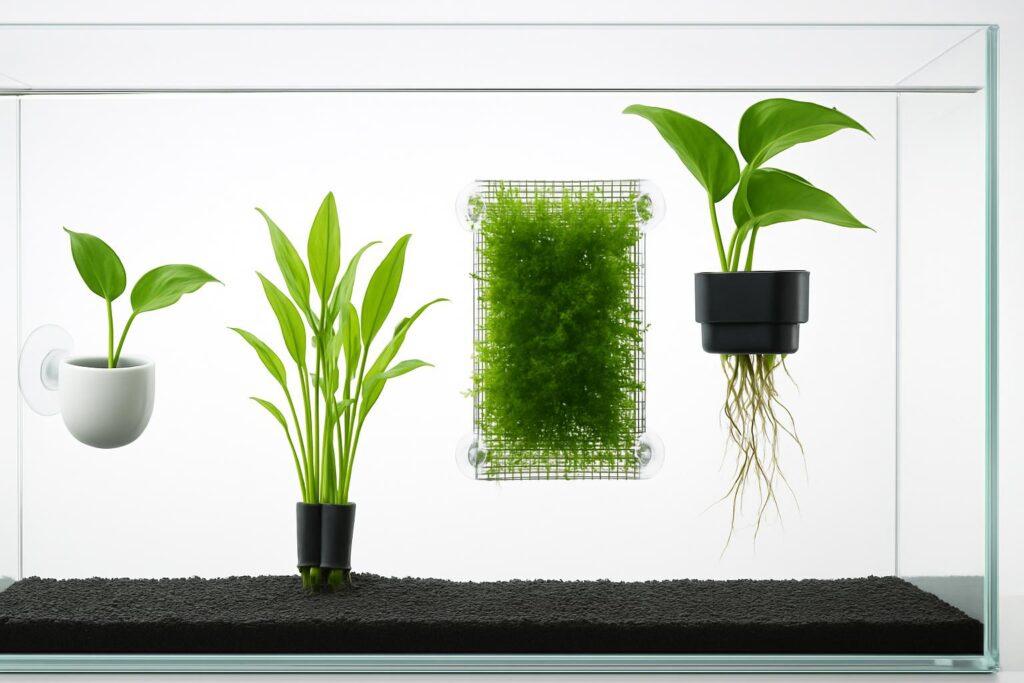
Best ceramic suction-cup planter: Hamiledyi Aquarium Plant Holder Ceramic Pot with Suction Cup
Why it helps
This ceramic cup mounts directly to glass, lifting small plants to stable light while keeping roots secure. The porous ceramic promotes gentle water exchange, which reduces stagnant spots and helps cuttings transition from nursery to display without floating away.
Best for
Nano tanks, betta setups, and anyone who wants to position small rhizomes, cuttings, or runners at mid-height rather than in the substrate. Ideal for Anubias, Buce, small Java fern varieties, or stem tips you are rooting.
Setup and sizing
Rinse the cup, pre-soak the suction cup in warm water, clean the glass, then mount. Add a small plug of inert media or a little rock wool to steady the plant if needed. Avoid burying rhizomes; secure only the roots and base.
Potential downsides
The included suction cup ages and may need replacing over time. The cup volume is small, so heavy root feeders will outgrow it. Not a match for large, boisterous fish that might knock it loose.
Care and longevity
Wipe algae from the cup during water changes. Rotate positions to tune light exposure as plants establish. Replace the suction cup when it hardens or loses grip.
Best budget control for floating stems: AQUANEAT Aquarium Plant Anchors Lead Weights
Why it helps
Soft lead strips wrap gently around stems to keep them planted during the critical rooting phase. They counteract buoyancy in fast-growing stems and prevent rearranged scapes from drifting.
Best for
New stems like Ludwigia, Rotala, Bacopa, or bunch plants that like to float before rooting. Also useful in high-flow tanks and during rescapes when you need immediate hold.
How to use them right
Trim clean stems, bundle loosely, and wrap with minimal tension. Bury the weighted base just into the substrate. Once roots take hold, remove the anchor to allow natural growth and prevent stem pinching.
Potential downsides
Cosmetically plain and intended as a temporary aid. Over-tightening can bruise stems. Remove when plants are established to reduce clutter.
Safety and maintenance
These are designed for aquarium use. Rinse before use, handle gently, and retire any strip that shows damage. Use sparingly and store away from children and pets.
Best for shrimp and moss walls: Jardin Stainless Steel Moss Holder with Suction Cups
Why it helps
A stainless steel mesh plate lets you tie or thread moss, then mount it to glass with suction cups. As the moss grows, it forms a clean, vertical mat that shrimp graze all day. It also hides hardware and creates texture without taking substrate space.
Best for
Shrimp tanks, minimal-substrate layouts, and anyone building a green backdrop or mid-height accent. Works with Java moss, Christmas moss, and other fine-leaf species.
Setup tips for fast coverage
Pre-rinse the mesh. Spread a thin layer of moss and secure with fine thread or plant glue at a few points so light and water can reach all fronds. Mount on clean glass and give moderate flow to prevent detritus from settling.
Potential downsides
Edges of cheap meshes can be sharp; handle with care. Suction cups are consumables and may need periodic replacement. Dense growth can shade nearby plants, so plan placement.
Cleaning and care
Brush algae from exposed mesh during water changes. Trim overgrowth to keep a flat, healthy mat and prevent detritus pockets. Replace suction cups as they lose elasticity.
Best rim planter for simple nutrient export: Penn-Plax Aquaponic Planter
Why it helps
This clip-on rim planter holds a terrestrial cutting or houseplant above the tank while roots hang in aquarium water. Roots absorb nitrogen from the water column, which supports water quality and gives you a clean way to grow pothos, philodendron, or herbs.
Best for
Low-tech tanks, betta and nano community setups, and keepers who want easier nitrate control without adding equipment. Also useful where the substrate is shallow or you prefer an open, uncluttered scape.
Setup and plant choices
Rinse the planter, clip to the rim, and seat the root section in the included media or inert gravel. Start with hardy cuttings. Keep roots clear of any intake flow. Expect a short acclimation period as terrestrial roots adjust.
Potential downsides
Small pot volume limits plant size. Fit may vary with rimless or extra-thick glass. You still need to prune roots and foliage to prevent crowding and shading at the water surface.
Care over time
Rinse the media occasionally, trim roots to avoid filter interference, and top up water to maintain contact with roots. Rotate the planter position to balance light and avoid casting shade on light-hungry aquatics.
Do you still need substrate with these holders
It depends on the holder and plant. Suction cup cups and rim planters can support plants without deep substrate. Anchors work best with a normal substrate so roots can grip once weighted. Moss holders do not need substrate but appreciate moderate flow and low debris build-up.
Conclusion
Pick the holder that matches your plants and tank style. Choose the Hamiledyi ceramic cup for neat placement in small tanks. Choose AQUANEAT anchors to stop floaters and secure bunch plants during rescapes. Choose the Jardin stainless mesh to feed shrimp and build living green walls. Choose the Penn-Plax rim planter to grow houseplant roots for passive nutrient export. Use clean glass, gentle tension, and routine trims. With the right holder, plants settle faster, stay where you want them, and the scape stays tidy.
FAQ
Q: Which plant holder is best for tiny tanks or betta setups
A: The Hamiledyi ceramic suction-cup planter is the top pick because it positions small plants securely without taking floor space.
Q: How do I stop suction cups from falling off the glass
A: Clean the glass, warm the cups in water, press out air pockets, and replace cups every 6 to 12 months as they harden.
Q: Do I still need substrate when using these plant holders
A: Suction cup cups and rim planters can work without deep substrate, while anchors need normal substrate so roots can grab; moss holders mount to glass and do not require substrate.
Q: Are lead plant anchors safe to use in aquariums
A: They are designed for aquarium use; rinse before use, wrap gently, and remove once plants root to avoid stem damage.
Q: Which option is best for shrimp tanks
A: The Jardin stainless steel moss holder is ideal because it grows clean moss mats that shrimp graze and it does not take substrate space.