
We are reader supported. When you purchase through links on our site, we may earn an affiliate commission. Also, as an Amazon affiliate, we earn from qualifying purchases.
Fast, safe water changes start with the right faucet adapter. If your sink connects quickly and seals tightly, you can refill and vacuum with confidence, cut change time in half, and avoid messy spills. This guide breaks down what to look for, how to size threads correctly, and four proven adapters that make water changes faster and less frustrating for both beginners and experienced aquarists.
What Makes a Good Aquarium Faucet Adapter
Thread compatibility comes first
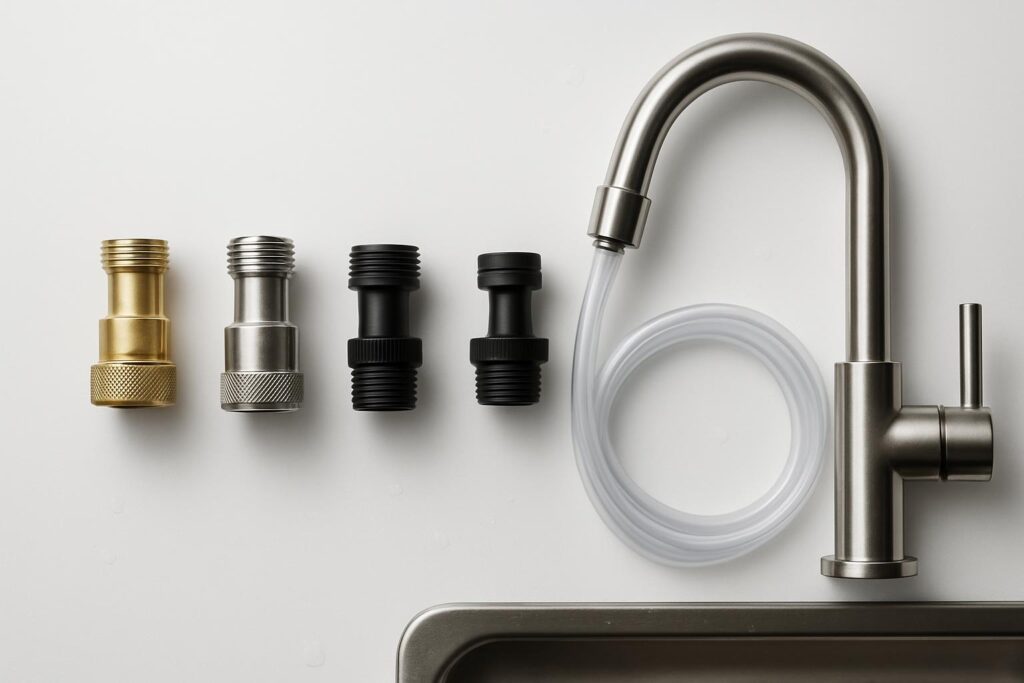
Most sinks use aerator threads, while most aquarium water changers and hoses use 3/4 inch garden hose thread, also called GHT or NH. The two most common aerator sizes are 15/16-27 male and 55/64-27 female. The best adapters bridge these standards without leaks. Before buying, remove your faucet aerator and check whether your faucet has external threads you can see and measure or internal threads inside the spout, then match them to an adapter that terminates in 3/4 inch GHT.
Material and durability
Brass and stainless steel resist cross-threading and last longer under frequent use. Quality plastics can work, but they need gentler handling and proper gaskets. If you plan weekly changes or own multiple tanks, metal is usually worth it.
Seals and flow
Look for adapters with a flat rubber washer or O-ring on the faucet side to stop drips. A clean, full-bore flow path reduces restriction, speeds filling, and improves gravel vacuum performance.
Quick connect vs screw-on
Quick connect couplers save time if you connect and disconnect weekly. Screw-on is simpler and cheap, but it takes a bit longer to attach. Both work well when threads and gaskets are right.
About pull-out sprayers
Many pull-out or pull-down kitchen faucets lack removable aerators or have proprietary couplings. These usually need a dedicated brand-specific adapter or a separate utility sink solution. Standard aerator-based adapters generally do not fit pull-out sprayers without extra parts.
How We Picked
These four options are widely used by aquarists, offer solid build quality, seal reliably when installed correctly, and keep setup simple for beginners. Each selection notes who it suits best and what to consider before you buy.
4 Best Aquarium Faucet Adapters for Faster Water Changes
1) Python Brass Sink Faucet Adapter
This is a staple for users of popular no-spill water change systems. The Python brass adapter threads securely to common sink aerators and presents a 3/4 inch garden hose connection that mates with standard water changer hoses. The solid brass body tolerates frequent attachment without rounding or cracking, and the internal washer helps maintain a tight seal.
Why it helps: Reliable threads and a firm seal mean higher flow with less dribble, so vacuuming detritus is easier and refills finish faster.
Best for: Aquarists who perform weekly or biweekly changes and prefer a long-lived, metal adapter that pairs seamlessly with water changer systems.
Potential downsides: Like most aerator-based adapters, it requires a faucet with a removable aerator. Non-standard or pull-out faucets may need an additional adapter or a different sink.
Installation notes: Remove the aerator, seat the washer flat, hand-tighten firmly, attach the hose, then test at low flow before opening fully.
2) Aqueon Aquarium Water Changer Faucet Adapter
Designed for the Aqueon water changer system, this faucet adapter is a simple, budget-friendly way to connect a sink to a 3/4 inch GHT hose. It is a straightforward fit for many bathroom and kitchen faucets with removable aerators and relies on a rubber washer to take up any play in the threads.
Why it helps: A lightweight, easy-to-handle adapter that keeps setup uncomplicated for first-time users of water changers.
Best for: Beginners who want a direct match with Aqueon systems or those who prefer a simple plastic adapter with minimal parts.
Potential downsides: Plastic threads can cross-thread if forced. Take your time to align straight and tighten by hand only.
Installation notes: Hand-tighten until the washer compresses and stops seepage. If you see a slow drip, reseat the washer or add a fresh gasket.
3) Danco Multi-Thread Garden Hose Adapter, 15/16-27 Male and 55/64-27 Female to 3/4-Inch GHT
A known plumbing brand solution that covers the two most common aerator sizes in one part. One side presents 15/16-27 male threads, the other side is 55/64-27 female. Either way, you end up with a 3/4 inch garden hose connection for your water changer. The metal body and crisp threads improve sealing and longevity.
Why it helps: Dual-thread design means you can flip the adapter to match your faucet, reducing guesswork for first-time sizing.
Best for: Homes with multiple sinks or anyone unsure whether their faucet is male or female aerator thread.
Potential downsides: Heavier than plastic, so ensure the washer sits flat and do not overtighten against delicate faucet finishes.
Installation notes: Check which end matches your faucet. Use the included washer on the faucet side. Start with low water pressure for the first test.
4) Kichwit Stainless Steel Sink-to-Garden Hose Adapter Kit
This kit focuses on durability and clean threading. The stainless steel construction resists corrosion and rough handling, and the package typically includes common aerator thread options plus a 3/4 inch GHT connection. If you want an all-metal setup with a tidy finish, this is a solid pick.
Why it helps: Stainless steel threads engage smoothly and hold up to repeated changes, keeping leaks at bay and flow consistent.
Best for: Frequent water changers who want a long-term, metal solution and a cleaner look on exposed faucets.
Potential downsides: Costs more than single-piece plastic adapters. Verify the included thread pieces match your faucet before first use.
Installation notes: Confirm the right aerator thread insert, place the washer, hand-tighten, and check for clean flow at moderate pressure.
Setup Tips for Faster, Leak-Free Water Changes
Measure once, buy once
Remove your existing aerator and identify the thread. Common sizes are 15/16-27 male and 55/64-27 female. Your hose end should be 3/4 inch GHT. Matching these correctly avoids returns and leaks.
Use gaskets and hand torque
Always install a flat rubber washer on the faucet side. Hand-tighten until the washer compresses. Avoid pliers on decorative faucet finishes. If a slow drip persists, reseat or replace the washer.
Test at low pressure
Crack the faucet a quarter turn and watch for seepage. If dry, open further. High pressure right away can push out a misaligned washer and cause spray.
Watch water temperature
Use lukewarm water to match tank temperature. Do not run very hot water through plastic adapters or hoses. Avoid sudden temperature swings that stress fish.
Know when an adapter will not fit
Pull-out or pull-down sprayer faucets usually need brand-specific couplers or a separate utility faucet. For hassle-free changes, a bathroom sink with a removable aerator is often the fastest route.
Conclusion
Faucet adapters are small parts that make a big difference during water changes. Choose one that matches your aerator thread and terminates in 3/4 inch GHT, prefer metal for frequent use, and always seat a good washer. The Python Brass Sink Faucet Adapter delivers proven reliability for popular water changer systems. The Aqueon Faucet Adapter keeps things simple for first-time users. The Danco Multi-Thread Adapter covers the two most common aerator sizes in one part. The Kichwit Stainless Steel kit prioritizes durability and clean threading. With a correct fit and a careful first test, you will move more water in less time and keep floors dry.
FAQ
Q: How do I know which faucet adapter size I need?
A: Remove the aerator and check whether your faucet is 15/16-27 male or 55/64-27 female, then choose an adapter that ends in 3/4 inch garden hose thread.
Q: Will these adapters work with pull-out sprayer faucets?
A: Most pull-out or pull-down sprayers need a brand-specific coupler, so standard aerator-based adapters usually will not fit without extra parts.
Q: How can I stop leaks at the faucet connection?
A: Use a flat rubber washer, hand-tighten until it compresses, and test at low pressure. Reseat or replace the washer if you see a slow drip.
Q: Is brass or plastic better for frequent water changes?
A: Brass and stainless steel resist cross-threading and last longer, while plastic is fine with careful hand tightening and proper gaskets.
Q: Can I run hot water through these adapters?
A: Use lukewarm water to match tank temperature and avoid very hot water, especially with plastic adapters or hoses.