
We are reader supported. When you purchase through links on our site, we may earn an affiliate commission. Also, as an Amazon affiliate, we earn from qualifying purchases.
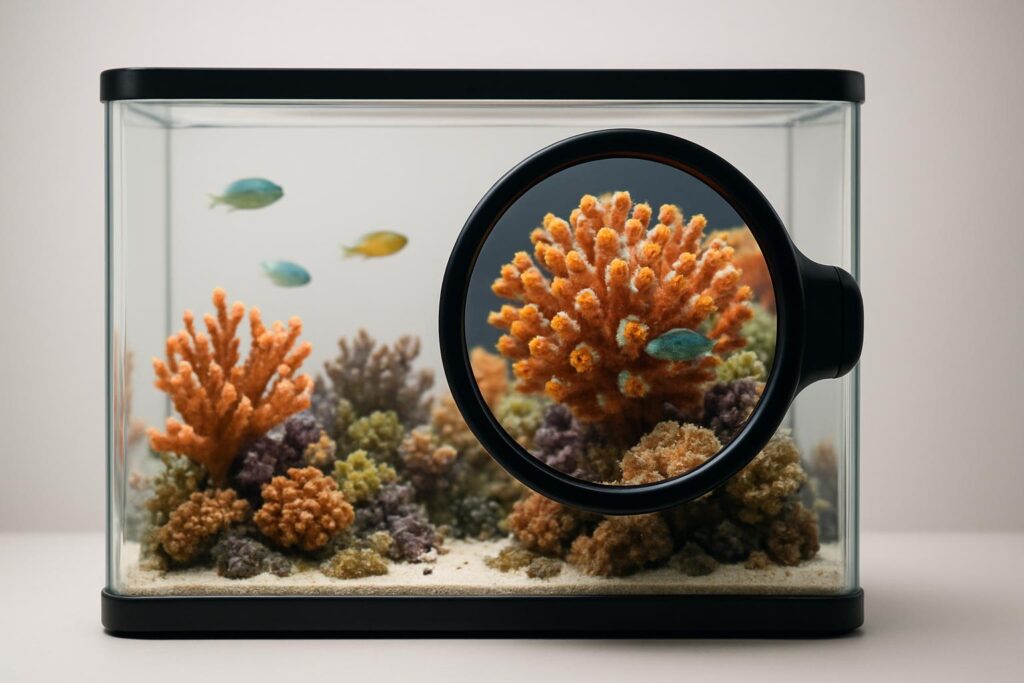
Getting a clear, close look at fish, polyps, and tiny critters can change how you care for your aquarium. A good magnifying viewer helps you spot early signs of disease, check coral polyp extension, identify pests before they spread, and enjoy fine details you normally miss. This guide compares four reliable options that work for side-viewing through the glass or top-down over the water. You will find who each pick suits best, how to use them for crisp results, and what to watch out for before you buy.
What to look for in an aquarium magnifying glass
Pick the right tool for your tank and goals. Focus on these points before you decide.
- Viewing style: Side-view magnifiers glide on glass for daily scans. Top-down viewers sit on the surface for color-true coral checks.
- Glass thickness: Magnetic models come in Nano to Max strengths. Match your panel thickness so the viewer tracks smoothly.
- Lens size and power: Larger lenses are easier to use and show more area; moderate magnification keeps the image bright and steady.
- Build and safety: Optical-grade acrylic or glass for clarity. Always avoid trapping sand between lens and panel to prevent scratches.
Top picks: 4 best aquarium magnifying glasses for fish and coral inspection
1) Flipper DeepSee Magnetic Viewer Standard

Neptune Systems A3 Apex Jr. Aquarium Controller - Temperature, pH, Leak Detection & Level Sensor Monitoring System for Freshwater and Saltwater Aquariums
View on AmazonThe Flipper DeepSee Standard is a go-to side-viewing magnifier for medium to larger tanks. It uses a large, optical-grade lens and strong magnets to lock on and glide across panels, letting you sweep the rockwork and sandbed without getting your hands wet.
Why it helps: It makes quick, close inspections simple. Scan fish for spots or frayed fins, check coral polyp extension and tissue, and hunt for pests on the move without chasing focus. The generous lens keeps the image bright and comfortable for longer sessions.
Best for: Mixed-reef and fish-only tanks with medium to thicker glass or acrylic. Great when you want a single viewer that covers most day-to-day needs.
Key features: Magnetic mount, optical-grade lens with moderate magnification, smooth tracking. Available in multiple strengths across the lineup to match panel thickness. The wet side floats to prevent drops into rockwork.
Setup tips: Clean both the tank panel and lens. Start at low speed and glide in overlapping passes. Angle a small flashlight near the lens to highlight details. Keep fine sand away from the contact area to avoid scratches.
Potential downsides: Moderate power may not reveal the tiniest flatworms or copepods in full detail. Edges can collect biofilm and need a quick wipe. Very thick glass needs a higher-strength version from the same line.
2) Flipper DeepSee Magnetic Viewer Nano

Flipper Aquarium Magnifying Glass, DeepSee Magnetic Viewer - Nano 3" Black | For reef & saltwater tanks, optical lens, hands-free underwater use, fits walls to 3/8" thick, see corals, fish & aquascapes
View on AmazonThe DeepSee Nano brings the same clear, stable viewing to small aquariums where space is tight. Its compact lens and lighter magnets are tuned for thinner panels, so you still get smooth movement without drag or drift.
Why it helps: Nano tanks pack life into small spaces. This viewer lets you zoom in on shrimp, gobies, zoas, and encrusting corals where detail matters but room is limited.
Best for: Pico and nano reefs, betta and shrimp tanks, and any system with thin glass or acrylic where a standard viewer feels bulky.
Key features: Smaller optical-grade lens, clean image with moderate magnification, magnetic mount matched to thin panels. The wet side floats for easy retrieval.
Setup tips: Wipe the viewing spot before use. Move slowly; in smaller tanks tiny nudges shift the field a lot. Pair with a penlight for shadowed areas under overhangs.
Potential downsides: A smaller lens shows less area at once, so scans take longer. On curved or bowed fronts, alignment requires more care to keep the image sharp.
3) Innovative Marine Aqua Gadget AccuView Top-Down Viewer
Side-viewing does not always show true coral color or growth tips. The AccuView sits on the water surface and removes ripples and shimmer so you can evaluate corals from above, where light hits directly and detail stands out.
Why it helps: Top-down viewing reveals polyp extension, coloration shifts, growth ridges, and pest tubes that hide from side angles. It is ideal for frag placement and quick health checks during maintenance.
Best for: Reef keepers who want accurate color assessment and close coral inspection without glare or surface distortion.
Key features: Floating top-down window with optical clarity. Mild magnification with a clean, flat field. Simple, hands-on use during feeding or maintenance.
Setup tips: Turn off wavemakers and return pump for a few minutes to calm the surface. Set the viewer gently on the water and lean in. Rinse and dry after use to prevent salt creep marks.
Potential downsides: Only works from above, so it does not replace a side viewer. You hold or steady it while looking, and temperature differences can cause brief fogging until it equalizes.
4) Polyplab Coral View Lens with Macro for Smartphones
When you want to capture and inspect tiny details, a clip-on macro lens with reef color filters adds another layer of precision. Polyplab’s set includes a macro lens and orange filters that cut blue light so both your eyes and phone screen see clean, accurate detail.
Why it helps: Use your phone as a live magnifier and documentation tool. This is effective for zooming in on polyp structure, vermetid snail tubes, algae filaments, and early tissue recession, while also recording clear photos and video for tracking changes.
Best for: Reefers who want close-up inspection plus photos. Works for quick pest ID, frag listings, and sharing progress.
Key features: Clip-on macro lens with color-correction filters, fits most smartphone cameras, fast to mount and remove. Combines well with a magnetic viewer to stabilize your angle through glass.
Setup tips: Clean the panel and the phone lens. Remove thick phone cases to reduce vignetting. Move the phone closer or farther to focus rather than relying on digital zoom.
Potential downsides: Through-glass focusing can be finicky on thick panels. You need steady hands or a brace point to avoid blur, and there is a short learning curve to nail sharpness.
Quick buying and usage checklist
Match the viewer to your tank
Choose magnet strength that matches your glass or acrylic thickness so the viewer does not slip or feel hard to move. For nanos, lighter magnets track smoother and protect delicate panels.
Clean before you scan
Wipe the lens and the viewing spot on the tank. Even a thin film or a stray sand grain degrades clarity and risks scratches. Rinse the lens after use to keep it spotless.
Light for detail
A small flashlight angled along the panel reveals texture, pests, and early tissue changes. For top-down checks, pause flow so the surface stays flat and sharp.
Use the right tool for the job
Side viewers excel at routine fish checks and scanning rockwork. Top-down windows show truest coral color and growth. Smartphone macro adds record-keeping and micro-detail when you need it.
Conclusion
A clear, stable view is the fastest path to better livestock health and smarter decisions. For everyday side-view scans on medium tanks, the Flipper DeepSee Standard is the balanced pick. For small systems, the DeepSee Nano keeps things nimble without giving up clarity. For color-true coral evaluation, the Innovative Marine AccuView shines during maintenance windows. To document details and zoom in further, a Polyplab macro lens with filters turns your phone into a practical inspection tool. Use them clean, move slowly, add thoughtful lighting, and you will notice more, earlier, with less effort.
FAQ
Q: Do magnetic viewers scratch glass or acrylic?
A: They are safe when clean, but always check for sand or debris before sliding and rinse the lens after use to avoid scratches.
Q: Will a magnifier help me find coral pests early?
A: Yes, moderate magnification plus a small flashlight makes it easier to spot things like vermetid snail tubes, algae filaments, and early tissue changes.
Q: Should I use side-view or top-down for color checks?
A: Top-down viewing gives the truest color and detail because it removes surface distortion, which is why a floating viewer excels here.
Q: How important is matching magnet strength to glass thickness?
A: Very important; a weak magnet drifts and a too-strong one is hard to move, so choose a version that matches your panel thickness.
Q: Any simple tips for sharper results?
A: Clean the glass and lens, move slowly, add angled light, and turn off pumps for top-down viewing to keep the surface flat.