
We are reader supported. When you purchase through links on our site, we may earn an affiliate commission. Also, as an Amazon affiliate, we earn from qualifying purchases.
Feeding stations turn messy, scatter-prone meals into controlled, predictable feedings. Fish learn where to eat, food stops swirling into filters, and you gain clear sightlines to observe appetite and behavior. In 2026, a few designs stand out for reliability, simplicity, and compatibility with today’s tanks and feeders. This guide breaks down what matters and reviews four proven options for freshwater and saltwater setups.
What a feeding station does
A feeding station corrals food to one spot. Flakes stop drifting across the surface. Pellets drop in a defined column that midwater fish can intercept. Frozen foods stay contained long enough for fish to graze without blasting into the overflow. The result is less waste, steadier water quality, and calmer, more efficient feedings.
Stations also help you train a routine. Fish cue into a fixed location, which reduces frenzied surface scrambles and gives shy species a fair chance to eat. Over time, you can measure portions better, cut back on excess, and keep filters cleaner.
How we chose
We prioritized designs that are easy to install, stable in real-world flow, and quick to clean. We looked for compatibility with common foods and, where useful, with automatic feeders. Each pick has a clear use case so you can match the station to your tank size, flow pattern, and stocking.
4 Best Aquarium Feeding Stations for 2026
EHEIM Feeding Station
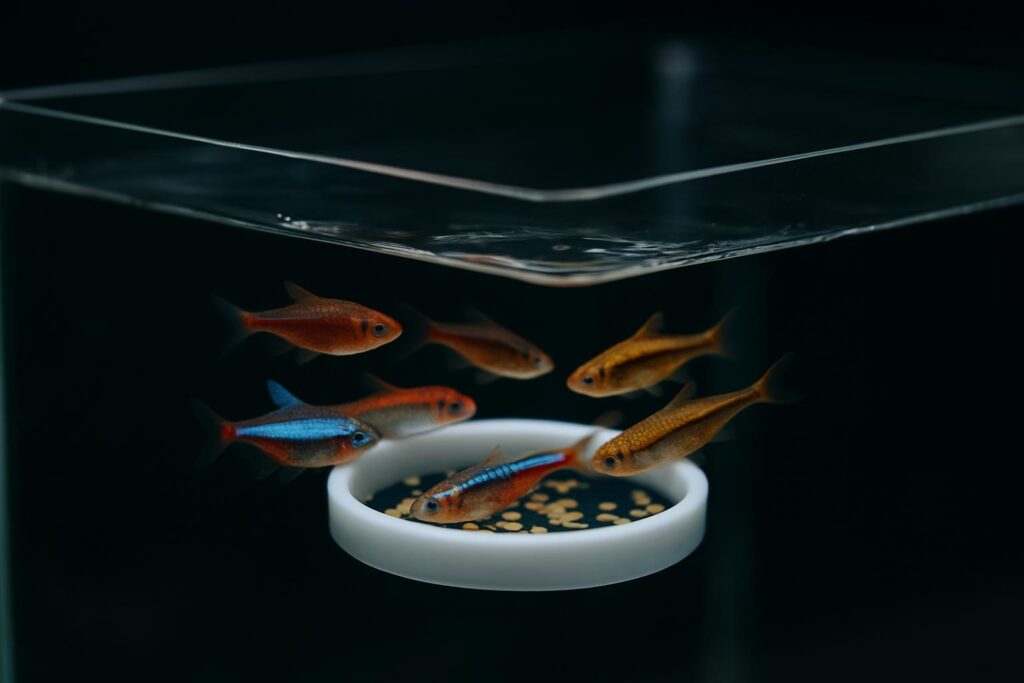
What stands out: A rigid mount clamps to the rim and holds a cup-shaped basin below the surface. The basin concentrates food where fish can approach from all sides. It also aligns well with popular auto feeders for hands-off schedules.
Why it helps: The basin keeps flakes and pellets from skimming off to the filter, so more food ends up in fish, not in media. Because the food sits slightly submerged, midwater species feed confidently without surface chaos. It is one of the simplest ways to cut waste and stabilize water quality.
Best for: Community tanks, aquariums with moderate flow, and anyone running an automatic feeder. Great for tetras, rasboras, barbs, livebearers, and similar fish that meet food midwater.
Potential downsides: The mount and basin are more visible than a minimal ring. On very thin or very thick rims, alignment may take patience. The cup needs a quick rinse after each use to avoid biofilm.
Setup tips: Mount in a calmer area away from the strongest outflow. If using an auto feeder, synchronize drop timing and portion so the food lands squarely in the basin. Start with small amounts to help fish learn the new spot.
Two Little Fishies MagFeeder
What stands out: A magnetic mount holds a compact feeding cup to the glass. You can place it at almost any depth, which is ideal for frozen preparations and targeted feeding in reef tanks and planted tanks with flow.
Why it helps: The cup contains thawed frozen or small pellets so food is not blasted straight into the overflow. Fish can graze from the cup and intercept food as it gently drifts out, reducing waste and making observation easy.
Best for: Reef tanks, sumps with overflows, and freshwater setups with strong circulation. Excellent for feeding frozen mysis, brine, and micro pellets to fish and invertebrates that prefer midwater or controlled flow.
Potential downsides: Magnet strength is limited on very thick glass. The cup is compact, so large predatory fish may empty it quickly. It needs a quick rinse to prevent residue.
Setup tips: Thaw frozen food in a small amount of tank water before placing it in the cup. Mount the cup at mid-depth and a little off-axis from the strongest current so food drifts slowly, not in a jet. Keep the magnet faces clean for a secure hold.
sera Feed A Ring
What stands out: A simple floating ring tethered to a suction-cup arm creates a calm surface pocket. Flakes and floating pellets stay put instead of skating along the surface film.
Why it helps: Surface feeders line up under the ring and eat efficiently, while midwater fish grab what drifts down. It minimizes surface slicks and cuts the amount of food pulled into hang-on or canister intakes.
Best for: Bettas, gouramis, livebearers, and peaceful community fish in low to moderate flow. Perfect for nano tanks where scattered food quickly fouls filters.
Potential downsides: Works best with floating foods; it does not manage sinking sticks before they drop out of the ring. Suction cups require clean glass for a reliable hold, and the ring can wander if the cup loses grip.
Setup tips: Clean the glass patch and moisten the suction cup for a firm seal. Place the ring away from the direct output of filters or wavemakers. Feed smaller portions at first so fish immediately associate the ring with meals.
Aqueon Feeding Ring
What stands out: A straightforward ring with a holder that positions food consistently at the surface. The design favors simple daily use and quick rinses after feeding.
Why it helps: It creates a predictable surface zone where flakes and small pellets stay contained. Fish learn the spot quickly, which reduces frantic surface chasing and helps you dial in portions.
Best for: Beginners, nano tanks, and community aquariums that need tidy surface feedings without hardware bulk. Works well for routine flake and micro pellet meals.
Potential downsides: The arm length and plastic hardware may be less adaptable on unusually braced tanks. In stronger flow, you may need to reposition to keep food from spilling over the ring.
Setup tips: Choose a low-flow corner and seat the holder firmly. Rinse the ring after each meal to prevent buildup. Start with half portions and add as needed so no food exits the ring unused.
Buying tips and quick troubleshooting
Match the station to your flow: Rings suit calm to moderate currents. Magnetic cups excel in higher flow or near overflows where you want controlled release. Basin-style stations balance both by submerging food slightly.
Pick based on food type: Floating flakes and micro pellets favor rings. Pellets and thawed frozen often work better in a cup or basin that sits below the surface. Mixed diets may justify owning two styles.
Keep suction cups and magnets clean: Clean glass and a light rinse on the mount keep holds secure. If a cup loses grip, move to a freshly cleaned patch and avoid oils on the contact surface.
Feed less, observe more: Stations make it easy to see exactly what is eaten. Stop adding food when fish slow down. Remove leftovers to prevent nutrient spikes.
Conclusion
Feeding stations streamline the most important routine in aquarium care. Choose a ring for clean surface feeds, a magnetic cup for targeted control in flow, or a basin for auto-feeding and midwater eaters. The four picks above cover nearly every tank, food type, and experience level. Install with care, feed mindfully, and enjoy clearer water, calmer fish, and reliable, repeatable results.
FAQ
Q: Do feeding stations really reduce waste and improve water quality?
A: Yes. By keeping food contained, more is eaten and less is pulled into filters or left to decay, which helps stabilize water quality.
Q: Which feeding station works best with automatic feeders?
A: The EHEIM Feeding Station aligns well with automatic feeders, dropping food into a basin that midwater fish can reach easily.
Q: Are magnetic feeding stations suitable for thick glass tanks?
A: Magnetic mounts can struggle on very thick glass. Check placement and keep magnet faces clean for the best hold.
Q: What foods pair best with rings versus cups or basins?
A: Rings excel with floating flakes and micro pellets. Cups or basins handle pellets and thawed frozen foods more cleanly below the surface.
Q: How do I keep a suction-cup feeding ring from drifting?
A: Clean the glass where it mounts, moisten the cup for a firm seal, and place the ring out of direct flow from filters or wavemakers.