
We are reader supported. When you purchase through links on our site, we may earn an affiliate commission. Also, as an Amazon affiliate, we earn from qualifying purchases.
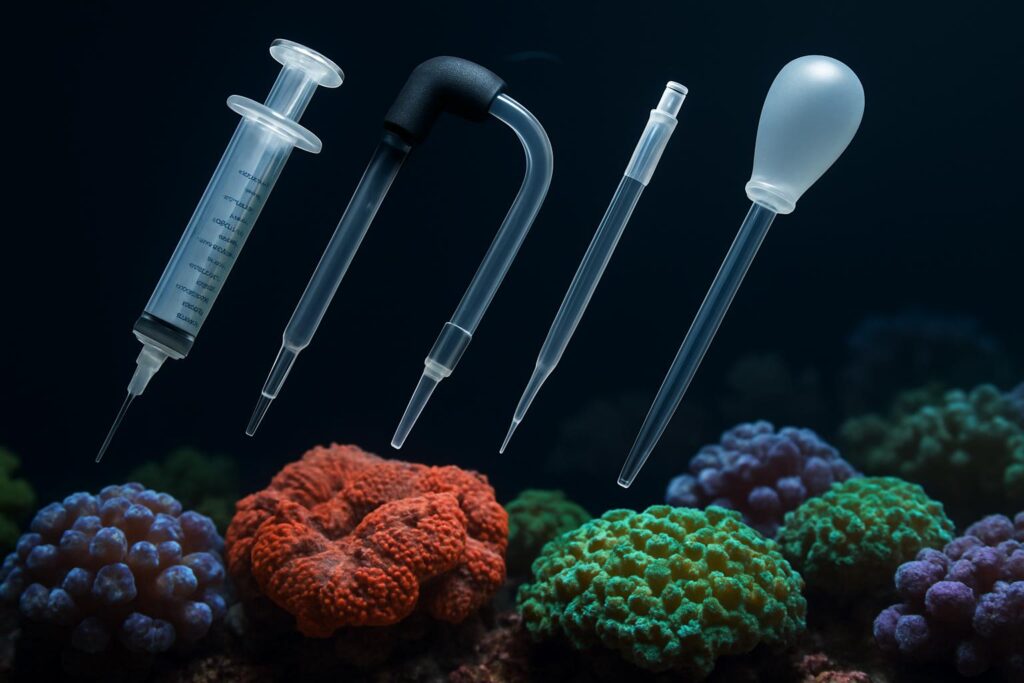
Feeding corals is not just about dropping food in the tank. Target feeding with the right tool controls waste, keeps nutrients balanced, and helps LPS and NPS corals extend their feeding response. A good coral feeder lets you place the right food at the right spot without blasting tissue or stirring detritus. Below you will find four proven coral feeders that make this easier in 2026, with clear use cases, setup tips, and caveats to avoid common mistakes.
How to Choose a Coral Feeder in 2026
Key factors that matter
– Reach and control: Longer, rigid tubes help you reach deep rockwork and large tanks without getting your hands wet.
– Tip size and precision: Narrow tips are better for small-polyp corals and liquid foods. Wider tips handle chunkier LPS foods like mysis or small pellets.
– Flow management: The best results come when you can place food gently and let corals grab it. Your feeder should not blast tissue.
– Cleaning and durability: Food-grade materials and detachable parts make cleaning fast and reduce bacterial growth.
– Versatility: A tool that can feed, spot-treat, and even blow off light detritus adds value.
Kent Marine Sea Squirt Feeder
What stands out
The Kent Marine Sea Squirt is a long, extendable feeder with a comfortable plunger and a clear tube for easy viewing. It is built for precise target feeding without placing hands in the tank, and the reach is ideal for deeper systems and hard-to-access colonies.
Why it helps
The extendable body gives reliable control when placing food on LPS corals and near NPS polyps. Graduated markings help portion liquid foods and prevent overfeeding that can fuel algae or elevate nutrients.
Best for
– LPS corals like Acanthastrea, Favites, Scolymia, and Euphyllia
– NPS corals that need regular spot feeding
– Medium to large tanks where extra reach prevents arm-in-tank sessions
How to use it well
1) Mix food in a separate cup with tank water until it suspends evenly.
2) Turn off pumps for 10–15 minutes to reduce flow and drift.
3) Load the feeder, approach slowly, and dispense small amounts right over mouths or tentacles. Re-dose in small bursts instead of one large push.
Potential downsides
It is longer than a simple pipette, so storage space is needed. The plunger and tube should be rinsed and air-dried after each session to avoid buildup.
Two Little Fishies Julians Thing
What stands out
Julians Thing is a modular target feeder with rigid tubing, flexible connectors, and a squeeze bulb. It delivers a smooth, predictable flow that is easy to control with one hand while your other hand manages light or feeds a second coral.
Why it helps
Control and consistency reduce wasted food. The rigid sections reach deep crevices while the bulb gives fine control over flow rate. This can coax feeding responses without blasting the polyp.
Best for
– Reefers who want one-handed precision
– Spot feeding meaty foods to LPS corals
– Targeting areas under overhangs or behind rock structures
How to use it well
1) Prepare a smooth food slurry without large clumps.
2) Power down flow and approach slowly from the side of the polyp, not directly head-on.
3) Gently pulse small amounts, wait for a feeding response, and repeat as needed.
Potential downsides
Bulb feeders need consistent cleaning so food does not dry inside the bulb. Rinse thoroughly with warm freshwater and let parts air-dry fully.
What stands out
This is a precision pipette-style feeder often supplied with interchangeable tips. It is simple, durable, and ideal for fine particle foods such as powdered coral foods and rotifer blends.
Why it helps
The narrow tip minimizes water turbulence and lets you place microfoods exactly where small polyps capture best. The rigid body keeps your hand far from the coral, reducing accidental contact.
Best for
– SPS and small-polyp LPS corals that prefer fine particles
– Dosing phytoplankton or fine suspensions to filter feeders
– Nano tanks where space is tight and precision is critical
How to use it well
1) Mix fine foods until fully hydrated to avoid clogging the tip.
2) Stop flow and target-feed with short, gentle pulses around the polyp ring rather than straight into the mouth.
3) Rinse the feeder immediately after use to prevent residue.
Potential downsides
The narrowest tips can clog if the food mix contains large particles. Hydrate powders well and strain chunky foods if needed.
IceCap Coral Feeder 22 inch
What stands out
The IceCap Coral Feeder is a long, rigid feeder with a soft bulb for smooth delivery. The length makes it easy to reach low rockwork or the back of the aquascape, and the clear tube shows exactly how much you are dosing.
Why it helps
Length plus a soft bulb creates a gentle stream that avoids tissue damage on fleshy corals. It is also handy for placing small amounts of food repeatedly without stirring the sandbed.
Best for
– Medium to large tanks with deeper aquascapes
– LPS that dislike high-velocity feeding streams
– Hobbyists who want a simple, durable tool with reliable reach
How to use it well
1) Suspend food evenly in tank water and load the bulb slowly to avoid air bubbles.
2) Shut off return and wavemakers temporarily.
3) Hover just above coral mouths and squeeze gently in short intervals.
Potential downsides
Bulb-style feeders can draw in air if squeezed too fast when loaded. Slow, steady loading avoids this and protects pump health when flow resumes.
Feeding Technique That Protects Coral Health
Get the timing right
Most corals feed more readily after lights dim or during a gentle blue spectrum period. If your schedule does not allow that, feed during the day but reduce flow and give corals time to grab food before pumps restart.
Portion control prevents problems
Start with small portions and watch polyp response. Overfeeding creates nutrient spikes and film algae. A practical baseline is one to three target feedings per week depending on coral type and nutrient goals.
Food type and tip size must match
Choose narrow tips for powdered foods and rotifers, and wider tips for mysis or small pellets. This keeps the stream gentle and food consistent.
Clean after every session
Rinse feeders with warm freshwater, operate bulbs or plungers under the faucet to clear residue, and let everything air-dry. Dedicated tools for each tank reduce cross-contamination.
Conclusion
If you want consistent growth and polyp extension without nutrient swings, a reliable coral feeder is essential. The Kent Marine Sea Squirt offers long reach and measurement control. Two Little Fishies Julians Thing delivers smooth, one-handed precision. The PolypLab Premium Coral Feeder excels with microfoods and tight spaces. The IceCap Coral Feeder gives gentle flow with dependable length. Pick based on your coral types, tank size, and preferred food textures. Keep flow off during feeding, portion modestly, and clean the tool every time. Simple steps, better outcomes.
FAQ
Q: Do I need a coral feeder if I keep only soft corals
A: Many soft corals do fine on light and dissolved nutrients, but a feeder helps place occasional microfoods precisely, keeping waste low.
Q: How often should I target feed corals
A: A practical baseline is one to three times per week depending on coral type and nutrient goals. Start small and adjust based on response.
Q: Should I turn off pumps while feeding
A: Yes. Turn off return and wavemakers for 10–15 minutes so food settles on the coral instead of drifting away.
Q: Which tip size should I use for different foods
A: Use narrow tips for powdered foods and rotifers, and wider tips for chunkier LPS foods like mysis or small pellets.
Q: How do I clean coral feeders after use
A: Rinse with warm freshwater, operate bulbs or plungers to clear residue, and air-dry. Using dedicated tools per tank reduces cross-contamination.