
We are reader supported. When you purchase through links on our site, we may earn an affiliate commission. Also, as an Amazon affiliate, we earn from qualifying purchases.
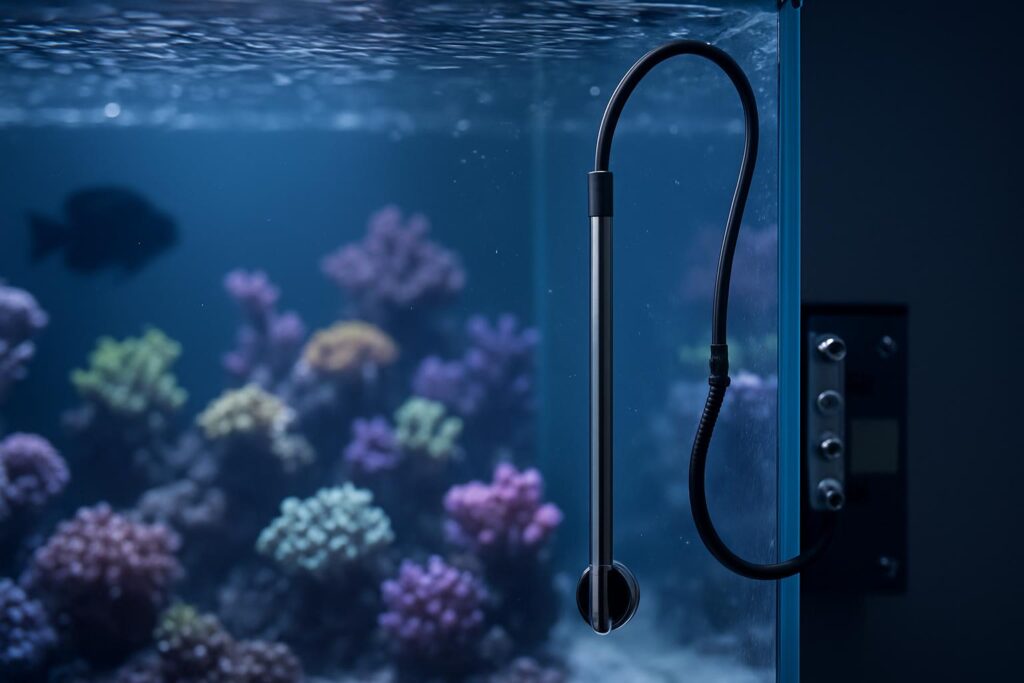
Stray voltage in an aquarium is more common than most hobbyists realize. Powerheads, heaters, lights, and pumps can leak small amounts of electricity into the water. Fish sense this and show stress, odd swimming, or unexplained lethargy. A grounding probe pairs with a GFCI outlet to shunt stray voltage to ground and trip protection fast. If you want fewer shocks during maintenance and calmer livestock, a grounding probe is a simple layer of safety you can add in minutes.
Why a Grounding Probe Matters
Stray voltage is not always dangerous by itself, but it is a signal that something is off. Sensitive fish and invertebrates can react to it. You might even feel a tingle when your hand is in the water. A proper grounding probe offers a low-resistance path to ground, stabilizing your system and helping your GFCI outlet do its job.
Do You Need One
If you run multiple powered devices or notice fish irritation without clear cause, a probe is a smart addition. It is not a fix for faulty gear. It is a safety tool that works best alongside a GFCI outlet, drip loops, and regular equipment checks.
Safety Essentials First
Use a GFCI outlet or adapter. Make drip loops on every power cord. Replace cracked heaters and frayed cables. The probe reduces risk but only within a complete safety setup.
How We Chose These Probes
Selection focused on corrosion resistance, cable quality, secure mounting, and real-world reliability. Titanium rods, sealed connections, and ring lugs for solid chassis grounding all scored higher. Simplicity and clear installation also mattered for beginner friendliness.
5 Best Aquarium Grounding Probes for Electrical Safety
1) American Marine Ground Probe
The American Marine Ground Probe is a long-standing favorite for reef and freshwater systems. The build is robust, installation is straightforward, and the hardware feels purpose-built for wet environments.
Why it helps: Provides a reliable path to ground to stabilize stray voltage and support fast GFCI action.
Best for: Hobbyists who want a proven, no-nonsense probe for any tank size, including reef systems with sumps.
Key features: Corrosion-resistant probe, quality cable, and solid ring connector for grounding. Simple suction-cup mounting keeps it where you place it.
Installation tips: Place the probe in a high-flow area of the sump or display. Connect the ring lug to a grounded screw on your power center or GFCI outlet plate as per manufacturer guidance.
Potential downsides: Premium pricing compared to no-name options, but build quality and consistency are strong.
2) Aquatic Life Titanium Grounding Probe
Aquatic Life focuses on corrosion resistance with a titanium probe and tidy cable management. It is beginner friendly and fits most aquarium setups.
Why it helps: Titanium resists corrosion in both freshwater and saltwater, keeping the connection stable over time.
Best for: Reefers and planted tank keepers who want a durable, set-it-and-forget-it probe.
Key features: Titanium rod, suction cup mount, insulated wire, and a secure termination for grounding.
Installation tips: Mount vertically in an area with steady flow. Confirm the grounding connection is tight and free of salt creep.
Potential downsides: The suction cup can harden with age; plan to replace the mount if it loosens over time.
3) Aquatop Titanium Grounding Probe TGP-1
Aquatop’s TGP-1 is compact and easy to hide, suitable for small nano tanks up to larger displays. The cable is flexible, which makes routing behind stands simple.
Why it helps: Offers a stable ground path to minimize tingling sensations during maintenance and reduce stress from stray voltage.
Best for: Small to medium aquariums where minimal visual impact is important.
Key features: Compact titanium probe, flexible insulated wire, and simple mounting hardware.
Installation tips: Place near a return or powerhead for consistent water flow around the probe. Keep the connection point dry and protected.
Potential downsides: The smaller form factor is great for hiding but easy to misplace during tank rescapes; take note of its position.
4) Saim Titanium Aquarium Grounding Probe
This budget-friendly probe delivers the basics with a corrosion-resistant rod and straightforward grounding connection. It is a low-cost entry point for better safety.
Why it helps: Even at a modest price, it creates a path for stray voltage to reach ground and supports GFCI operation.
Best for: Beginners setting up their first tank or anyone needing coverage for a quarantine or hospital tank.
Key features: Titanium probe, suction mount, and a simple crimped connector that is easy to attach.
Installation tips: Double-check the crimp and add heat-shrink or self-fusing tape if the connector jacket is loose to keep moisture out.
Potential downsides: Quality control can vary; inspect the connector and cable jacket before first use.
5) MingDak Aquarium Titanium Grounding Probe
MingDak offers a clean, simple probe with dependable materials. It is often chosen for its balance of cost and ease of use across both freshwater and saltwater systems.
Why it helps: Keeps your system grounded to reduce stray voltage spikes that fish can detect.
Best for: Mixed equipment builds with multiple pumps, wavemakers, and heaters where repetitive small leaks add up.
Key features: Titanium body, firm suction mount, and clear, easy-to-route cabling.
Installation tips: Position the probe where it will not get buried by substrate or blocked by rockwork. Check the suction point monthly.
Potential downsides: The mounting cup may need periodic replacement to maintain a firm hold on textured glass or acrylic.
Quick Installation Guide
1. Power down your equipment and verify you have a GFCI outlet or adapter in place. 2. Rinse the probe with fresh water. 3. Mount the probe in the sump or display where water flow is steady. 4. Route the cable with a drip loop. 5. Attach the ring or terminal to a proper ground point as directed by the manufacturer. 6. Restore power and test your GFCI by pressing the test button to confirm it trips correctly.
Maintenance and Testing Tips
– Inspect the cable and connector monthly for salt creep or corrosion. – Replace suction cups when they harden. – Test your GFCI monthly. – If you feel tingling during maintenance, unplug devices one by one to identify the source, then repair or replace the faulty item.
How to Choose the Right Probe
– Material: Prefer titanium for saltwater. – Connection: A solid ring terminal is more secure than bare wire. – Mounting: Suction cup or bracket that actually holds. – Cable length: Enough to reach from your mounting point to a reliable ground without strain. – Brand reliability: Consistent reviews and parts availability help over the long term.
Conclusion
A grounding probe is a simple upgrade that reduces stray voltage and helps your GFCI do its job. It will not fix broken equipment, but it tightens your safety net and can reduce stress signals fish detect. Choose a corrosion-resistant probe, install it with a proper ground, and keep up with GFCI testing and equipment checks. The result is a calmer, safer aquarium for you and your livestock.
FAQ
Q: Do I still need a GFCI if I use a grounding probe?
A: Yes. A grounding probe works best with a GFCI outlet or adapter. The GFCI is essential safety equipment.
Q: Where should I place the probe in my aquarium system?
A: Put it in a high-flow area of the sump or display and keep the connector dry and securely grounded.
Q: Will a grounding probe fix faulty equipment?
A: No. It reduces stray voltage but does not repair damaged heaters, pumps, or cables. Replace faulty gear.
Q: How often should I maintain or check the probe?
A: Inspect monthly for salt creep, cable damage, and suction cup wear. Test your GFCI monthly.
Q: What material is best for saltwater tanks?
A: Titanium is preferred for corrosion resistance in both freshwater and saltwater.