
We are reader supported. When you purchase through links on our site, we may earn an affiliate commission. Also, as an Amazon affiliate, we earn from qualifying purchases.
Even water circulation is the difference between a healthy, stable aquarium and one that struggles with dead spots, algae, and inconsistent temperatures. A spray bar spreads the filter’s return flow across a line of small holes, creating a gentle, even current. It reduces turbulence, improves gas exchange, and makes life easier for plants, shrimp, and fish that dislike strong jets. Below is a clear guide to choosing and using a spray bar, followed by five proven options that deliver smooth, balanced flow in real tanks.
What a spray bar actually does
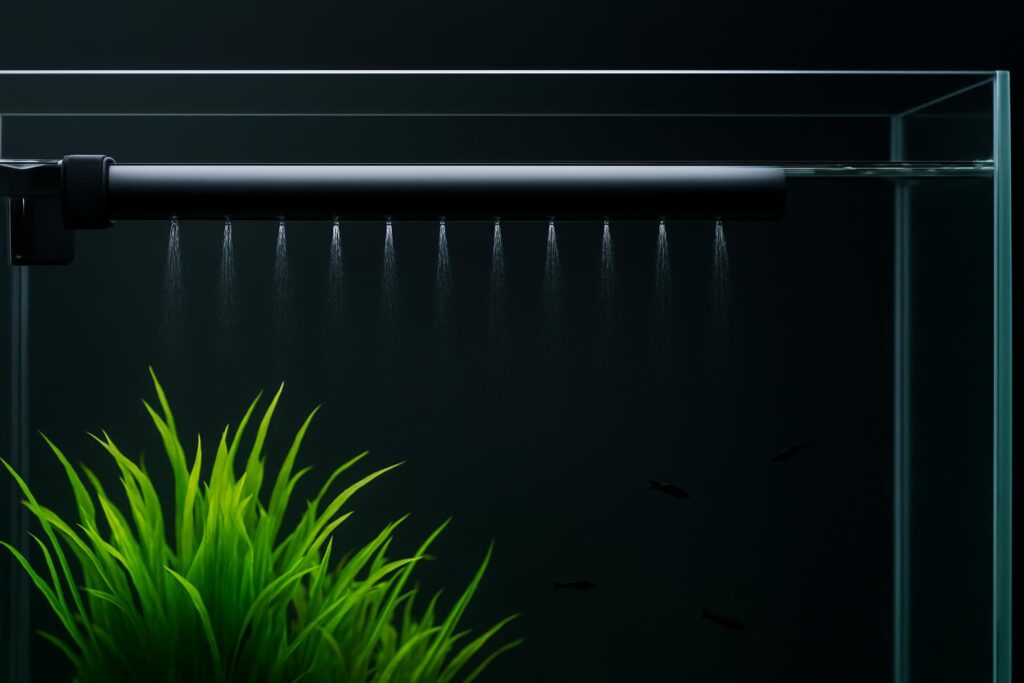
A spray bar converts a single outflow into many smaller streams. This softens the impact on fish and spreads circulation across the entire tank. You get better oxygenation at the surface, fewer dead zones behind hardscape, and more stable temperature and nutrient distribution. Planted tanks benefit because CO2 and fertilizers disperse more evenly, and aquascapes stay cleaner as debris is moved toward the filter intake instead of collecting in corners.
How to choose the right spray bar
Match hose size and filter power
Check your canister or pump tubing. Most common sizes are 12/16 mm and 16/22 mm. A proper fit prevents leaks and random bursts of flow. Also match bar length and hole count to your filter’s rated flow. Undersized bars can blast too hard through each hole. Oversized bars can reduce velocity too much.
Pick the right length and orientation
Longer bars spread flow more evenly. Shorter bars give more punch. Many kits let you add or remove segments. Orientation matters too. Aim slightly upward to break surface film, or a few degrees below the surface to quiet splashing and reduce evaporation.
Consider build, color, and ease of maintenance
Rigid plastic is light and easy. Modular sets allow custom layouts. Dark colors blend in. Smooth internals are easier to clean. If your water is hard or heavily planted, expect to clean small holes regularly to keep flow even.
Noise, evaporation, and livestock needs
Spray bars can be almost silent if placed just under the surface. Higher placement increases ripples and gas exchange but can raise evaporation. For bettas, gouramis, shrimp, and fry, aim for gentler flow. For goldfish or river fish, you may run more surface agitation.
Best 5 aquarium spray bars for even water circulation
Fluval Spray Bar Kit A234 for 07 and 06 Series
This kit integrates cleanly with Fluval 07 and 06 canister filters. It includes modular bar sections, an elbow, end cap, and suction cups so you can tailor the length across different tank sizes. Setup is straightforward and the flow output is consistent once the holes are oriented correctly.
Why it helps: Modular sections let you span more of the tank, so you can eliminate dead spots without blasting sensitive fish. The design is light, easy to mount, and simple to rinse when holes accumulate biofilm or debris.
Best for: Fluval canister owners who want a matched, no-fuss fit and a dark, low-visibility bar that blends into the background.
Potential downsides: Plastic clips can loosen if repeatedly removed and remounted. Hole size is fixed, so very high-flow setups may require partially capping holes or shortening the bar to maintain velocity.
Setup tip: Start with the bar just below the surface and angle it upward a few degrees. Watch surface movement from end to end. If one side is weak, add or remove a segment to balance the line.
EHEIM Installation Set 2 Spray Bar 12/16 mm, 4005300
Trusted for decades, EHEIM’s Installation Set 2 is a modular outflow system with spray bar segments that fit 12/16 mm tubing. It allows clean routing along the glass and controlled diffusion across the tank length. The set is durable and easy to reconfigure during rescapes.
Why it helps: The modular design lets you fine-tune direction and reach. When placed along the back wall near the surface, it creates a gentle, continuous curtain of flow that reduces stagnant corners.
Best for: Classic EHEIM users and anyone running canisters with 12/16 mm lines in medium tanks that need balanced surface movement.
Potential downsides: The classic green plastic is visible in minimalist aquascapes. Tanks over 4 feet long may need an additional segment set or a second return to cover the full span.
Setup tip: Aim two thirds of the holes slightly toward the front glass for a slow forward roll, and angle the final third a little upward to maintain a light ripple across the surface.
Penn-Plax Cascade Canister Filter Spray Bar Kit
This kit is tailored for Cascade canister filters and includes the fittings, elbow, and suction cups needed to convert the standard output into a spray bar. It spreads the Cascade’s strong flow into a calmer, more uniform return that is easier on plants and small fish.
Why it helps: Cascade filters push solid flow. The spray bar softens it, which prevents uprooting in planted tanks while still maintaining strong circulation patterns from end to end.
Best for: Cascade 500 through 1500 owners seeking better flow balance in community aquariums, shrimp tanks, and planted layouts.
Potential downsides: Fitment is tuned for Cascade models. Tolerances matter; if an O-ring or joint is misaligned, small drips can occur until reseated. Expect a modest reduction in perceived flow due to diffusion across multiple holes.
Setup tip: If the jetting feels too soft, shorten the bar or cap a couple of end holes to concentrate velocity. Recheck circulation with a bit of fish food to visualize current paths.
OASE Spray Bar Set for Biomaster Series
OASE’s spray bar set pairs with Biomaster canisters that use 16/22 mm tubing. The matte black finish blends in, and the hardware is robust. It delivers a balanced outflow suitable for high-quality planted displays where consistent, gentle circulation is a priority.
Why it helps: With larger-diameter plumbing, the bar maintains even distribution without abrupt pressure loss. This keeps CO2 and heat more uniform while minimizing stress on delicate livestock.
Best for: Medium to larger planted aquariums and aquascapes running Biomaster 250, 350, or 600 where quiet, even surface movement is important.
Potential downsides: Higher cost than generic kits. Limited compatibility outside the intended hose size. Fine holes need periodic brushing to prevent buildup and maintain even flow.
Setup tip: Position along the back glass, just under the surface, angled 5 to 10 degrees upward to break surface film without splashing. This typically hits the sweet spot between oxygenation and noise.
UPETTOOLS Universal Aquarium Spray Bar Kit, 12/16 and 16/22 mm Options
This budget-friendly, universal spray bar kit comes in common hose sizes and includes elbows, suction cups, and cut-to-fit sections. It is a flexible option for non-brand-specific setups and for hobbyists who tweak layouts often.
Why it helps: The universal approach adapts to many canisters and sumps. You can trim the bar or mix sections to match tank length, which makes it easy to fix dead spots in odd-shaped tanks.
Best for: New hobbyists and tinkerers who want an affordable, adaptable bar for a variety of aquariums and filters.
Potential downsides: Plastic is thinner than premium brands. Tolerances can vary and may require a firm push or a wrap of PTFE tape on joints to get a snug, drip-free seal.
Setup tip: After mounting, run the filter at full power and check every joint for condensation or weeping. If you spot moisture, reseat or reinforce before final cable and hose management.
Positioning and tuning for best results
Start with a light surface ripple
Place the bar just under the surface and angle it slightly up. You should see a gentle, continuous ripple across the full length. This maximizes gas exchange and keeps biofilm from forming.
Use food flakes to map current
Drop a pinch of flakes and watch how they move. If flakes stall in a corner, rotate the bar a few degrees or shorten the line to increase velocity. If plants sway too much, lower the bar and angle holes toward the glass to diffuse the force.
Balance flow after maintenance
As your filter clogs over time, the pressure across the spray bar changes. Re-check orientation after cleaning the filter and after brushing the holes to keep circulation even throughout the maintenance cycle.
Conclusion
A good spray bar stabilizes your tank by spreading the return flow, boosting oxygenation, and eliminating dead spots. Match the bar to your hose size and tank length, place it near the surface, and tune angle and hole coverage until you get a smooth ripple and steady circulation from end to end. The five options above cover brand-specific and universal needs, from premium planted displays to budget-friendly community aquariums. Pick the kit that fits your plumbing, keep the holes clean, and your livestock will show the difference in their behavior and health.
FAQ
Q: How do I choose the right spray bar size for my setup?
A: Match the bar to your hose size and filter flow. Most systems use 12/16 mm or 16/22 mm. Longer bars spread flow; shorter bars increase velocity.
Q: Where should I position the spray bar for best oxygenation?
A: Place it just under the surface and angle it slightly upward to maintain a gentle, continuous ripple across the tank.
Q: Will a spray bar reduce my filter’s flow too much?
A: It diffuses the output, which can feel gentler, but proper sizing and bar length maintain effective circulation without significant performance loss.
Q: How can I quiet the spray bar without losing gas exchange?
A: Submerge the bar slightly and aim a few degrees upward. You get surface movement for oxygenation with minimal splashing and noise.
Q: How often should I clean the spray bar holes?
A: Check them during regular filter maintenance. Brush or rinse when you notice uneven flow, reduced ripple, or buildup around the holes.