
We are reader supported. When you purchase through links on our site, we may earn an affiliate commission. Also, as an Amazon affiliate, we earn from qualifying purchases.
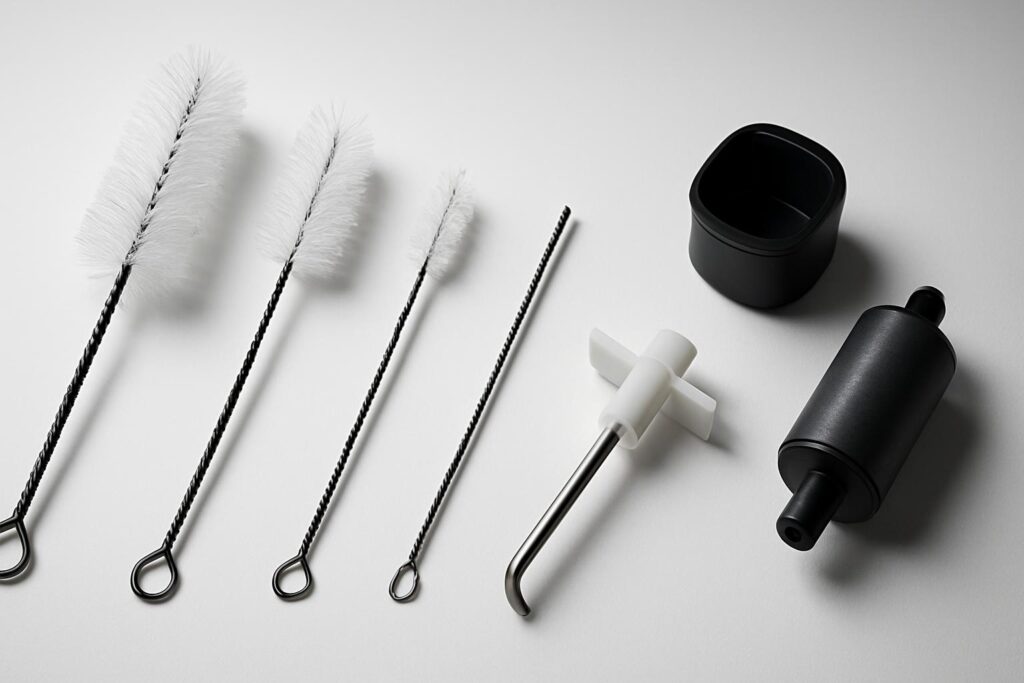
Keeping the impeller and motor housing clean is the fastest way to restore flow, cut noise, and extend the life of your aquarium filter. Slime and mineral scale collect in tight spaces around the impeller, and normal sponges cannot reach it. A dedicated impeller brush solves this by sliding into the well, scrubbing the shaft channel, and clearing debris from the magnet and blades without scratching plastic or ceramic parts.
What to look for in an impeller brush
Right size and reach
A slim, narrow head that matches your impeller well is essential. Look for a small-diameter tip for the well and a slightly larger end for the motor housing. A total length of 6–12 inches covers most hang-on-back and small canister filters. Longer flexible brushes help for deeper wells and intake paths.
Bristle stiffness and material
Nylon bristles offer a safe balance of scrubbing power and protection. They remove biofilm without scratching plastic housings or ceramic shafts. Avoid metal bristles. If you keep soft plastics or rubber bushings in the motor head, stick to medium-soft nylon.
Shaft safety
Many impellers spin on a ceramic or stainless shaft. A gentle brush protects the shaft and the bushing. Do not force an oversized brush into a tight well. Let the bristles do the work with light, controlled strokes.
Corrosion resistance
A stainless-steel or coated core resists rust. Rinse and dry after each use, especially in saltwater tanks. Plastic stems avoid corrosion altogether but can flex more.
Easy to sanitize
Nylon and stainless cores tolerate quick soaks in a mild vinegar solution to remove mineral deposits. After soaking, rinse well with dechlorinated water and air-dry.
How to clean an impeller safely
Unplug the filter and remove it from the tank. Open the motor head, lift out the impeller and shaft, and keep the parts organized. If there is mineral scale, soak the impeller, shaft, and housing in a 1:1 mix of white vinegar and water for 10–20 minutes. Use a small impeller brush to scrub the well, shaft channel, and the crevices around the magnet and blades. Rinse each part with dechlorinated water, dry lightly, and reassemble. Clean every 2–4 weeks, or sooner if you notice reduced flow or unusual noise.
The 4 best aquarium impeller brushes for cleaning filter motors
Aqueon Aquarium Brush Set
This simple set includes a narrow brush that fits the impeller well on many hang-on-back filters and small canisters. The nylon bristles are gentle and the smaller head gets into tight channels around the shaft and magnet. The larger brush in the set helps with intake tubes and the motor housing, making it a versatile starter choice for beginners who want one kit for the whole job.
Why it helps: The small-diameter brush slides into wells most sponges cannot reach, removing slime before it hardens and causes drag or noise.
Best for: Aqueon QuietFlow and similar HOB filters, nano canisters, and general weekly or biweekly maintenance.
What stands out: Gentle nylon bristles, simple plastic stems that do not corrode, and two sizes cover impeller wells and housings.
Potential downsides: The smaller brush is short, so deeper canister wells may require extra reach. Bristles are medium-soft, which can take a few more passes on heavy buildup.
Penn-Plax Double-Ended Aquarium Filter Brush
The Penn-Plax double-ended brush uses a slim tip for impeller wells and a larger end for housings and intake elbows. The stainless-steel core adds control, while nylon bristles clear biofilm efficiently. It is a straightforward, durable tool that covers both precision work and general scrubbing.
Why it helps: The narrow head reaches the well and shaft channel, then you flip the tool to clean the broader motor cavity and intake bend.
Best for: Hobbyists who want one compact brush that handles both tight and open spaces within the motor head.
What stands out: Good stiffness for stubborn slime, easy to rinse clean, and the metal core holds shape over time.
Potential downsides: The steel core can scratch if you push too hard at an angle. Use light pressure and let the nylon do the work. No padded handle, so wet grip can feel slippery.
Fluval Cleaning Brush Set
Designed with Fluval filters in mind, this set provides a small brush ideal for impeller wells along with pieces for intake tubes and corners in the motor head. The nylon bristles are soft enough for ceramic shafts yet firm enough to break down biofilm in a few passes. If you run a Fluval HOB or canister, the fit and finish feel dialed in, but the set also works well on other brands with similar dimensions.
Why it helps: The mini brush targets the well and shaft channel, reducing magnet drag and restoring flow quickly after a short soak and scrub.
Best for: Fluval HOB and compact canisters where precision cleaning around the impeller is critical.
What stands out: Purposeful sizes for tight spaces and gentle bristles that protect plastic housings and ceramic parts.
Potential downsides: Fewer pieces than some generic kits and a higher price for the brand name.
SunGrow Double-Ended Flexible Filter Cleaning Brush
This flexible, double-ended brush offers extra reach for deeper wells, intake paths, and curved housings. The slim tip works for impeller wells while the broader head clears the larger motor space. It is especially useful if your filter has long intake runs or recessed motor heads where short, rigid brushes cannot reach.
Why it helps: The flexible core snakes into hard-to-reach spots, removing slime before it restricts flow or causes startup issues.
Best for: Deeper canister wells, long or curved intake sections, and aquarists who prefer one tool that adapts to tricky angles.
What stands out: Long reach, two useful head sizes, and nylon bristles that are safe for plastic and ceramic parts.
Potential downsides: Flexibility reduces pressure at the tip, so it can take a few extra strokes on stubborn deposits. Pull it out slowly to avoid splatter.
Quick tips for faster, safer cleaning
Soak first, then scrub
A short soak in a 1:1 mix of white vinegar and water softens mineral scale and slime, so you do less brushing and avoid wear on parts.
Match brush to well size
Use the smallest brush that comfortably enters the impeller well. Do not force a brush that bows the housing or binds against the shaft channel.
Be gentle with ceramic shafts
Always use nylon bristles and light pressure on ceramic or glass-like shafts. Wipe the shaft with a soft cloth after brushing.
Rinse and dry the brush
After each use, rinse the brush in clean water and let it air-dry. For saltwater systems, rinse with fresh water to prevent corrosion.
Conclusion
A dedicated impeller brush is a small tool that makes a big impact on filter performance. Choose a brush with a slim head for the well, nylon bristles for safety, and enough reach for your motor housing. The Aqueon set is a solid beginner pick, Penn-Plax brings stiffness and control, the Fluval set offers dialed-in sizing for its filters, and SunGrow adds extra reach for deep or curved paths. Clean every 2–4 weeks or at the first sign of flow loss or noise, and your motor will run smoother, cooler, and longer.
FAQ
Q: How often should I clean my filter impeller and motor housing?
A: Clean every 2–4 weeks, or sooner if you notice reduced flow or unusual noise.
Q: What bristle type is safe for impellers and ceramic shafts?
A: Nylon bristles are best because they scrub biofilm without scratching plastic housings or ceramic shafts.
Q: Should I remove the impeller before brushing the well?
A: Yes, unplug the filter, open the motor head, remove the impeller and shaft, then brush the well and parts separately.
Q: Can I use vinegar to help with stubborn deposits?
A: Yes, soak parts in a 1:1 mix of white vinegar and water for 10–20 minutes, then brush and rinse with dechlorinated water.
Q: How do I choose the right brush size for my impeller well?
A: Pick a slim head that slides in without force and reaches the shaft channel; never push an oversized brush into a tight well.