
We are reader supported. When you purchase through links on our site, we may earn an affiliate commission. Also, as an Amazon affiliate, we earn from qualifying purchases.
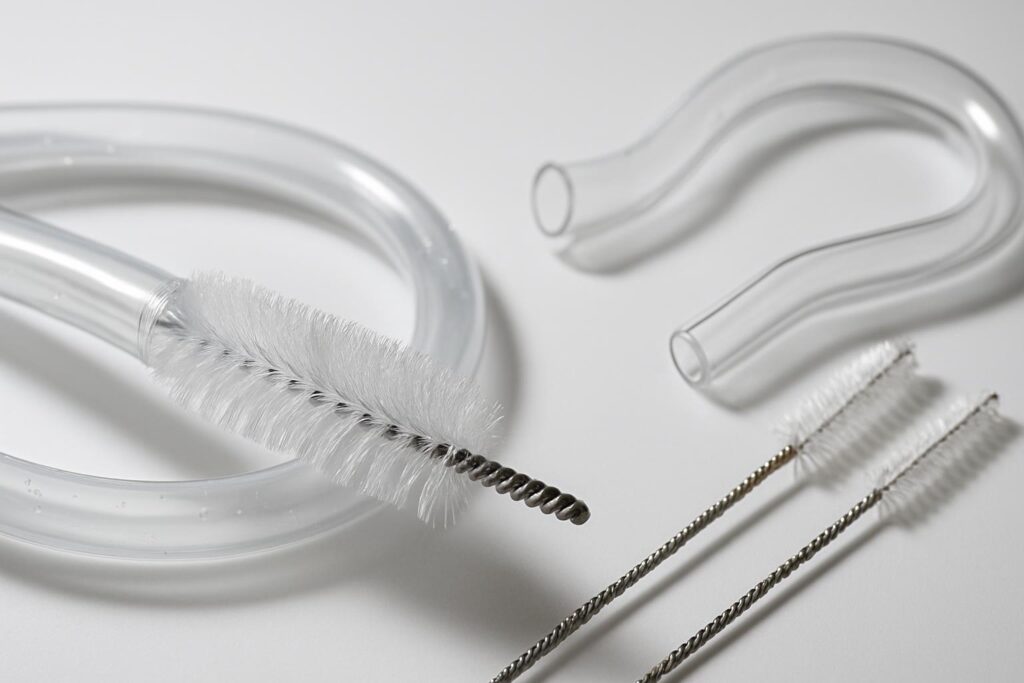
Clear hoses and clean filter pipes keep water flow strong, oxygen levels steady, and equipment running longer. Algae film and bio-gunk build up faster than most beginners expect, especially inside canister filter hoses, U-tubes, lily pipes, and siphon lines. The right tubing brush removes this buildup quickly without damaging soft vinyl or acrylic. This guide breaks down what matters, then reviews four reliable tubing brushes that handle common aquarium sizes and setups.
How to choose an aquarium tubing brush
Length and flexibility
Long hoses need a flexible spring-style brush to reach deep bends. For canister filters and long siphon hoses, prioritize a double-ended flexible brush around 5 to 6 feet. For short intake tubes and hard-to-reach elbows, a short, firm brush adds control.
Diameter fit
Match the brush head to your hose inner diameter. Aim for a snug fit that glides with light resistance. Too small leaves debris behind. Too large risks tearing soft vinyl or sticking in tight bends.
Bristle stiffness
Soft to medium nylon bristles are safe for most vinyl hoses and acrylic pipes. Stiffer bristles remove algae faster but need a lighter touch on delicate parts like lily pipes or narrow inlets.
Build quality and rust resistance
Stainless steel springs resist rust and hold shape. Smooth, capped ends reduce scratching risk when entering hoses. Avoid exposed sharp wire tips.
Extras that help
Double-ended heads clean both large hoses and small fittings in one pass. Detachable heads or accessory brush sets cover multiple tasks: intake strainers, impellers, U-tubes, and spray bars.
The 4 best aquarium tubing brushes for hoses and filter pipes
Fluval Flexible Tube Brush
This flexible, spring-style tube brush is designed for canister filter hoses and tight curves. The long, slim steel coil threads easily through bends, while the nylon brush head clears biofilm and algae without scuffing soft vinyl. It is well balanced for standard 5/8 inch and 1/2 inch hose inner diameters commonly used on freshwater and planted tanks.
Why it helps: The extended flexible shaft navigates long runs and 90-degree bends smoothly. The brush head shape wipes hose walls evenly, restoring flow fast.
Best for: Canister filter return and intake hoses, long siphon hoses, and tanks that develop persistent green film inside tubing.
Potential downsides: The single brush head means you may still want a small detail brush for intake fittings or very narrow pipes.
Tips: Before inserting, flush the hose with warm dechlorinated water to soften debris. Guide the coil gently and avoid twisting too hard to protect hose integrity.
SunGrow Double Ended Aquarium Filter Cleaning Brush, 66 inch
This long, double-ended brush offers two head sizes on a single flexible spring. One end handles standard hoses; the smaller end targets tight elbows, spray bars, and inlet pipes. The extra length covers full hose runs on medium to large aquariums without disconnecting every section.
Why it helps: Two brush heads reduce tool switching and let you downsize instantly when you hit a narrow section.
Best for: Aquarists running two hose diameters on the same setup or those who want one tool to clean return lines, spray bars, and intake tubes.
Potential downsides: The smaller head can feel too soft for heavy black algae; a slower, repeated pass solves it.
Tips: Thread the larger head first from the cleanest side of the hose toward the dirtiest. Rinse mid-pass to avoid dragging debris back through.
Hygger Double Ended Stainless Steel Spring Brush, 67 inch
Built with a rust-resistant spring and nylon bristles, this brush is tuned for durability and frequent use. The stiffness is enough to lift stubborn buildup while staying safe for vinyl hoses and plastic fittings. Both ends are capped smoothly to protect edges as you enter the tube.
Why it helps: Consistent spring tension keeps the brush tracking true through long hoses with fewer snags.
Best for: Heavier maintenance schedules, high-bio-load tanks, and aquarists who prefer a slightly firmer feel for faster cleaning sessions.
Potential downsides: On delicate glass lily pipes, use light pressure or switch to the smaller head to reduce the chance of micro-scratches.
Tips: After each session, rinse the spring and bristles, then hang to dry to keep the coil responsive and odor-free.
AQUANEAT 5 Piece Aquarium Filter Cleaning Brush Set with Long Flexible Tube Brush
This kit pairs a long flexible tube brush with several small detail brushes. The variety covers hoses, intake strainers, U-tubes, and hard-to-reach seams in hang-on-back filters and canisters. New keepers appreciate the all-in-one coverage without buying separate tools.
Why it helps: Multiple brush sizes suit different inner diameters, so you can match the right stiffness and width to each part.
Best for: Beginners setting up a cleaning routine across a full filtration system, from hoses to impellers and elbows.
Potential downsides: The flexible brush in the kit may be slightly shorter than standalone models, so extra-long hoses can take two passes from each end.
Tips: Keep the smallest brush just for impeller wells and spray bar holes to avoid carrying grit from hoses into sensitive parts.
How to use a tubing brush for best results
Prep the hose
Disconnect the hose, drain it, and pre-rinse with warm dechlorinated water. This loosens slime so the brush works faster and gentler.
Work from clean to dirty
Feed the brush from the cleaner side toward the dirtiest section. Advance slowly with steady, even strokes. Avoid aggressive twisting that can kink the coil or stress fittings.
Rinse as you go
Every 6 to 12 inches, remove the brush and rinse both the tool and hose. This prevents pushing loosened debris deeper.
Protect delicate parts
For acrylic or glass lily pipes, use the smaller brush end and minimal pressure. If a coil end is exposed, cap it with a small piece of soft tubing to avoid scratches.
Finish and sanitize
Rinse the hose thoroughly until water runs clear. Rinse the brush in warm dechlorinated water, shake off excess, and hang dry. Do not use harsh chemicals or boiling water on nylon bristles.
Maintenance frequency
For lightly stocked tanks, clean hoses every 4 to 6 weeks. For heavy feeding, planted tanks with strong light, or canisters pushing high flow, move to every 2 to 4 weeks. If you notice reduced filter return or microbubbles, schedule cleaning sooner.
Which brush should you pick
For long canister hoses
Choose a flexible, double-ended brush such as the SunGrow or Hygger. The extra reach and dual heads simplify full runs with variable diameter sections.
For reliability and smooth tracking
The Fluval flexible brush balances reach, control, and soft bristles for routine freshwater maintenance.
For full system care
Pick the AQUANEAT set to cover hoses, intake strainers, impellers, U-bends, and spray bars with dedicated tools.
Conclusion
Clean hoses and pipes are a quiet upgrade to every aquarium. Stronger flow, steadier oxygen, and fewer filter hiccups all start inside your tubing. Match brush length and head size to your hoses, use gentle pressure, and rinse as you go. The four brushes above cover most needs, from long canister lines to delicate pipework and small fittings. Set a simple schedule, keep your tools dry between uses, and your filter will reward you with stable, reliable performance.
FAQ
Q: How often should I clean aquarium hoses and filter pipes with a tubing brush
A: For light stocking, every 4 to 6 weeks works well. For heavy feeding, bright planted setups, or strong flow systems, clean every 2 to 4 weeks or sooner if you see reduced return flow.
Q: Which brush type is best for long canister filter hoses
A: A flexible, double-ended spring brush around 5 to 6 feet makes it easier to navigate bends and reach the full length, such as the SunGrow or Hygger options listed.
Q: How do I avoid scratching acrylic or glass lily pipes
A: Use the smaller brush end with light pressure, cap any exposed coil tip with a soft piece of tubing, and rinse frequently to avoid dragging grit.
Q: Should I use hot water or chemicals to clean hoses and brushes
A: Use warm dechlorinated water only. Avoid harsh chemicals and boiling water, which can damage nylon bristles and soft vinyl hoses.
Q: What if the brush feels too tight in my hose
A: Do not force it. Choose a smaller head, soften debris with a warm rinse first, and work in shorter sections with gentle, even strokes.