
We are reader supported. When you purchase through links on our site, we may earn an affiliate commission. Also, as an Amazon affiliate, we earn from qualifying purchases.
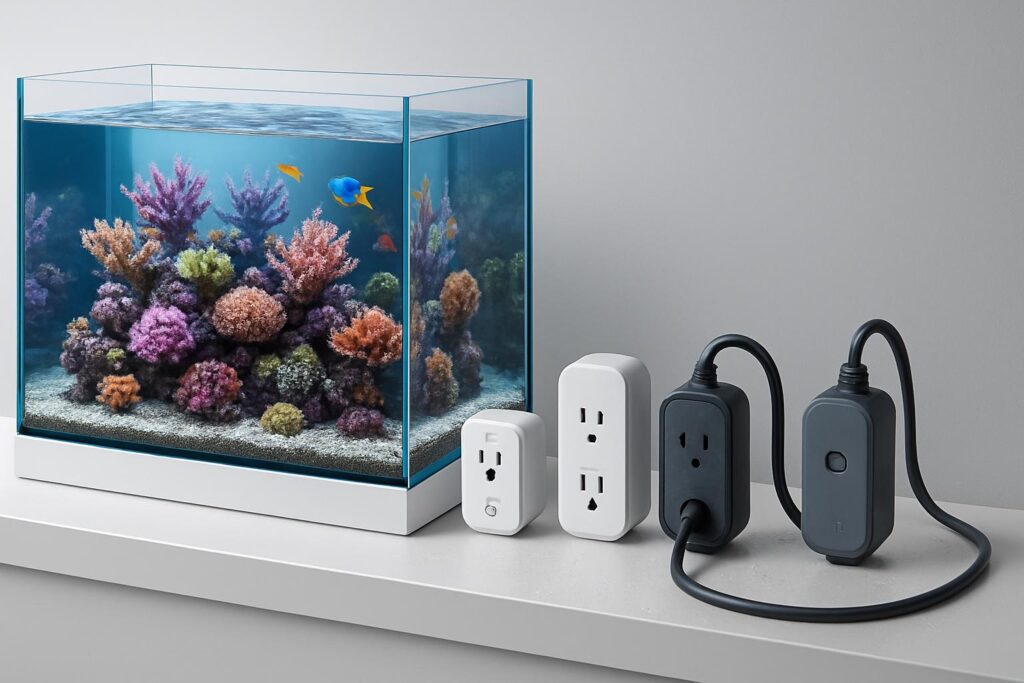
Smart plugs turn routine aquarium tasks into reliable, timed workflows. Lights switch on precisely, auto top-off pumps follow safe windows, and you can cut power to a skimmer during feeding without reaching behind the stand. The right pick must be safe near moisture, survive power blips, and offer scheduling that runs without fuss. Below are four dependable smart plugs that suit freshwater and reef tanks in 2026, with clear notes on where each one fits best.
What to look for before you buy
Choosing a smart plug for aquarium gear is not the same as choosing one for a lamp. You need more than simple on and off.
- Load capacity and safety: Look for 15 A at 120 V minimum, UL listing, and a robust housing. Avoid stacking adapters that trap heat.
- Energy monitoring: Useful for heaters, return pumps, and skimmers to spot abnormal draw that signals clogging or failure.
- Offline reliability: Schedules and timers that keep running if your phone or cloud service goes down.
- Power restore behavior: The ability to restore last state or set a default state after an outage helps prevent floods and overflows.
- Moisture handling: For sump cabinets or ponds, water resistance with an IP rating is a safer choice.
- App stability and ecosystem: A reliable app with clear schedules, countdowns, and scenes reduces mistakes.
The 4 best aquarium smart plugs for 2026
TP-Link Kasa EP25 Smart Plug with Energy Monitoring
The EP25 is a compact 15 A plug with accurate energy tracking and mature scheduling. Kasa automations are simple to set, and the app is stable across updates. For aquariums, the steady firmware and clean graphs make it easy to baseline heater and pump power, then spot drift early.
Why it helps: Energy monitoring helps you catch a heater that is stuck on, a return pump that is drawing more power due to blockage, or a skimmer that is underperforming. Schedules and timers make lighting, refugium cycles, and feeding pauses consistent.
Best for: Main display or refugium lights, skimmer power cycling during feeding, monitoring heater consumption to detect anomalies.
Setup notes: Use 2.4 GHz Wi-Fi. Name devices clearly such as Display Light or Return Pump to avoid toggling the wrong outlet. Group related gear into a scene for single-tap actions like Feed Mode.
Potential downsides: Single outlet only. No water resistance, so keep it in a dry area with a drip loop and away from salt creep.
Real-world automations to try
- Refugium reverse photoperiod: On at lights-out, off before display lights come on.
- Skimmer delay after water change: Off for 60 minutes to prevent overflow, then auto resume.
- Heater anomaly alert: If daily kWh suddenly increases, inspect for thermostat drift or biofouling.
TP-Link Kasa EP40A Outdoor Smart Plug, 2 Outlets
When humidity is high or splashes are likely, the EP40A offers two individually controlled outlets in an IP-rated housing. It is a good pick for sump cabinets with fans or refugium lights, and it hedges against occasional drips better than indoor minis.
Why it helps: Moisture resistance and two outlets let you separate control of two devices in a damp zone. Timers and schedules run reliably for lights, fans, or accent LEDs without placing indoor-only plugs at risk.
Best for: Sump cabinet gear such as cabinet fans and refugium lights, small outdoor pond applications under cover, quarantine setups in laundry or garage spaces.
Setup notes: Mount it off the floor, keep all connections with drip loops, and use weather-resistant covers if near spray. Confirm the total amperage across both outlets stays within rating.
Potential downsides: Bulkier than indoor minis, so plan cable routing. Not suited for submersion or direct spray; still treat it as splash resistant, not waterproof.
Real-world automations to try
- Cabinet ventilation: Run fans in sync with display lights to stabilize pH and reduce humidity.
- Refugium photoperiod: Independent control without adding a second plug.
Meross MSS310 Smart Plug with Energy Monitoring
The MSS310 balances solid load handling with energy stats and a useful power-restore setting. You can choose restore last state, always on, or always off after a power cut. That control reduces surprises when power returns while your sump level is still stabilizing.
Why it helps: Power-restore options let you define safe behavior for return pumps, skimmers, and UV sterilizers. Energy monitoring adds another layer of diagnostics to spot clogging or wear.
Best for: Return pump or skimmer where post-outage state matters. Also good for tracking heater or UV draw over time.
Setup notes: Set power-restore preference per device. For a return pump, many aquarists choose restore last state so the system resumes as before. For a skimmer, consider always off and use a scene to bring it back on after a delay.
Potential downsides: The plug is slightly larger than some mini models. Keep it well spaced from other outlets to avoid blocking adjacent sockets.
Real-world automations to try
- Skimmer safe start: After outage, wait 15 to 30 minutes before auto power-on to prevent wet skimming.
- Return pump health check: Weekly compare energy draw to baseline and investigate if it trends upward.
Wyze Plug Outdoor, 2 Outlets with Energy Monitoring
For areas with moisture or for pond gear under a covered patio, the Wyze Plug Outdoor offers two individually controlled outlets, robust scheduling, and energy tracking. It pairs quickly and continues running schedules even if your phone is offline.
Why it helps: Dual outlets with energy stats cover two devices while keeping wiring tidy. Offline-friendly schedules keep lighting or aeration consistent through minor network issues.
Best for: Outdoor pond lights and air pumps under a cover, or a humid aquarium cabinet where a splash-resistant body is safer than indoor plugs.
Setup notes: Mount vertically, keep cable drip loops, and avoid direct rain or spray. Use GFCI protection and weatherproof covers on the receptacle.
Potential downsides: Bulk and cord orientation may require a short extension for clean routing. Energy graphs are simpler than some competitors.
Real-world automations to try
- Pond aeration timer: Extra aeration during hot afternoons to protect dissolved oxygen without constant runtime.
- Accent lighting: Precise on and off that matches your viewing hours.
Setup checklist and safe use
Follow these steps to keep your aquarium gear safe and predictable.
- Use a GFCI-protected outlet and create drip loops on every cable.
- Do not exceed 80 percent of the rated amperage for continuous loads.
- Place indoor-only plugs outside the splash zone. Use IP-rated models in humid areas.
- Heaters should rely on their own thermostats. Use the smart plug only for logging, scheduled maintenance windows, or emergency cutoff.
- Label each plug clearly in the app and in the cabinet. Train family members on Feed Mode and emergency off.
- Test outage scenarios. Confirm power-restore behavior matches your plan for pumps and skimmers.
Conclusion
Smart plugs make aquariums more consistent and easier to maintain. If you value clean energy graphs and a compact form, the Kasa EP25 is a strong first pick. For damp spaces or two devices on one body, use the Kasa EP40A or the Wyze Plug Outdoor. If you want explicit control over what happens after a power cut, the Meross MSS310 stands out. Match the plug to your placement, define safe restore behavior, and keep loads within rating. Your tank gets dependable routines, and you get faster signals when something drifts from normal.
FAQ
Q: Do I need energy monitoring for an aquarium smart plug
A: Energy monitoring helps you catch a heater that is stuck on and detect pumps or skimmers drawing abnormal power, so it is very useful.
Q: Which smart plug is better for humid sump cabinets
A: The TP-Link Kasa EP40A or the Wyze Plug Outdoor are better options because their bodies handle moisture more safely than indoor-only minis.
Q: Can I run a heater through a smart plug
A: Yes, but let the heater thermostat control temperature. Use the smart plug for logging, scheduled maintenance windows, or emergency cutoff, and avoid rapid toggling.
Q: What happens if power or Wi-Fi goes out
A: Choose plugs with offline-friendly schedules and clear power-restore behavior. The Meross MSS310 lets you set restore last state or a default state, and the other picks focus on reliable scheduling.
Q: What amperage rating should I look for
A: A 15 A rating at 120 V covers typical aquarium lights, pumps, and heaters, but keep continuous loads under about 80 percent of the rating and check each device label.