
We are reader supported. When you purchase through links on our site, we may earn an affiliate commission. Also, as an Amazon affiliate, we earn from qualifying purchases.
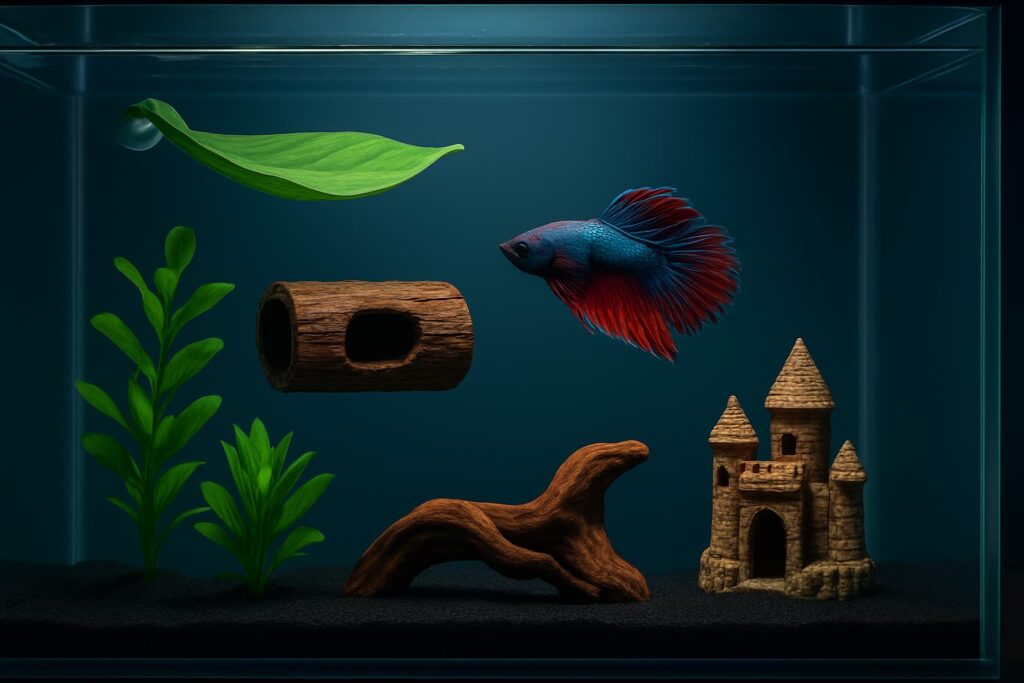
Setting up a small betta tank should be simple, safe, and beautiful. The right decorations give your fish places to rest, hide, and explore without stealing precious swimming room. For 2026, these are the five best betta aquarium decorations for small tanks that balance fin safety, function, and style. Each pick fits tanks from 2.5 to 5 gallons, helps reduce stress, and is easy to maintain for beginners.
How to Choose Betta-Safe Decorations for Small Tanks
Prioritize fin safety
Bettas have delicate fins. Choose decor with soft edges and smooth surfaces. Silk plants are preferred over hard plastic. If you try plastic, do the pantyhose test: gently drag nylon over the item; if it snags, your betta’s fins can, too.
Size and swim space matter
In 5 gallons, aim for one primary hideout, two to three small plants, and one surface rest or focal piece. Leave an open lane at the front for swimming. Avoid oversized castles, sharp resin corals, and crowded layouts.
Think like a betta
They like to perch near the surface, weave through plants, and retreat into low-light hides. Decorations that add vertical layers and shade calm them and support natural behaviors like bubble nesting.
Safe materials
Favor aquarium-safe resin, ceramic, silk plants, and hardwoods like Mopani. Rinse all items before use. Avoid painted pieces that chip, metal parts that can rust, and rough lava rock unless fully smoothed.
Top 5 Betta Decorations for Small Tanks in 2026
1) Zoo Med Betta Bed Leaf Hammock
A simple surface-level resting spot your betta will use daily. The silicone leaf mounts with a suction cup and sits just below the waterline, letting your fish rest while gulping air from the labyrinth organ with minimal effort.
Why it helps: Reduces fatigue, encourages surface lounging, and can support bubble nest activity by creating a calm corner near the top.
Best for: Any small tank with gentle flow. Great for long-finned bettas that tire easily.
Setup tips: Place the leaf about 1 inch below the surface in a low-current area. Angle it slightly upward for easy access. Clean the suction cup and glass before mounting.
Potential downsides: Suction cups can loosen over time and may need occasional re-seating. Algae can form if placed directly under strong light; wipe it during water changes.
2) Penn-Plax Floating Betta Log
This floating hollow log gives shelter and shade at the surface, where bettas naturally cruise. Many models include a feeding hole on top so you can drop pellets without breaking the calm inside the log.
Why it helps: Adds a secure surface hide and reduces stress by dimming harsh light. Encourages exploration and resting close to the air-water interface.
Best for: 2.5 to 5-gallon tanks with timid bettas that love topwater cover.
Setup tips: Rinse well and let it float where current is mild. If your filter outflow disturbs the log, baffle the flow or position the log on the calmer side of the tank.
Potential downsides: Biofilm can build up inside; swish it in old tank water during maintenance. It can shade out floating plants if placed directly underneath a grow light.
3) Marina Naturals Silk Aquarium Plant, Small
Soft silk leaves that look natural and will not shred fins. Small sizes fit compact tanks and create gentle perches. Use two to three different heights to form sight breaks and a natural path through the scape.
Why it helps: Provides cover without risk to fins and reduces line-of-sight, which lowers stress. Leaves act as mini hammocks mid-water.
Best for: New keepers who want a safe, low-maintenance plant look; tanks with moderate lighting; bettas that like to rest among foliage.
Setup tips: Rinse, then tuck the base into substrate so it does not wobble. Pair a short silk clump in front and a medium one in back to create depth without crowding.
Potential downsides: The plastic base can be a bit rigid. Bury it to avoid exposed edges. Silk leaves can trap debris; flick them gently during water changes.
4) Zoo Med Mopani Driftwood, Small
A dense hardwood that sinks reliably and adds a natural focal point. Its branching shapes create shaded underpasses and anchor points for easy low-light plants like anubias or java fern.
Why it helps: Offers a central hide and exploration routes while keeping the footprint compact. Slow tannin release can slightly soften water and tint it a pleasant tea color that many bettas prefer.
Best for: 3 to 5-gallon nano scapes that need a single, versatile hardscape piece.
Setup tips: Rinse and pre-soak for 1 to 2 weeks to reduce tannins and minimize initial white biofilm. Lightly sand any rough spots with fine sandpaper before placement.
Potential downsides: Tannins can amber the water and nudge pH down slightly. This is usually safe for bettas but monitor parameters. Initial biofilm is common and harmless; wipe it off during maintenance until it subsides.
5) Aqueon Betta Castle
A compact, stackable hideout that builds vertical interest without eating floor space. Smooth openings let fins pass cleanly. Use a single module in very small tanks, or two for a taller look in a 5-gallon.
Why it helps: Creates multiple caves and shaded lookouts. The vertical format preserves open swimming lanes while giving your betta clear territories.
Best for: Active bettas that enjoy darting in and out of hides; keepers who want a tidy, modular centerpiece.
Setup tips: Place near the back or a rear corner to keep the front glass open. Ensure no opening faces directly into a strong filter outflow. Rotate pieces occasionally for thorough cleaning.
Potential downsides: Some openings may feel snug for very long-finned varieties. Confirm edges are smooth and do not crowd the intake of hang-on-back or internal filters.
Layout Blueprint for a 5-Gallon Betta Tank
Simple, safe, and open
Use one primary hideout like the Aqueon Betta Castle or Mopani wood. Add two small silk plants for cover at mid and back. Include one surface rest, such as the Betta Bed Leaf Hammock, and optionally the floating log if your surface area allows. Keep an open swim lane along the front glass.
Maintenance rhythm
During weekly or biweekly water changes, give decorations a quick swish in removed tank water. Use a soft toothbrush on silk leaves and inside the floating log. Do not use soap or chemicals. Re-seat suction cups if needed. For Mopani wood, wipe early biofilm until it stabilizes.
Conclusion
In small betta tanks, smart decoration choices make the difference between a cramped box and a calm, enriching habitat. The five options above focus on fin safety, surface access, shaded retreats, and compact footprints. Start with one main hide, two silk plants, and a surface rest. Keep layout open, clean routinely, and watch your betta explore with confidence.
FAQ
Q: How many decorations should I use in a 5-gallon betta tank?
A: Aim for one primary hideout, two to three small plants, and one surface rest or focal piece. Leave an open lane at the front for swimming.
Q: Are plastic plants safe for bettas?
A: Silk plants are preferred because they are gentle on fins. If you try plastic, do the pantyhose test: if nylon snags on it, your betta’s fins can, too.
Q: Will Mopani wood change my water?
A: Mopani releases tannins that can tint water amber and may nudge pH down slightly. Pre-soak 1 to 2 weeks and monitor parameters; this is usually safe for bettas.
Q: How do I clean these decorations safely?
A: During water changes, swish them in removed tank water and use a soft toothbrush as needed. Do not use soap or chemicals. Re-seat suction cups if they loosen.