
We are reader supported. When you purchase through links on our site, we may earn an affiliate commission. Also, as an Amazon affiliate, we earn from qualifying purchases.
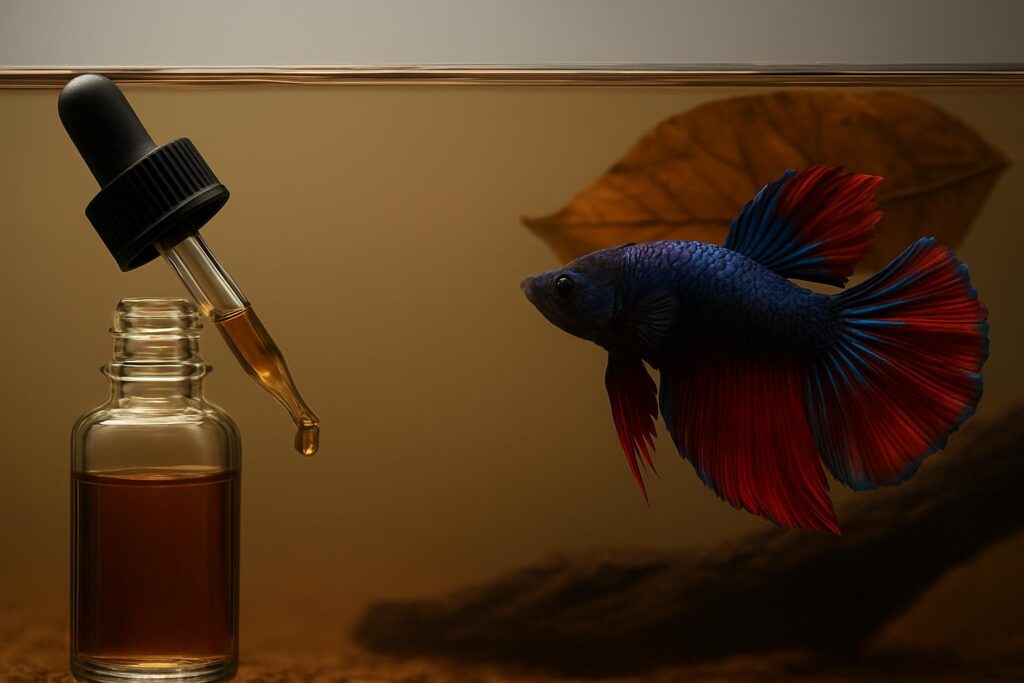
Bettas evolved in warm, tannin-rich, slow-moving waters. Recreating that blackwater feel helps them color up, settle in faster, and display more natural behavior. If you want the amber tint without guesswork, a good blackwater additive is your shortcut. Below are the five best options for 2026, how to choose the right one for your tank, and how to use them safely.
What Blackwater Is and Why Bettas Benefit
Blackwater forms when leaves, bark, and seed pods release humic and tannic substances. This softens the visual glare, slightly lowers pH in the right conditions, and can support a calmer environment for bettas.
Expect a gentle tea tint, not murky water. Tannins are not dirt. They color the water while keeping it clear if your filtration is sound.
How to Choose a Blackwater Additive in 2026
Know your water first
Test pH and KH. If KH is high, pH will resist change and most blackwater products will tint more than they will acidify. If KH is low to moderate, tannins can nudge pH downward. Do not chase numbers. Aim for stability.
Pick a format that fits your routine
Extracts dose quickly and predictably. Natural botanicals like almond leaves release slowly and also grow biofilm that shrimp and microfauna enjoy. Peat granules go in your filter and are efficient for larger setups.
Think about goals and maintenance
Light tint for a desktop betta bowl calls for a mild extract. Deeper amber in a planted 10–20 gallon tank is easier with leaves or peat. Carbon and heavy water changes will strip tannins quickly; plan your dosing accordingly.
The 5 Best Betta Blackwater Additives for 2026
1) Brightwell Aquatics BlackWater
Brightwell’s BlackWater is a concentrated humic and tannic additive aimed at soft-water tropical species. It delivers a clean, controllable tint and is easy to integrate into weekly routines. The formula focuses on humic substances without heavy perfumes or dyes.
Why it helps: Provides a steady supply of humic substances to calm fish, reduce glare, and encourage natural betta behavior.
Best for: Hobbyists who want precise, repeatable dosing with minimal fuss in nano to mid-size aquariums.
Potential downsides: Concentrated liquids can overshoot if you do not measure; it is not a dechlorinator, so you still need a conditioner for tap water.
Usage tip: Start at half dose, wait 24 hours, and adjust in small steps until you reach the tint you like. Remove or reduce carbon to maintain color.
2) Fluval Black Water Conditioner
Fluval’s Black Water Conditioner is beginner-friendly and designed for quick, consistent results. It pairs well with standard maintenance schedules and does not cloud water when dosed correctly.
Why it helps: Adds natural tannins for an authentic amber hue and a calmer visual field that reduces betta stress.
Best for: New keepers who want straightforward dosing with clear label guidance and predictable tint.
Potential downsides: Carbon and frequent large water changes strip the tint fast, so you may need to redose more often.
Usage tip: Dose after your regular water change, then reassess the color after 12–24 hours before adding more.
3) Fritz Dark Water Almond Leaf Extract
This extract is derived from catappa leaves, giving you the benefits of leaves without the wait. It is popular with betta keepers for fast, controllable amber tone and a gentle nudge toward softer, more natural water chemistry in low-KH setups.
Why it helps: Catappa tannins support a stress-reducing environment and a natural look that bettas recognize.
Best for: Betta tanks where you want the effect of almond leaves but prefer liquid dosing over leaf litter.
Potential downsides: Scent can be earthy and strong in the bottle; like all extracts, it can be easy to overdo if you are not testing.
Usage tip: Begin with a conservative dose, then fine-tune weekly. Shake well before use to distribute the active compounds.
4) SunGrow Indian Almond Leaves
Natural catappa leaves remain a gold standard for blackwater tanks. They slowly release tannins, foster biofilm, and create authentic leaf litter that many bettas and invertebrates enjoy exploring. They are simple and effective when you want a gradual, organic approach.
Why it helps: Slow-release tannins build a stable, natural tint and microhabitat that encourages foraging and relaxed behavior.
Best for: Keepers who like a nature-style look and want biofilm for shrimp or microfauna alongside their betta.
Potential downsides: Leaf potency varies by batch and size; pieces can shed and may not suit minimalistic display tanks.
Usage tip: Rinse, then float or place one medium leaf per 5–10 gallons. Replace when the leaf skeletonizes, or top up tint with an extract between water changes.
5) Fluval Peat Granules
Peat granules sit in your filter and release humic acids steadily. They are powerful for achieving a deeper amber tone and gently lowering pH in soft water. For tanks 10 gallons and up, peat is efficient and long-lasting between changes.
Why it helps: Strong, consistent tannin release supports blackwater conditions and can softly reduce pH when KH is not high.
Best for: Larger aquariums with soft to moderate KH where you want a deeper, stable amber with less frequent re-dosing.
Potential downsides: Can drop pH more than extracts in low-KH water; always monitor pH and KH, and avoid sudden changes.
Usage tip: Use a media bag, pre-rinse, and place after mechanical filtration. Test weekly and adjust the amount instead of making big changes at once.
How to Use Blackwater Additives Safely
Start light and test
Begin at half the suggested dose. Wait one to two days, then evaluate color, pH, and fish behavior. Add small increments if needed.
Mind your KH and avoid swings
Low KH makes pH easier to shift. If KH is already low, use smaller, more frequent doses and test pH weekly. Stability beats a target number.
Consider filtration and water changes
Carbon and large, frequent changes strip tannins quickly. Remove or reduce carbon and plan to redose after maintenance.
Keep it clear, not dirty
Blackwater should be clear tea, not cloudy. If water clouds, check mechanical filtration, avoid overfeeding, and rinse decaying botanicals.
Conclusion
Blackwater is one of the simplest upgrades for a betta tank. Choose an approach that fits your water and routine. Brightwell BlackWater and Fluval Black Water Conditioner excel for quick, predictable dosing. Fritz Dark Water delivers catappa benefits without leaf litter. SunGrow Indian Almond Leaves give a slow, natural release and biofilm. Fluval Peat Granules are powerful for deeper amber and gentle pH shifts in soft water. Start light, test, and keep changes steady. Your betta will do the rest.
FAQ
Q: Do I need to lower pH to use blackwater in a betta tank?
A: No, do not chase numbers; aim for stability and use blackwater for tint and comfort first.
Q: Will carbon remove the blackwater tint?
A: Yes, carbon and frequent large water changes strip tannins quickly.
Q: Which product is best for a natural look with biofilm?
A: SunGrow Indian Almond Leaves provide a slow, natural release and biofilm.
Q: How should I start dosing a new blackwater additive?
A: Begin at half the suggested dose, wait one to two days, then adjust in small steps.
Q: Are blackwater additives also water conditioners for chlorine?
A: No, they are not dechlorinators, so you still need a conditioner for tap water.