
We are reader supported. When you purchase through links on our site, we may earn an affiliate commission. Also, as an Amazon affiliate, we earn from qualifying purchases.
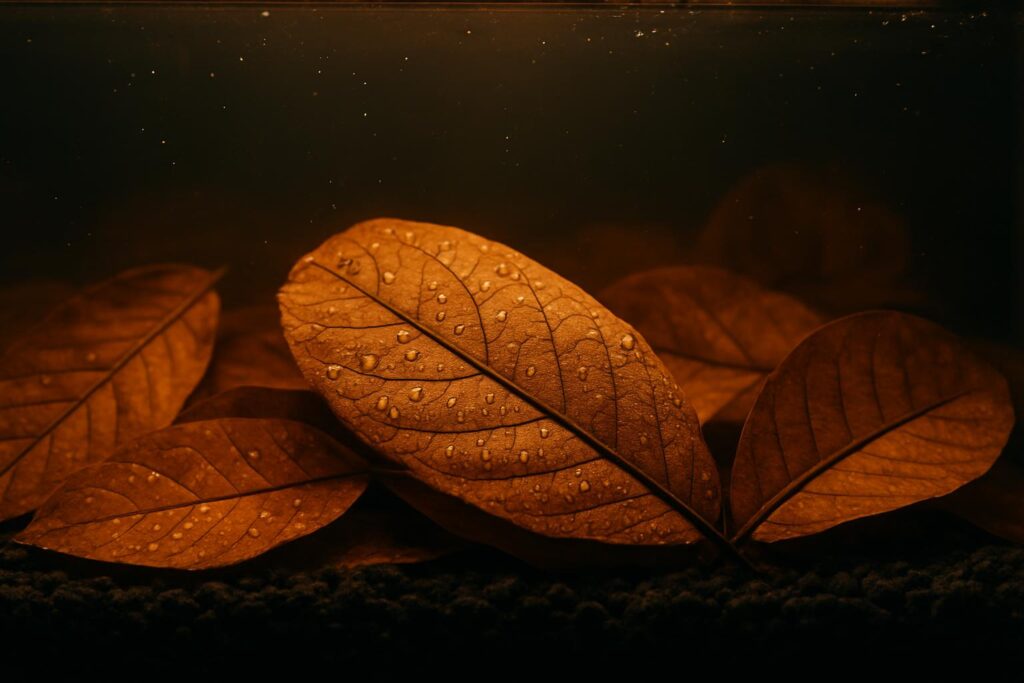
Catappa leaves, also called Indian almond leaves, are a simple upgrade that helps betta fish thrive. They add beneficial tannins, encourage bubble nesting, support slime coat and gill health, and create a calmer, more natural blackwater look. If you have been unsure which brand or size to choose, this 2026 guide breaks it down with clear picks, practical use tips, and what to watch out for.
What Catappa Leaves Do for Betta Health
Tannins and pH support
Catappa leaves release tannins that very gently soften water and buffer pH downward. Bettas come from slow, tannin-rich waters. Mildly acidic conditions can reduce stress, support fin recovery, and discourage some opportunistic pathogens. Leaves are not medicine, but they create a supportive environment.
Biofilm for fry and shy eaters
As leaves break down, they grow biofilm and microfauna. Bettas, shrimp, and fry graze on this, which can improve feeding response in picky fish and provide a safety net for small or young fish between meals.
Color enrichment and stress reduction
Blackwater tint reduces glare and reflections that can stress solitary bettas. Many keepers also report deeper reds and blues under tannin-stained light.
How We Picked the Best for 2026
Sourcing and cleaning
Good leaves are sun-dried, pesticide free, and packed clean. We favored brands with consistent prep, minimal dust, and leaves that sink within a day or two after a quick rinse or pre-soak.
Leaf size and thickness
Size affects dosing and tannin strength. Larger, thicker leaves release more tannins and last longer. Mixed-size packs are flexible for nano tanks, while extra-large leaves suit blackwater builds and breeding projects.
Packaging and consistency
Flat-pack bags that protect the leaves reduce crumbling and broken edges. Consistent sizing simplifies dosing so you get the same look and effect every time.
The 5 Best Betta Catappa Leaves in 2026
1) SunGrow Indian Almond Leaves, Medium 5–6 inches, 50 pack
SunGrow stays popular because of reliable medium sizing, clean prep, and steady tannin output. A single medium leaf lightly tints a 5-gallon tank and supports natural behavior without an extreme pH drop.
Why it helps: Predictable, moderate tannins make it easy to dial in a soft amber hue and gently support betta immune health and slime coat.
Best for: New betta keepers and anyone who wants a mild blackwater look in 3–10 gallon setups.
Potential downsides: Occasional size variation within the 5–6 inch range. Some batches curl, which is cosmetic but can trap air and delay sinking.
Usage tip: Start with 1 leaf per 5 gallons. Pre-soak 10–20 minutes in warm dechlorinated water to help it sink and reduce initial float time.
2) Aquatic Arts Catappa Leaves, Extra Large 8–10 inches, 10–12 pack
These extra-large leaves are robust, last longer, and deliver a stronger tea-stain. They are excellent for betta breeders and for larger or heavily planted tanks where you want a deeper tint and more biofilm area.
Why it helps: Heavier tannins and bigger coverage create stable blackwater conditions that encourage bubble nesting and breeding behavior.
Best for: 10–20 gallon betta displays, sororities, and breeding projects that need a noticeable amber tint.
Potential downsides: Stronger tannins can drop pH faster in soft water. Pre-soak and add gradually to avoid sudden changes.
Usage tip: For a 10-gallon tank, begin with a half leaf, then step up every 3–4 days until you reach the color you like.
3) AQUANEAT Indian Almond Leaves, Mixed 4–7 inches, 20 pack
AQUANEAT offers a budget-friendly pack with a useful size spread. Smaller leaves are great for nano tanks and shrimp jars, while mid-size pieces work for standard 5-gallon betta setups.
Why it helps: Mixed sizes give dosing flexibility and reduce waste in tiny aquariums where a full medium leaf would overtint the water.
Best for: Nano tanks, shrimp keepers, and bettas in 2–5 gallons where fine control of tannins matters.
Potential downsides: Inconsistency in thickness and edges. Thinner leaves break down faster and may need replacing more often.
Usage tip: In a 2–3 gallon, use a quarter to a half of a mid-size leaf. Replace more frequently if you prefer a steady light tint.
4) NilocG Aquatics Catappa Leaves, Large 7–9 inches, 10 pack
NilocG focuses on premium selection and clean packaging. Leaves arrive flat, intact, and consistent. They release tannins at a steady pace and resist crumbling, so they look tidy in display aquariums.
Why it helps: High-grade, uniform leaves simplify dosing and keep displays neat, which is ideal when you care about both function and appearance.
Best for: Show bettas, aquascapes, and keepers who want predictable results and slower decomposition.
Potential downsides: Higher cost per leaf compared to bulk options.
Usage tip: Use a half leaf to start in 5 gallons if you want only a light tint while maintaining a pristine scape.
JOR packs a neat, beginner-friendly set that avoids heavy dust and jagged edges. The leaves sink within a day after a rinse and produce a medium amber tone suited to single-betta tanks.
Why it helps: Clean, flat-packed leaves reduce debris in the water column and deliver a stable tannin curve for calm, consistent conditions.
Best for: First-time betta owners in 3–10 gallons who want a straightforward, low-mess option.
Potential downsides: Smaller pack size means you will restock sooner if you like a darker blackwater look.
Usage tip: Rotate one new leaf in and remove one old leaf weekly to maintain a steady tint and avoid sudden swings.
How to Use Catappa Leaves Safely
Dosing that works
General starting point is 1 medium leaf per 5 gallons. If your water is already soft or you keep sensitive tank mates, begin with half a leaf per 5 gallons. Add more only after testing pH and observing your betta for a few days.
Prep before adding
Rinse under tap, then briefly soak in dechlorinated warm water to release trapped air. This speeds up sinking and reduces initial surface film.
Maintenance and replacement
Leaves darken water most in the first week, then taper off over weeks two to four. Replace when the leaf skeletonizes or when tint fades below your target. Remove decayed fragments during routine gravel vacs to keep the substrate clean.
Conclusion
For 2026, SunGrow offers the most effortless starting point, Aquatic Arts delivers bold blackwater with long-lasting extra-large leaves, and AQUANEAT gives flexible sizing on a budget. NilocG is the polished choice for displays, while JOR is an easy, low-mess entry for first-timers. Choose based on your tank size, desired tint, and how often you want to replace leaves. Start light, test pH, and let your betta’s behavior guide the final dose.
FAQ
Q: How many catappa leaves should I use in a 5-gallon betta tank?
A: Start with 1 medium leaf per 5 gallons, or half a leaf if your water is already soft. Add more only after observing your fish and testing pH.
Q: Do catappa leaves lower pH a lot?
A: They gently buffer pH downward, especially in soft water. Add leaves gradually and monitor with a test kit.
Q: How long do catappa leaves last before I should replace them?
A: Expect the strongest tint in week one, tapering over weeks two to four. Replace when the leaf skeletonizes or when color fades below your target.
Q: Should I pre-soak catappa leaves before adding them?
A: Yes. Rinse and briefly soak in warm dechlorinated water to reduce float time and initial surface film.
Q: Which pick is best for a strong blackwater look?
A: Aquatic Arts extra-large leaves deliver a deeper amber tint and last longer, making them ideal for strong blackwater setups.