
We are reader supported. When you purchase through links on our site, we may earn an affiliate commission. Also, as an Amazon affiliate, we earn from qualifying purchases.
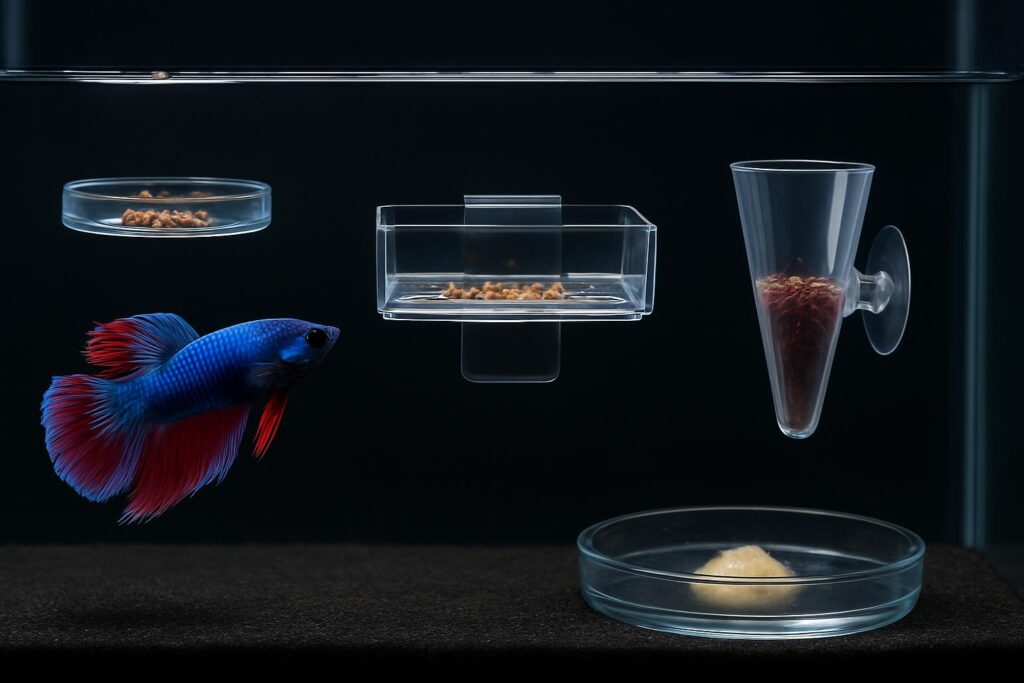
Betta fish are eager surface feeders, but scattered pellets, fast currents, and messy frozen foods can turn a simple meal into extra maintenance and stress. A feeding station fixes this. It keeps food in one zone, trains your betta to eat with focus, and cuts down on waste that clouds water and fuels algae. Below are four reliable feeding stations for 2026 that suit different foods, tank setups, and keeper preferences. Each pick is simple to set up, easy to keep clean, and proven to make daily feeding more controlled.
How a Feeding Station Helps a Betta Thrive
Precision feeding: Pellets stay put so your betta can strike quickly without chasing food into corners.
Cleaner water: Less drift means fewer leftovers decaying in substrate or inside the filter.
Routine and training: A fixed feeding spot reduces anxiety and helps you monitor appetite and portion size.
What to look for in 2026
Stability: A ring or tray that resists wobbling in mild surface current.
Food compatibility: Pick based on pellets, flakes, freeze-dried, frozen, or live worms.
Safe materials: Aquarium-safe plastics, silicone, or glass with smooth edges.
Easy cleaning: Fewer crevices to trap gunk, quick to rinse after feeding.
Size: Compact enough for nano betta tanks, but wide enough for your food type.
Best Overall Floating Ring: SunGrow Betta Fish Feeding Ring
The SunGrow ring is a simple, effective floater with a guide line and suction cup anchor. It corrals floating pellets and flakes at the surface, right where bettas prefer to eat. Anchoring keeps the ring from riding currents, so pellets do not wander into plant thickets or behind filters.
Why it helps: Surface feeding is natural for bettas, and this ring creates a calm pocket. It also sets a clear target for training and portion control.
Best for: Pellets and flakes in low to moderate flow. Nano tanks from 2.5 to 10 gallons.
Setup tips: Rinse, attach the suction cup high on the glass, and adjust the line so the ring sits flat. Drop pellets inside the ring, not outside.
Cleaning and maintenance: Rinse after each feeding to prevent oil film. Weekly, remove and give a quick soak in dechlorinated water.
Potential downsides: In strong surface flow, even anchored rings can tilt. The plastic line can develop biofilm if ignored.
Best For Minimal Waste and Auto Feeders: EHEIM feedingSTATION
This station combines a floating ring with a suspended tray that keeps food in a defined column of water. It is designed to pair well with an automatic feeder but also excels for manual feeding when you want near-zero surface drift.
Why it helps: Food drops to the same spot each time, so your betta focuses and eats fast. The tray shields pellets from currents, reducing the chance they are swept into the filter.
Best for: Pellets and small granules. Tanks with moderate flow or HOB filters that create ripples.
Setup tips: Mount the bracket on the rim or glass, set the tray just below the surface, and ensure the opening faces an area with gentle flow. If using an auto feeder, align its chute over the tray.
Cleaning and maintenance: The tray is easy to lift and rinse. Wipe the bracket weekly to prevent salt creep or mineral buildup.
Potential downsides: Bulky in very small tanks. Not ideal for large floating wafers or big frozen chunks.
Best For Live and Frozen Worms: Lee’s 3-Way Worm Feeder Cone
Live or frozen bloodworms can create a mess when they scatter. This cone feeder contains them and lets a betta pick naturally. Three mounting options give flexibility: float it, suction it, or clip it. Small slits and holes allow worms to dangle slightly, triggering strong feeding responses.
Why it helps: It converts messy foods into controlled portions and keeps worms out of the filter intake and substrate.
Best for: Live or thawed bloodworms, micro worms, and finely chopped frozen foods.
Setup tips: Thaw frozen worms in tank water, place them in the cone, and position the cone near the front glass for easy viewing. Start high in the water column for quick learning.
Cleaning and maintenance: Rinse immediately after feeding to prevent residue in the slits. A soft brush makes quick work of the inside surface.
Potential downsides: Not suited to standard dry pellets. If left dirty, the slits can clog.
Best Substrate Dish for Sinking Foods: UPETTOOLS Shrimp and Fish Feeding Dish
Some bettas prefer to peck at food that slowly sinks, and some keepers offer gel foods or finely chopped frozen mixes. A shallow glass dish keeps these foods contained and visible, so you can remove leftovers quickly.
Why it helps: Food stays off the substrate and away from crevices, reducing waste and smell. The clear dish also makes it easy to judge intake.
Best for: Pre-soaked pellets that sink gently, gel foods, and small frozen portions placed directly on the dish.
Setup tips: Place the dish in an open area your betta frequents. Pre-soak pellets to prevent bounce and scatter. Target-feed with tweezers for accuracy.
Cleaning and maintenance: Lift and rinse after each use. A quick wipe removes biofilm. Glass does not absorb odors.
Potential downsides: Occupies floor space in very small tanks. Food can drift off the dish in strong flow.
Choosing the Right Station for Your Betta
Match the station to the food
If you mostly feed pellets or flakes, use a floating ring or the EHEIM station. If you offer live or frozen worms, use the worm cone. For gel foods or sinking portions, use the shallow dish.
Match the station to your flow
For calm tanks, any ring works. For moderate flow, the EHEIM tray shields pellets well. For strong flow, reduce outflow or baffle it so food remains inside the station.
Training and consistency
Feed at the same spot and time daily, and your betta will learn fast. This also helps you spot appetite changes early.
Setup and Feeding Routine Tips
Location: Place the station near the front glass, away from strong filter outflow, at a calm surface spot your betta already patrols.
Filter timing: Switch off the filter for 5–10 minutes during feeding so pellets do not drift out of the station.
Portioning: Start with 2–3 pellets, observe, then add more only if eaten within a minute. Remove leftovers after 5–10 minutes.
Pre-soak when needed: A short soak prevents pellets from bouncing out of rings or off dishes.
Hygiene: Rinse stations after every feeding. A clean station trains a clean eater.
Key Takeaways
SunGrow’s ring is the simplest path to tidy surface feeding in small tanks. EHEIM’s feedingSTATION offers maximum control and shines with auto feeders or moderate flow. Lee’s worm cone is the clean answer for live and frozen worms. UPETTOOLS’ dish keeps sinking foods contained and easy to remove. Pick based on what you feed most, where your flow is strongest, and how much space you can spare. Consistent placement and quick cleanup complete the system.
Conclusion
Feeding stations make a visible difference in betta care. They create order, lower waste, and sharpen your fish’s feeding response. Choose a station that matches your food type and flow, train with short, consistent sessions, and keep it clean. The result is clearer water, easier maintenance, and a betta that eats with confidence every day.
FAQ
Q: Do bettas need a feeding station?
A: A feeding station is not mandatory, but it makes feeding cleaner, reduces waste, and helps prevent overfeeding.
Q: Where should I place it?
A: Place the station near the front glass, away from strong filter outflow, at a calm surface spot your betta already patrols.
Q: How do I teach a betta to use it?
A: Feed at the same spot and time daily, tap the rim lightly, and drop 2–3 pellets into the station; most bettas learn in a few days.
Q: Should I turn off the filter when feeding?
A: Switch off the filter for 5–10 minutes during feeding so pellets do not drift out of the station.
Q: Which station is best for live or frozen worms?
A: For live or frozen bloodworms, Lee’s 3-Way Worm Feeder Cone keeps the food contained and easy for a betta to pick at.