
We are reader supported. When you purchase through links on our site, we may earn an affiliate commission. Also, as an Amazon affiliate, we earn from qualifying purchases.
Breeding bettas goes smoother when the tank fits the job. You want calm water, a secure lid, and space to manage a pair, eggs, and then fry. This guide keeps it beginner friendly and focused on four reliable options you can set up with confidence in 2026. You will also find a simple layout plan and quick answers to common questions.
How to choose a betta breeding tank in 2026
Size and footprint
Most home breeders use 5 to 10 gallons for spawning, with 10 gallons being the most forgiving. A shallow fill level of roughly 4 to 6 inches reduces effort for the male to tend the bubble nest and helps fry reach the surface.
Lid and access
Use a tight lid. Warm, humid air above the water protects the developing labyrinth organ of fry. Still, you need access for a cup or breeder box and for gentle maintenance, so a hinged lid or hood cutouts help.
Filtration and flow
Gentle is the goal. An air driven sponge filter is the standard because it keeps fry safe and the flow is easy to control. Strong pumps or surface agitation can tear bubble nests and exhaust the male.
Heater and stability
Stable warmth matters. Aim for 80 to 82 F. Make sure your tank shape allows a heater to sit horizontal or vertical with full submersion. A lid helps lock in heat and humidity.
Material and visibility
Glass resists scratching and shows crisp edges. Acrylic is lighter, clearer at thick panels, and safer around kids, but it scratches more easily. Either works if you protect the nest area and keep flow low.
4 best betta breeding tanks for 2026
Aqueon Standard Glass Aquarium 10 Gallon
This no frills glass tank is a classic for pairing and spawning. It is simple, sturdy, and gives you full control over equipment and layout.
- Key specs: 10 gallons, glass, rimmed, approximate footprint 20 x 10 inches, bare tank
- Why it helps: Size is forgiving, shallow fill is easy, and there is space for a male, a conditioned female in a chimney or breeder box, and ample cover.
- Best for: First time breeders who want a proven, flexible setup with a sponge filter and heater of choice.
- Potential downsides: No lid or gear included, so you must add a lid, heater, sponge filter, and cover like floating plants or an Indian almond leaf.
Setup tip: Add a tight cover, run an air driven sponge filter at a low bubble rate, and keep water at 4 to 6 inches during courtship. Place a leaf or raft near the heater outflow to steady temperatures at the nest site.
SeaClear 10 Gallon Acrylic Aquarium Combo Set
Lightweight and clear, this acrylic combo includes a hood and light fixture, which helps seal in humidity while giving you clean viewing for courtship and nest checks.
- Key specs: 10 gallons, acrylic, combo with hood and light fixture
- Why it helps: Acrylic retains heat well, and the included hood keeps warm, moist air above the water for fry safety. The clarity helps you monitor eggs and fry without lifting the lid often.
- Best for: Breeders who value a lightweight tank with a fitted hood for stable humidity and temperature.
- Potential downsides: Acrylic scratches if you drag sand or rough tools along the panel. Flow from add on filters still needs to be kept gentle.
Setup tip: Use an air driven sponge and a small adjustable heater. Baffle any return flow. Wipe panels with soft sponges only to avoid scratches.
Marina Hang On Breeding Box, Large
Not a stand alone tank, but a strong tool for conditioning, separating, or protecting fry. It hangs on the side of your main tank or your breeding tank and uses a small air pump to draw water through, giving the occupants fresh, heated water without strong flow.
- Key specs: External breeding and nursery box, multiple chambers, air driven water exchange
- Why it helps: You can condition the female apart from the male, float a small group of fry for safe grow out, or pull the female right after spawning without a stressful net chase.
- Best for: Breeders who want precise control during pairing and early fry protection while keeping stable temperature from the main tank.
- Potential downsides: Requires a separate air pump and airline. Capacity is limited, so it complements a main tank rather than replacing it.
Setup tip: Prime the siphon per instructions, run the air line gently, and add fine mesh over any slots if you are holding very small fry. Keep the water level in the host tank steady for consistent exchange.
Aqueon Standard Glass Aquarium 20 Long
When you want a roomier grow out or you plan larger spawns, a 20 Long offers a wide footprint and stable water. Many breeders spawn in a 10 and shift fry to a 20 Long at 3 to 4 weeks.
- Key specs: 20 gallons, long footprint about 30 x 12 inches, rimmed glass, bare tank
- Why it helps: The long, shallow profile spreads fish out, reduces aggression among growing juveniles, and keeps maintenance manageable as feeding ramps up.
- Best for: Grow out after the first month, or very careful spawns when you want extra space from day one.
- Potential downsides: Needs all gear added by you. More water means more heating and more frequent small water changes to keep up with heavy feeding.
Setup tip: Run two air driven sponges, one on each end, and increase aeration as you move from infusoria to baby brine shrimp. Keep a tight lid at all times to protect the fry.
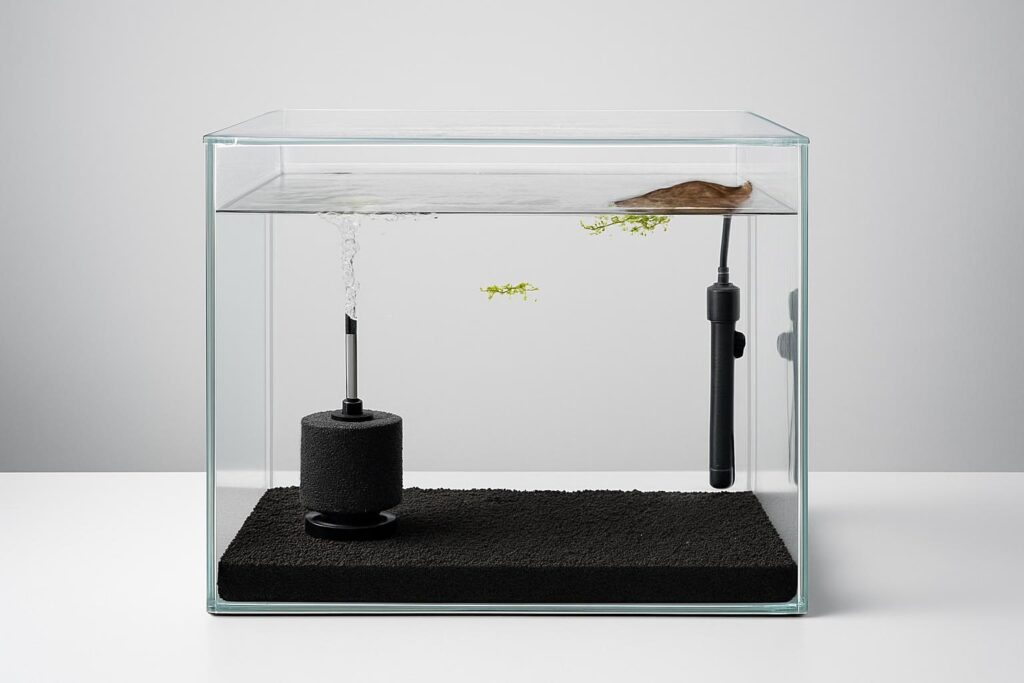
Proven breeding layout in a nutshell
Water level and cover
Fill to 4 to 6 inches for spawning and keep a tight lid. Stable, warm, humid air helps fry develop correctly.
Temperature and filtration
Hold 80 to 82 F. Use an air driven sponge filter with a gentle bubble rate. If a pump is built in, baffle it and keep surface ripple minimal.
Nest support and sight lines
Place an Indian almond leaf or a floating raft near a warm, calm corner. Add clumps of floating plants for visual breaks. Give the female hiding spots.
Pair management
Introduce the male into the breeding tank first. Condition the female separately, then float her in a clear chimney or a hang on breeding box for visual contact. Release when both show readiness. Remove the female soon after spawning. Remove the male once fry are free swimming for 24 to 48 hours.
Early foods and maintenance
Start with microscopic foods like infusoria, then move to baby brine shrimp and similar small live foods. Keep changes small and frequent to avoid shocking fry. Clean glass gently to preserve the nest area.
Conclusion
Pick the tank that fits your stage and control needs. A 10 gallon glass tank is the safest first pick. Acrylic with a fitted hood locks in humidity and looks clean. A hang on breeding box solves separation and early rearing without extra heaters. A 20 Long grows out spawns with fewer nips and steadier water. Keep flow gentle, warmth steady, and air humid, and each of these options can support consistent results in 2026.
FAQ
Q: What tank size works best for a betta breeding pair
A: Most home breeders use 5 to 10 gallons, with 10 gallons being the most forgiving and easiest to manage at a shallow water level.
Q: Do I need a tight lid for breeding and grow out
A: Yes, a tight lid keeps warm, humid air above the water, which protects developing fry and stabilizes temperature.
Q: What filtration is safe for betta fry
A: An air driven sponge filter with a gentle bubble rate is the standard, as it provides biofiltration without pulling fry into intakes.
Q: When should I remove the male and female during breeding
A: Remove the female soon after spawning, and remove the male once fry are free swimming for 24 to 48 hours.
Q: What temperature should I maintain during breeding
A: Hold the tank at 80 to 82 F for stable development and consistent spawning behavior.