
We are reader supported. When you purchase through links on our site, we may earn an affiliate commission. Also, as an Amazon affiliate, we earn from qualifying purchases.
Betta fish thrive when feeding is simple, consistent, and clean. A good feeding dish keeps pellets contained, prevents waste from sinking into gravel, and trains your betta to eat in one spot. That means clearer water, easier maintenance, and fewer uneaten pellets rotting out of sight. Below is a practical guide to choosing the right feeder and the five best betta feeding dishes for 2026.
What to look for in a betta feeding dish in 2026
Dish types that work
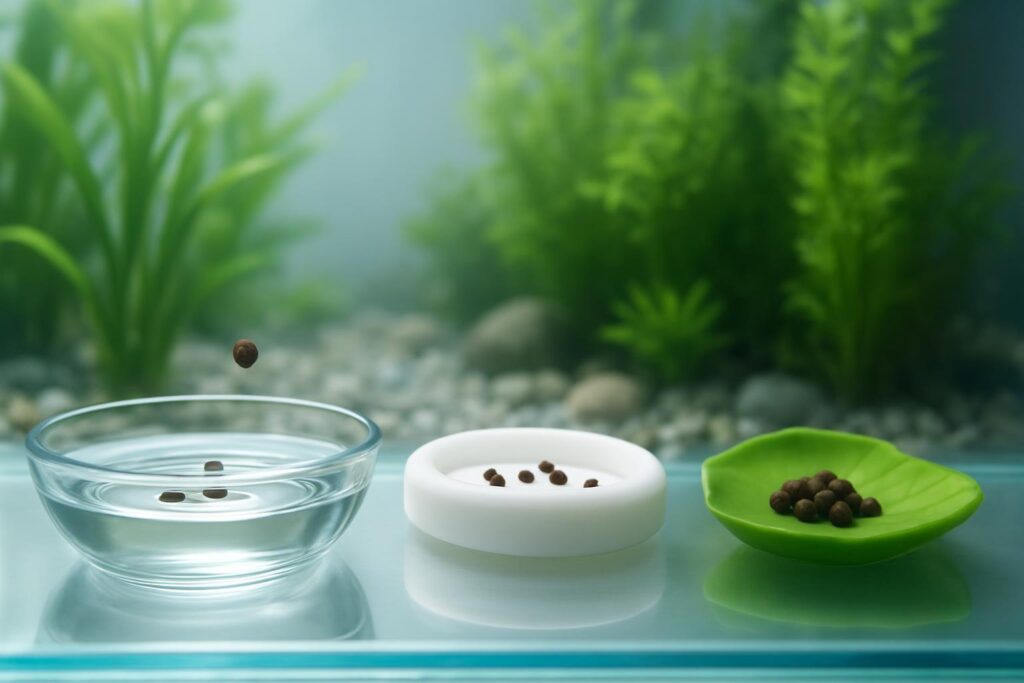
For bettas, three categories stand out. Floating rings hold floating pellets in one place on the surface. Shallow glass dishes sit on the substrate and stop sinking food from getting lost. Leaf platforms create a fixed surface target where you can place pellets and your fish can grab them easily.
Size, shape, and fit
Most bettas do best with a compact ring or dish that is 2–3 inches across. That is large enough to keep pellets from drifting, but small enough to focus your fish’s attention. Soft edges and low profiles prevent snags on delicate fins.
Material and safety
Choose BPA-free plastics, silicone, or polished glass. Avoid rough or sharp rims. Suction cups should be secure but easy to reposition. Smooth glass is the easiest to rinse clean.
Waste control and water quality
A feeding dish localizes food and stops pellets from sinking into the substrate where they rot. Less waste means fewer ammonia spikes and a steadier biofilter.
Maintenance routine
Rinse glass dishes after every feeding and deep clean weekly. Floating rings should be swished in clean tank water and wiped to remove biofilm. Replace worn suction cups as needed.
The 5 Best Betta Feeding Dishes for 2026
1) Dennerle Shrimp King Feeding Dish (6 cm, glass)
This small glass bowl was made for shrimp, but it is excellent for bettas that let pellets sink before eating. The shallow profile keeps food visible and off the substrate, so you can remove leftovers in seconds with a pipette. Clear glass blends into aquascapes and makes portion control easy.
Why it helps: It stops pellets from vanishing into gravel, reduces detritus, and lets you target feed precisely.
Best for: Bettas in planted tanks with soil or gravel, or for owners who feed a mix of pellets and frozen foods.
Potential downsides: Not ideal if your betta only eats at the surface. You also need a stable spot with low flow so food stays in.
Pro tip: Place it near the front glass for easy siphoning after each meal.
2) EHEIM FeedingStation 3581090
This is a compact feeding station with a guiding ring and platform that concentrates food in a fixed area. It keeps floating or slowly sinking foods from scattering across the surface. The rigid frame also blocks light surface current so pellets sit still.
Why it helps: It localizes food, reduces waste, and gives your betta a consistent feeding target.
Best for: Bettas in community tanks where current or tankmates steal food.
Potential downsides: It occupies surface real estate and may be bulky in nano tanks under 3 gallons.
Pro tip: Align it on the calm side of the filter outflow so pellets do not blow past the ring.
3) Aqueon Ring Feeder
This simple floating ring uses a suction-cup arm to anchor your feeding spot. It excels with floating pellets and flakes and is easy to place or move. It is minimal, inexpensive, and effective for training your betta to come to one area for meals.
Why it helps: It keeps pellets from roaming with surface flow and prevents them from getting trapped behind decor.
Best for: Solo betta setups where you want a compact, no-fuss surface station.
Potential downsides: Suction cups can loosen over time in warm water and need periodic replacement.
Pro tip: Place a floating ring where surface flow is calm so pellets stay put.
4) Zoo Med Betta Bed Leaf Hammock
Marketed as a resting leaf, this silicone leaf on a suction cup doubles as a reliable feeding platform. Set just below the surface, it gives you a defined spot to drop a pellet. Many bettas quickly associate the leaf with meals and rest time, which makes feeding predictable and tidy.
Why it helps: It creates a stable, near-surface platform that makes pellets easy to see and grab.
Best for: Bettas that prefer surface feeding and for small aquariums with limited space.
Potential downsides: The leaf can collect biofilm and needs regular wiping to stay clean.
Pro tip: Mount it near a corner to minimize flow and shadow, which improves strike accuracy.
5) COODIA Fish Feeding Ring (round and square set)
This set includes two floating rings with adjustable suction-cup anchors. The foam rings create a gentle barrier that holds pellets in place. The square ring fits neatly along a straight pane, while the round ring works in corners or open areas.
Why it helps: It is flexible, easy to position, and keeps a consistent feeding zone on tanks of different shapes.
Best for: Beginners who want a low-cost, adjustable solution that works in both small and medium tanks.
Potential downsides: Foam can stain if neglected; rinse it often to prevent discoloration.
Pro tip: Use the square ring for stronger flow areas and the round ring for calmer spots.
Setup and feeding tips
Position your feeder where your betta already patrols. Keep flow low so pellets do not wander. If using a glass dish, set it where you can siphon easily.
- Start with one pellet at a time and wait until it is eaten before adding the next.
- Limit session time to 2–3 minutes to avoid overfeeding.
- Rinse glass dishes after every feeding; deep clean weekly.
- Swish floating rings in a cup of tank water to remove oil film and detritus.
- If pellets sink fast, pre-soak for 10 seconds, then target drop onto the dish.
If your betta hesitates with a new feeder, pair the dish with your usual feeding time and stand still for consistency. Most fish settle into the routine within a few days.
Conclusion
The right feeding dish reduces waste, protects water quality, and makes portion control simple. For surface eaters, a compact floating ring like the Aqueon Ring Feeder or COODIA set is effective. For planted tanks or pellet-soakers, the Dennerle glass dish keeps food visible and clean. If you want a fixed platform that doubles as a rest spot, the Zoo Med Betta Bed Leaf Hammock is a smart upgrade. In busier tanks, the EHEIM FeedingStation locks feeding to one calm zone. Choose a dish that localizes food, keeps pellets off the substrate, and reduces waste.
FAQ
Q: Where should I place a floating feeding ring for my betta?
A: Place a floating ring where surface flow is calm so pellets stay put.
Q: How can I avoid overfeeding when using a feeding dish?
A: Start with one pellet at a time and wait until it is eaten before adding the next.
Q: What routine keeps feeding gear clean and safe?
A: Rinse glass dishes after every feeding; deep clean weekly.
Q: What features matter most when choosing a betta feeding dish?
A: Choose a dish that localizes food, keeps pellets off the substrate, and reduces waste.
Q: How long should a feeding session last?
A: Limit session time to 2–3 minutes to avoid overfeeding.