
We are reader supported. When you purchase through links on our site, we may earn an affiliate commission. Also, as an Amazon affiliate, we earn from qualifying purchases.
Feeding a betta with tweezers gives you precision, keeps your hands out of the water, and reduces waste that can foul the tank. It is also the best way to deliver live or frozen foods right to your fish without stressing tank mates. The right tool makes this easy and safe. Below is a concise guide to choosing and using tweezers, followed by five reliable picks that balance control, comfort, and durability for 2026.
How to choose betta feeding tweezers
Length and control
Most bettas live in nano tanks where reach matters but space is tight. A length of 8 to 10 inches gives you comfortable control without bumping decor. Longer tools can feel clumsy in small tanks, and very short ones put your fingers too close to the fish.
Material and corrosion resistance
Quality stainless steel handles daily dunking and resists rust. Look for surgical-grade or 304 and above. Rinse and dry after each use to extend life. Nylon or plastic tongs avoid corrosion entirely and are gentle, though they trade away some precision.
Tip shape and finish
Straight tips excel at picking up small items like bloodworms or pellets. Curved tips help angle food toward shy or finicky bettas and slip around plants easily. Smooth tips are gentle; light serration improves grip on slippery foods. Silicone-capped tips reduce risk of nicks near glass or fins.
Spring tension and grip
Low to medium tension reduces hand fatigue during repeated feeding. Knurled or matte handles minimize slipping. A precise tip alignment matters more than raw stiffness, especially for tiny foods.
How to use tweezers safely with bettas
Target feeding made simple
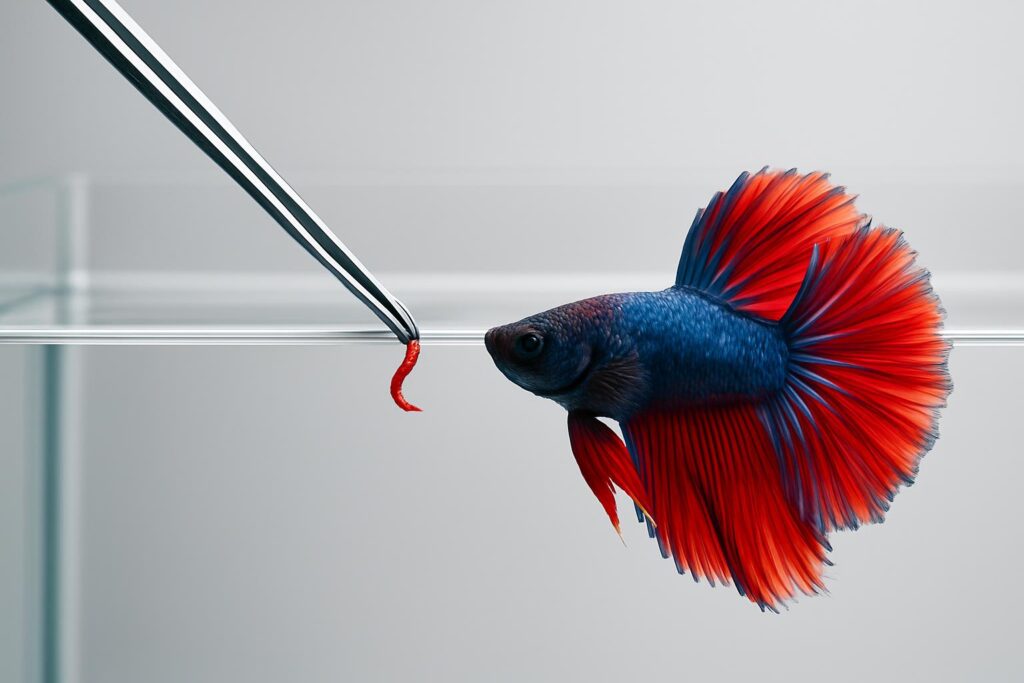
Thaw frozen foods and drain excess water. Hold tweezers at a slight angle and present the food just below the surface, a short distance from your betta. Release gently and pause. Bettas learn this routine quickly and will swim to the spot.
Hygiene to protect fish health
Rinse in fresh water and dry completely after every session. If you handle raw foods like bloodworms, do a quick weekly clean with mild, aquarium-safe practices and let the tool air-dry. Store it dry to prevent corrosion and biofilm.
Mistakes to avoid
Do not tap the glass or chase the fish. Avoid sharp, forceful motions near fins. Do not leave tweezers wet in the cabinet. Keep a separate pair for each tank if you manage multiple systems.
5 Best Betta Feeding Tweezers for 2026
1. Fluval Stainless Steel Straight Forceps 10.6 in
Fluval’s straight forceps offer clean machining, firm alignment, and a balanced length for most betta tanks. The tips grip small foods well without shredding them, and the brushed handle sits securely in wet hands. Corrosion resistance is solid when you rinse and dry routinely.
Why it helps: Accurate tip control and moderate spring tension make target feeding consistent. You can pick a single pellet or a bloodworm without fumbling.
Best for: Daily pellet feeding and precise delivery of thawed frozen foods in 5 to 15 gallon setups.
Potential downsides: All-metal tips require care near glass to avoid tapping the pane. Rinse and dry to avoid spotting.
Bottom line: A dependable, no-drama tool for most betta keepers who value precision over extras.
2. hygger Aquascaping Tweezers Set 10.6 in Straight and Curved
This set covers both feeding angles. The straight pair handles tiny items; the curved pair helps guide food around plants and wood without spooking your fish. The stainless steel construction is sturdy, and the grip pattern improves handling with wet fingers.
Why it helps: Two shapes let you adapt to your aquascape and your betta’s behavior. Curved tips are excellent for shy fish that prefer side-on approaches.
Best for: Keepers who want one set to handle pellets, worms, and hard-to-reach corners.
Potential downsides: The spring can feel firmer than average. Beginners may prefer a lighter squeeze for long sessions.
Bottom line: Versatile and practical if you want one purchase to cover all feeding angles.
3. Aqueon Aquarium Planting Tongs 10 in
Lightweight nylon tongs with a gentle grip and a soft touch near glass and fins. They will not rust and are easy to handle for new keepers. While designed for plants, they double as safe feeding tongs for pellets, brine shrimp, and larger bloodworms.
Why it helps: Non-metal tips are less intimidating to skittish bettas and reduce risk of accidental bumps.
Best for: Beginners, young hobbyists, and anyone worried about scratching glass or stressing a fish.
Potential downsides: Less precise with very tiny foods compared to fine steel tips. Grip can be weaker on slippery items.
Bottom line: A gentle, rust-proof option that trades a bit of precision for simplicity and safety.
4. SunGrow Aquarium Feeding Tweezers 10.6 in
These stainless tweezers focus on everyday feeding with lightly serrated tips that hold thawed foods well. The handle texture improves control, and the overall weight is comfortable for quick target feeds. With routine rinsing and drying, they hold up in humid fish rooms.
Why it helps: Serration increases hold on slippery foods like bloodworms without squeezing too hard.
Best for: Keepers who rotate between pellets and frozen foods and want a single, straightforward tool.
Potential downsides: Serrated tips can slightly mark very soft foods if you clamp too hard. Practice a light touch.
Bottom line: A balanced, budget-friendly pick that handles the most common betta diets.
5. GROWNEER 2-Pack Stainless Steel Tweezers 10.6 in Straight and Curved
A two-piece set that offers solid alignment and reasonable spring tension at a friendly price. The straight pinsettes target tiny bites cleanly, while the curved pair excels near plants and under driftwood. The finish is easy to wipe down after each session.
Why it helps: Owning both shapes means you can adapt to your aquascape and keep a spare tweezers dry and ready.
Best for: New hobbyists setting up a complete feeding routine and experienced keepers who want redundancy.
Potential downsides: Edges may feel sharper than premium brands. Smooth any burrs with care and handle gently near glass.
Bottom line: Strong value with the flexibility of two tools, suitable for most betta tanks.
Quick setup for success
Step-by-step feeding routine
Thaw the portion, grab a small amount at the tip, present it at a slight angle near your betta, and release. Wait a moment to let the fish strike. Repeat until the portion is finished. End the session by rinsing and drying the tool.
Care that extends tool life
Always rinse in fresh water and towel-dry. Do not store wet. If you feed raw foods, add a weekly light clean and dry completely before storage.
Conclusion
Betta feeding should be simple, precise, and safe. Choose a length around 8 to 10 inches, match the tip shape to your scape, and keep a light grip. The five tools above deliver consistent control for pellets, frozen treats, and live foods. Build a clean routine, move calmly, and your betta will learn the process fast.
FAQ
Q: What length tweezers are best for feeding a betta
A: A length of 8 to 10 inches gives you comfortable control in most betta tanks.
Q: Are curved or straight tips better for bettas
A: Straight tips offer precise pickup, while curved tips help angle food around plants and toward shy fish. Both work well.
Q: How do I prevent rust on stainless steel tweezers
A: Rinse in fresh water and dry completely after each use, then store the tool dry.
Q: Can tweezers hurt my betta
A: Risk is low if you move slowly and use smooth or gentle tips. Avoid sharp motions near fins and glass.
Q: How often should I disinfect tweezers
A: Rinse after every use and add a quick weekly clean if you handle raw foods like bloodworms.