
We are reader supported. When you purchase through links on our site, we may earn an affiliate commission. Also, as an Amazon affiliate, we earn from qualifying purchases.
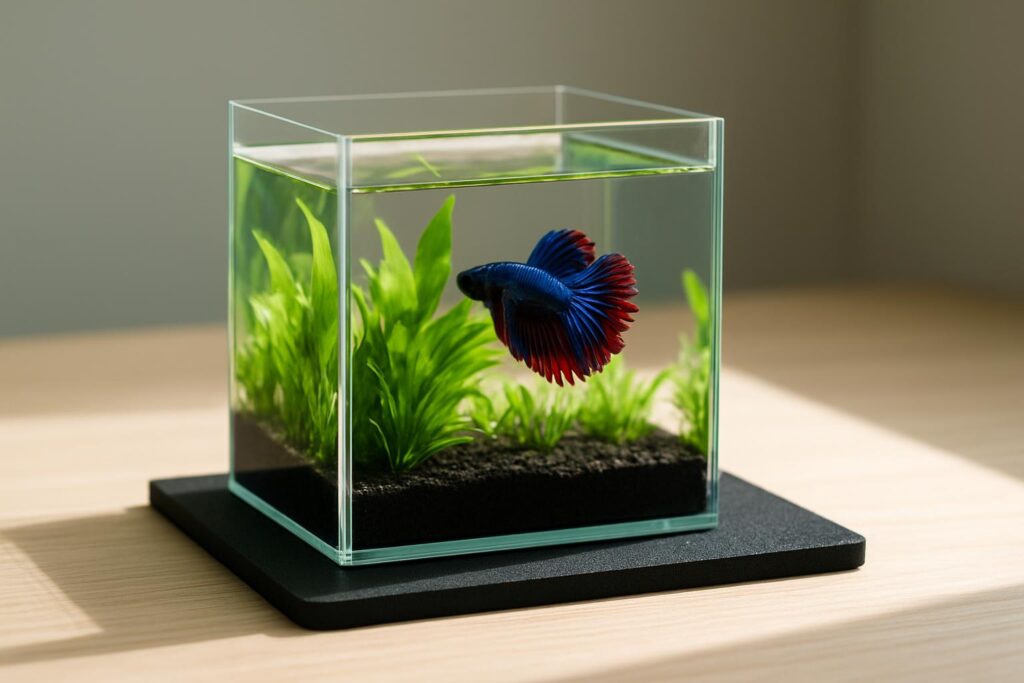
Bettas thrive when their world is stable and quiet. A proper tank mat is a small upgrade that protects glass, dampens vibration, keeps your desk safe from moisture, and reduces humming noise from filters or air pumps. If your betta lives in a 2.5 to 10 gallon setup on a shelf or desk, a good mat prevents stress microfractures from uneven surfaces and adds non-slip security. Below are the five best betta tank mats for 2026, plus how to pick the right one and set it up correctly.
Why your betta tank needs a mat
A mat does more than look tidy. It provides three core benefits:
Leveling and load spread A soft, dense layer evens out tiny bumps that cause point pressure on glass bases.
Vibration reduction Bettas are sensitive to vibration. A mat cuts mechanical noise and helps reduce stress.
Surface protection It guards wood, laminate, or stone from condensation rings, drips, and micro-scratches.
How we chose
These picks prioritize beginner-friendly setup, real-world durability, and value. Each option is easy to cut to size for common betta tanks, resists water, and offers the right density to support 3 to 10 gallon loads without compressing unevenly.
Best betta tank mats in 2026
1. Seapora Aquarium Foam Support Pad
Purpose-built for aquariums, this closed-cell foam pad is a reliable, no-nonsense choice. It is firm enough to spread weight evenly yet compliant enough to correct small imperfections on desks and shelves. For small betta tanks, you can buy a larger size and trim it cleanly with a utility knife.
Why it helps Designed for glass tanks, the density hits the sweet spot for leveling without over-squish that could cause rocking.
Best for Rimless 2.5 to 10 gallon betta tanks placed on wood or laminate surfaces.
Potential downsides Basic look and single color. You pick the size carefully or trim to fit.
Setup tip Leave a small lip of pad around the tank, just a few millimeters, for drip catch and edge protection.
2. XCEL Neoprene Foam Padding Sheet, quarter inch
Neoprene foam sheets from XCEL are a favorite DIY tank-mat option. The material is closed-cell, water resistant, and grippy on both sides. Quarter inch thickness balances cushion and stability for small aquariums. The sheet cuts cleanly and resists permanent dents under typical betta tank weights.
Why it helps Dense neoprene absorbs hum and pump buzz, reducing transmitted vibration to the furniture and water column.
Best for Apartments or bedrooms where noise damping is a priority. Works well under glass or acrylic nano tanks.
Potential downsides Slight rubber smell on first use; let it air out for a day. Not pre-sized for tanks, so trimming is required.
Thickness note Quarter inch is ideal for mildly uneven surfaces. If your table is very flat, eighth inch can also work.
3. Isolate It Sorbothane Vibration Isolation Pads, square
For maximum vibration control, Sorbothane pads are hard to beat. These viscoelastic squares are placed under the tank corners or along the base perimeter to soak up vibration and high-frequency buzz. They are overkill for many setups but shine when your stand sits on a humming fridge counter or near a subwoofer.
Why it helps Sorbothane converts vibration into a tiny amount of heat, reducing transmitted noise more than standard foam.
Best for Noisy environments, tanks near HVAC paths, or desks with sensitive microphones.
Potential downsides Cost is higher than foam. Corner-only use can concentrate load on small spots; pair with a thin full-sheet foam or cork layer if your tank is rimless to maintain even support.
Placement tip Use four equal pads near the corners or run a continuous strip under the edges for better load spread on rimless glass.
4. uxcell Foam Rubber Sheet, self-adhesive, quarter inch
This EPDM foam sheet includes a peel-and-stick backing. It is convenient when you need the mat to stay fixed to a shelf or the base of a light-weight stand. The material is closed-cell, resists moisture, and has consistent density for small tank footprints.
Why it helps The adhesive keeps the mat from sliding when you nudge the tank during maintenance, preventing sudden shifts.
Best for Small desks, narrow shelves, or renters who cannot secure a stand. Also handy under a hang-on-back filter to quiet rattles.
Potential downsides Adhesive is strong; removing later may require Goo Gone or similar. Measure twice before sticking down.
Pro tip If you want a non-permanent install, leave the paper on and use the non-adhesive side up, or add painter tape tabs under the corners.
5. Houseables Cork Roll, eighth inch
Cork is a classic leveling layer for light aquariums. It is biodegradable, easy to cut, and looks clean with wood furniture. At about eighth inch thick, it is enough to take out tiny surface irregularities for nano betta tanks without feeling mushy.
Why it helps Cork spreads load evenly and offers mild vibration damping while staying firm under small tanks.
Best for Aesthetic-first setups on wood desks or shelves where a natural look matters.
Potential downsides Less water resistant than neoprene or EPDM. Seal the edges with clear tape if you expect frequent drips. Not ideal for very wet environments.
Care note Wipe spills quickly and let the cork dry fully to maintain shape and color.
How to size and set up your mat
Pick the right thickness
For 2.5 to 10 gallon betta tanks, go with 3 to 6 millimeters of firm foam or about eighth inch of cork. Use quarter inch neoprene or EPDM if your surface has minor dips. Ultra-thick material can wobble, so avoid plush foams.
Cut to fit with a margin
Trace the tank footprint, then add a small border of a few millimeters. This protects the glass edge and catches stray drips. Use a sharp utility blade and a straightedge for a clean edge.
Clean both surfaces
Wipe the desk and the bottom glass with isopropyl alcohol and let dry. Dust and oils reduce grip and leveling performance.
Place and check level
Set the mat, then the empty tank. Use a bubble level across the long and short sides. Adjust placement before filling. Recheck level after adding water and substrate.
Mind rimmed vs rimless tanks
Rimless tanks rest on the full base and benefit most from a continuous mat. Rimmed tanks sit on a plastic frame, which already spreads load; a mat still protects furniture and reduces vibration.
Conclusion
A small, firm, water-resistant mat is one of the easiest upgrades you can make for a betta tank. For a purpose-built option, the Seapora Aquarium Foam Support Pad is the simplest choice. If you want strong noise control, add Sorbothane pads or use quarter inch neoprene like the XCEL sheet. For quick installs, the uxcell adhesive foam is convenient, and for a natural look, the Houseables cork roll fits clean decor. Choose the thickness to match your surface, cut with a clean margin, and your betta gets a steadier, quieter home.
FAQ
Q. Do betta fish really benefit from a tank mat
A. Yes. A mat levels small imperfections, cuts vibration and noise, and protects your furniture from moisture and scratches.
Q. What thickness should I choose for a 5 to 10 gallon betta tank
A. Use 3 to 6 millimeters of firm foam or about eighth inch of cork. Go up to quarter inch neoprene or EPDM if your surface is slightly uneven.
Q. How big should the mat be under my betta tank
A. Match the tank footprint and leave a small border of a few millimeters around the edges to protect glass and catch drips.
Q. Are Sorbothane pads safe to use under a rimless tank
A. Yes, but avoid point loading. Place four equal pads near corners or pair them with a thin full-sheet foam or cork layer to spread the load.
Q. Do rimmed tanks still need a mat
A. A mat is still helpful. It protects the furniture and reduces vibration, even though the plastic rim already spreads load.