
We are reader supported. When you purchase through links on our site, we may earn an affiliate commission. Also, as an Amazon affiliate, we earn from qualifying purchases.
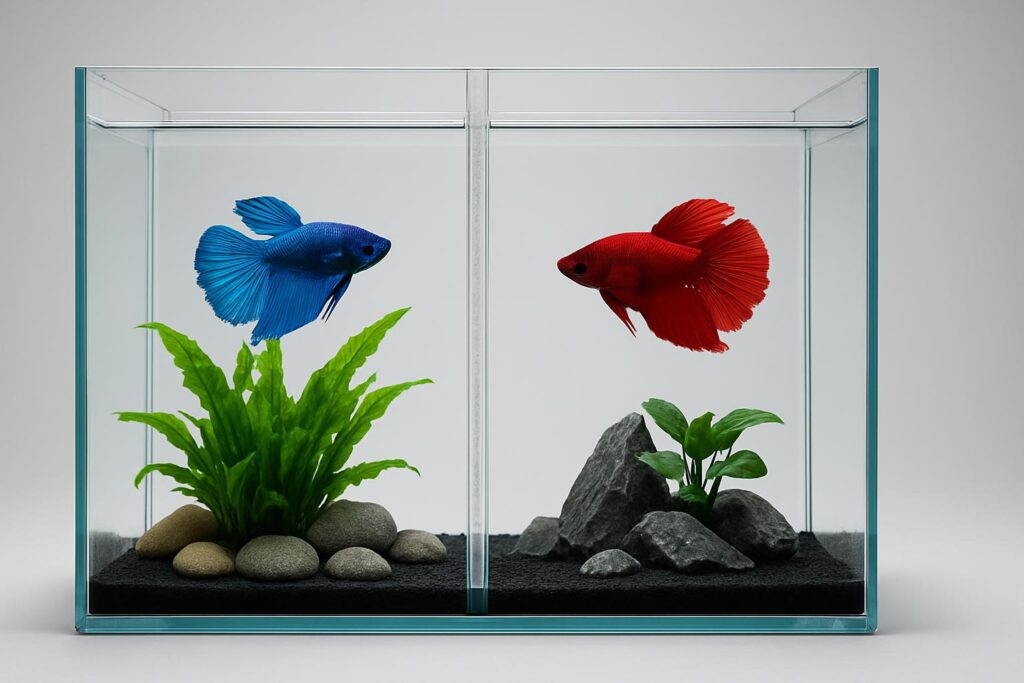
Betta fish are territorial. A good tank divider lets you keep two Bettas or a Betta with peaceful tank mates in one aquarium without risk. The right divider keeps fish safe, reduces stress, and maintains filtration across both sides. The wrong one leads to torn fins, escapes, or poor water flow. This guide narrows the options to the best dividers available now, explains why they work, and helps you avoid common mistakes during setup. For beginners, aim for at least a standard 10 gallon tank when dividing. Smaller tanks leave little room for stable water quality and enrichment.
How to choose a Betta tank divider in 2026
Fit and rigidity
The divider should fit snugly against glass with no top, bottom, or side gaps. Rigid frames and sized panels hold position under water flow and during maintenance. Flexible meshes can work if supported with enough clips and trimmed well.
Flow without gaps
Water must circulate between sides so both compartments share heat and filtration. Look for perforations or mesh that allow gentle flow but still block fish. Never rely on open gaps for circulation.
Visibility management
Constant sight of a rival causes nonstop flaring. Opaque or semi-opaque panels help. If using a clear mesh, plan to break line of sight with plants, rockwork, or a frosted film.
Safe materials and edges
Choose smooth plastic or acrylic with finished edges. Avoid sharp cut plastic or metal screens that can fray fins. Suction cups and clips should be aquarium safe.
Ease of cleaning and reconfiguration
Dividers need to be removed and rinsed. Panels that trap debris require more frequent cleaning. Systems with frames or tabs make reinstallation easier and more consistent.
The 5 best Betta tank dividers for 2026
Penn-Plax framed tank divider for 10 gallon
This rigid, framed divider is sized for standard 10 gallon tanks and uses side rails to hold a perforated panel securely. The frame helps prevent bypass along the glass and keeps the divider from bowing under flow.
Why it helps: The rail system reduces edge gaps that adventurous Bettas exploit. The perforations allow shared heat and filtration while limiting current. The rigid build simplifies cleaning and re-seating after maintenance.
Best for: New keepers who want a straightforward, stable option for a standard 10 gallon layout.
Potential downsides: It is largely size specific. If your tank is rimless or nonstandard, fit may be off. The panel surface is visible; plan plants or decor to block direct line of sight.
Setup notes: Dry fit first, then install rails firmly against clean glass. Confirm the divider meets both bottom and lid rim with no daylight showing. Add a tall plant or hardscape at midline to reduce flaring.
Lees adjustable tank divider kit
Known for cut-to-fit flexibility, this kit includes a mesh panel and rail system you trim to size. It is useful when you need to divide something other than a standard 10 gallon or prefer a tighter custom fit.
Why it helps: Custom trimming lets you match your exact internal dimensions. Properly cut, the rails press against the glass to reduce edge gaps while allowing measured flow through the mesh.
Best for: Rimmed tanks with unusual dimensions or users willing to do a precise install for a tailored seal.
Potential downsides: Requires careful measuring and clean cuts. If cut short, gaps appear at the rim or substrate line. Mesh is see-through, so visual barriers help manage stress.
Setup notes: Measure internal width at substrate level and just below the rim. Cut slightly large, then shave down slowly for a compression fit. Rinse the cut edges to remove plastic dust before installing.
Lifewithpets laser cut acrylic divider
This premium acrylic panel is manufactured in sizes for common tanks such as 10 gallon and 20 gallon long. The micro-slit or perforated design allows water movement while limiting visual contact more effectively than open mesh.
Why it helps: The semi-opaque face reduces constant flaring. Acrylic is rigid, easy to wipe clean, and holds shape over time. Suction tabs make removal straightforward during maintenance.
Best for: Owners who want lower stress through partial opacity and a clean, minimal look that is easy to keep spotless.
Potential downsides: Higher price than mesh kits. Suction-based mounting requires clean glass and periodic cup replacement. Check compatibility with thick rims before purchase.
Setup notes: Degrease glass with aquarium-safe cleaner, rinse, then apply cups slightly damp. Press out air under each cup. Use a plant wall or tall stems to further soften sightlines if needed.
UPETTOOLS mesh divider with suction clips
A budget friendly, modular option that uses grid panels and suction clips. Panels can be cut and combined, making it versatile for many glass sizes. It is common for starter setups and temporary divisions.
Why it helps: Low cost and easy to trim. Extra clips increase stability and reduce side bypass. Works well in planted layouts where plants help mask visibility and support the panel edges.
Best for: Flexible, low cost installations and users comfortable adding clips and decor to perfect the fit.
Potential downsides: If the grid openings are large, small fish or shrimp may pass through. Cups can loosen over time and need re-seating. Requires careful attention to top and bottom sealing.
Setup notes: Trim with a fine saw or strong scissors, then sand edges smooth. Place a pre-filter sponge on the filter intake between cups to block side currents and discourage exploration at the rails.
Pawfly aquarium divider system
Similar to UPETTOOLS, this system packages mesh sheets with multiple clips to lock the panel to glass. It is a straightforward DIY style divider for common small to medium tanks.
Why it helps: Multiple clip points add security and reduce panel flex. The mesh promotes water exchange and oxygenation across both compartments while keeping flow gentle.
Best for: Cost conscious setups that still aim for a tidy, secure fit with enough clips to prevent bowing.
Potential downsides: Suction cups age and can harden. Replace as needed. Clear mesh does little to limit visibility, so plan sight breaks to reduce stress-induced flaring.
Setup notes: Stagger clips along both sides and add one near the bottom center if possible. Test by gently pushing the panel to confirm no flex or pop at the edges. Cover any microgaps under the rim with a narrow strip of aquarium-safe craft mesh.
Setup checklist for a safe divided Betta tank
Seal the edges: Install the divider so it contacts bottom, sides, and just under the lid rim. Avoid even small crescent gaps at corners.
Manage visibility: Use opaque or semi-opaque dividers when possible. Otherwise, add tall plants, a moss wall, or a removable frosted film strip along the center.
Balance flow: Place the filter intake near the center or run a small sponge filter on the opposite side to maintain circulation and temperature uniformity.
Match parameters: Keep both sides at the same temperature and water level. Bettas are sensitive to drafts and sudden flow changes across a divider.
Double divider for high drive males: If flaring is constant, run two dividers with a 0.5 to 1 inch gap between them. This buffer greatly reduces visual triggers.
Maintenance tips
Rinse the divider during regular water changes to remove film and trapped debris. Inspect suction cups and clips monthly and replace any that lose grip. Trim plants so they do not wedge the divider out of alignment. Check for microgaps after gravel vacuums since substrate shifts can lift the panel.
Conclusion
Start with a snug, rigid divider that allows gentle flow without gaps. Control visibility to reduce stress, and build a balanced filtration plan for both sides. For a standard 10 gallon, the Penn-Plax framed divider is a simple, secure choice. If you want a cleaner look with reduced visibility, the Lifewithpets acrylic panel is strong and easy to maintain. For odd sizes or tight budgets, the adjustable kits from Lees, UPETTOOLS, and Pawfly offer reliable performance with careful setup. Follow the checklist, test for bypass, and your Bettas will thrive on their own side of the glass.
FAQ
Q: What should I look for when choosing a Betta tank divider
A: Prioritize a snug fit and rigidity, controlled water flow through perforations, visibility management to reduce flaring, safe smooth materials, and easy cleaning or reconfiguration.
Q: How do I stop Bettas from seeing each other across a divider
A: Use an opaque or semi-opaque panel like acrylic with micro-slits, or add tall plants, a moss wall, or a frosted film strip along the center to block direct line of sight.
Q: How can I prevent fish from slipping around or over the divider
A: Ensure the divider contacts bottom, sides, and just under the lid rim with no gaps. Add extra clips, use rail systems for a compression fit, and cover microgaps under the rim with aquarium-safe mesh if needed.
Q: How do I maintain flow and filtration in a divided Betta tank
A: Choose a divider with perforations or mesh for gentle exchange, place the filter intake near the center, or run a small sponge filter on the opposite side to balance circulation and temperature.
Q: What tank size works best for a divided setup
A: A standard 10 gallon is the practical baseline for dividing. Smaller tanks make stable water quality and enrichment difficult for two compartments.