
We are reader supported. When you purchase through links on our site, we may earn an affiliate commission. Also, as an Amazon affiliate, we earn from qualifying purchases.
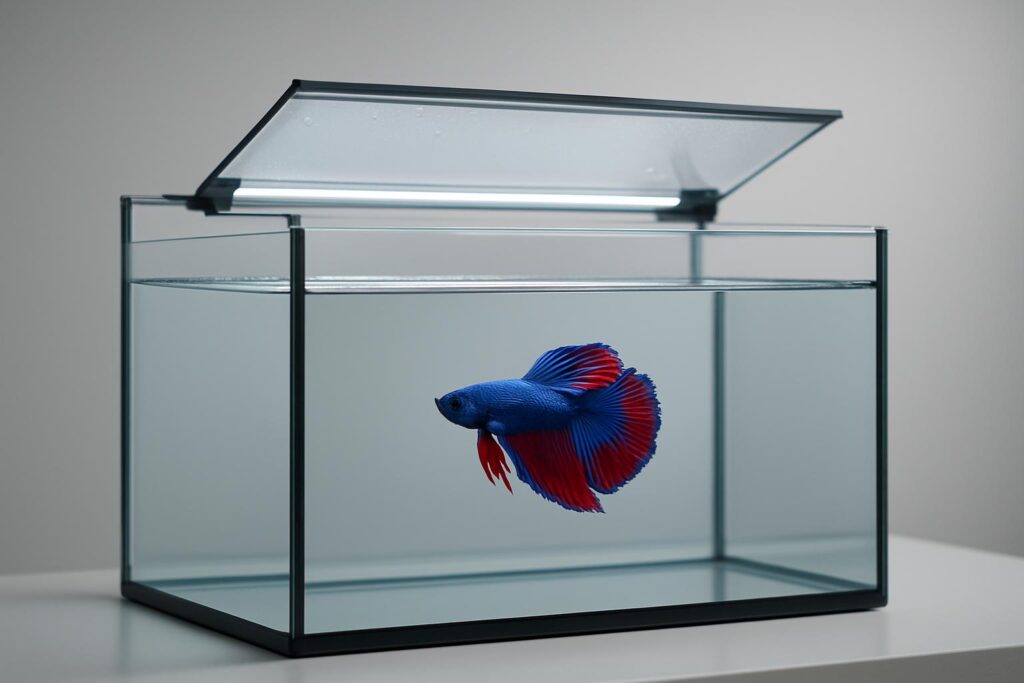
Bettas jump. Warm, humid air at the surface helps them thrive. A good lid does both jobs at once while keeping evaporation and drafts under control. In this guide, you will learn what matters most for betta lids in 2026 and see five reliable options that fit common tanks and setups. Each pick focuses on safe coverage, easy feeding, and compatibility with lights and filters so you can keep maintenance simple and your fish secure.
How to choose a betta tank lid in 2026
Fit and escape-proofing
A tight, intentional fit is non-negotiable for bettas. Measure the tank’s inside length and width, match the correct standard size, and confirm how the lid handles the back area where filters, heater cords, and airline tubing pass through. A flexible back strip you can trim is ideal. Keep gaps under 6 mm wherever possible.
Humidity and gas exchange
Bettas benefit from a warm, humid air layer above the water. Solid lids reduce evaporation and heat loss, but you still need some air exchange. The typical solution is a glass canopy with a trim-to-fit back strip or a hood with small vents. Avoid open mesh tops in most homes; they lose warmth and humidity too quickly.
Light and maintenance
Decide if you want a separate light on top of a glass canopy or an all-in-one hood with a built-in LED. Separate lights add flexibility for future plant upgrades. All-in-one hoods keep splashes off electronics and simplify cable management. Either way, plan for condensation by wiping the lid weekly to maintain clarity and light output.
Filtration and cable routing
Hang-on-back filters, sponge filters with airlines, heaters, and smart sensors all need neat routing. Look for lids with a soft back strip you can cut cleanly, hinged feeding doors, and enough rigidity that the lid does not flex when you lift it for maintenance.
The 5 best betta tank lids for 2026
Aqueon VersaTop Hinged Glass Canopy
Why it helps: This is the classic hinged glass canopy that fits most framed tanks in popular sizes. The clear plastic back strip trims easily for filter intakes and cables, keeping gaps minimal. The hinged front gives quick feeding access without lifting the entire top. It supports most clip-on or strip lights without wobble.
Best for: Standard framed 5.5, 10, 20 High, 29, and 55 gallon tanks where you want a separate light and precise cord cutouts. Great for reducing evaporation and maintaining a warm, humid surface layer for bettas.
Notable features: Polished glass edges, low-profile handle, and a hinge that opens smoothly. The glass resists scratches far better than acrylic.
Potential downsides: Mineral deposits can cloud the glass unless you wipe it weekly. The hinge may stiffen over time; a rinse in warm water and mild soap, then a thorough rinse, restores movement.
Setup tip: Scribe the back strip with a utility knife before cutting so the opening for your filter is straight and snug.
H2Pro Glass Canopy
Why it helps: A sturdy, budget-friendly glass canopy available in many sizes. It includes a trim-to-fit back strip and a simple front handle. If you want reliable coverage with minimal fuss, this delivers strong humidity control and jump prevention for bettas.
Best for: Framed tanks when you want value pricing without giving up a clean look. Works well with clip-on lights and sponge filter airlines.
Notable features: Good hinge stiffness to keep the panel from slamming, clear glass for accurate light transmission, and a back strip that accepts tidy cable slots.
Potential downsides: Edges may feel less polished than premium canopies. Inspect the glass and hinge on arrival and seat the back strip fully for a true seal.
Setup tip: Dry-fit your filter and heater cables, mark the back strip, and make two narrower cuts instead of one wide notch to keep escape gaps tighter.
Marineland Glass Canopy
Why it helps: Built to pair neatly with tanks that have center braces and standard trim, this canopy covers large openings securely with a robust hinge. It handles condensation well and provides a stable platform for light bars.
Best for: Owners of Marineland or similarly sized trimmed tanks who want a factory-like fit and minimal edge gaps for jumpy bettas.
Notable features: Quality hinge, clear glass, and a firm back strip that keeps its shape after trimming. The weight helps it sit flush without rattling.
Potential downsides: Sizing names can be confusing. Measure inside dimensions carefully and match the exact model number to your tank size.
Setup tip: If you run a larger hang-on-back filter, cut a stepped opening in the back strip so the lid still closes tightly over the cable run.
Aqueon Deluxe LED Full Hood
Why it helps: An all-in-one hood with integrated LED lighting, hinged feeding door, and splash protection. It seals the tank perimeter better than many clip-on light setups, which helps hold humidity and temperature for bettas.
Best for: Beginners who want a simple, tidy top with built-in light for low to medium-light plants like java fern and anubias. Good for small living spaces where evaporation control matters.
Notable features: Even light spread, quiet operation, and fewer cables. The hood keeps curious pets or kids from touching the water.
Potential downsides: Not intended for rimless tanks. Light output is moderate, so it is not for high-light aquascapes. Plastic components can warp if placed on very hot fixtures or near strong heat sources.
Setup tip: Seat the hood squarely on the tank rim and route the power cord along the back channel to preserve a tight seal on both corners.
Landen Rimless Aquarium Cover Glass
Why it helps: For rimless nano tanks popular with betta keepers, this dedicated cover glass matches the tank footprint and preserves the clean aesthetic. It reduces evaporation while maintaining clear viewing lines.
Best for: Landen or similarly sized rimless aquariums where standard framed canopies will not fit. Ideal if you want a minimalist look and still protect against jumps.
Notable features: Precision-cut glass, low-profile supports, and open sections that allow small equipment cables while keeping gaps narrow.
Potential downsides: Coverage depends on the exact tank model. Verify length, width, and glass thickness compatibility before ordering. Fewer cable-routing options than a canopy with a back strip, so plan your equipment layout carefully.
Setup tip: Pair with a compact internal filter or a discreet intake to avoid wide cutouts, and position the feeding gap away from high-flow areas.
Setup tips for quiet, safe operation
Trim precisely: When cutting a back strip, start small. Test fit, enlarge in 1–2 mm steps, and stop as soon as the filter body and cables pass cleanly.
Control condensation: Wipe the lid weekly with a soft cloth. If water drips toward your light, tilt the lid slightly back so droplets run away from electronics.
Protect the labyrinth organ: Keep the room draft-free and maintain a stable tank temperature. A tight lid with a small equipment gap balances humidity and gas exchange well for bettas.
Use the feeding door: Open only the hinge panel or door during feeding to prevent escapes. Close it right after feeding.
Conclusion
A secure, well-fitted lid is basic betta care. Glass canopies like the Aqueon VersaTop, H2Pro, and Marineland models give you flexible lighting and precise cable routing. All-in-one hoods such as the Aqueon Deluxe LED Full Hood simplify setup and reduce clutter. For rimless tanks, the Landen cover glass preserves the clean look without sacrificing safety. Pick the style that fits your tank and routine, trim carefully to close gaps, and maintain the lid weekly. Your betta will have warm, stable air, and you will have fewer spills, jumps, and surprises.
FAQ
Q: Do bettas need a lid?
A: Yes. A proper lid prevents jumping, reduces evaporation, and holds a warm, humid air layer that benefits bettas while still allowing some gas exchange through small gaps or vents.
Q: Should I choose a glass canopy or an LED hood?
A: Choose a glass canopy if you want flexibility to upgrade lights and make precise cable cutouts. Choose an LED hood if you want a simple all-in-one top with integrated lighting and strong perimeter coverage.
Q: How do I size the lid correctly?
A: Measure the inside length and width of the tank, match the standard size, and confirm compatibility with your filter and cables. For rimless tanks, use a model designed for your specific aquarium dimensions.
Q: How do I deal with condensation under the lid?
A: Wipe the lid weekly, tilt it slightly so droplets run away from electronics, and use the feeding door to limit opening the whole top during daily care.
Q: Can I use a mesh lid for a betta?
A: Avoid mesh-only lids in most homes because they lose heat and humidity quickly. Solid lids with small vents or tight back-strip cutouts are better for bettas.