
We are reader supported. When you purchase through links on our site, we may earn an affiliate commission. Also, as an Amazon affiliate, we earn from qualifying purchases.
Healthy plants transform a betta tank from a bare box into a stable micro-ecosystem. They calm fin nippers, buffer water quality swings, and make feeding and maintenance easier. If you are starting or upgrading a betta setup in 2026, focus on hardy species that thrive in small, low-tech aquariums. The picks below are simple to care for, gentle on fins, and proven to perform.
Why live plants help bettas
Natural cover reduces stress
Bettas feel secure when they can rest on broad leaves and weave through gentle stems. More cover leads to calmer behavior, steadier appetite, and fewer fin nips from boredom or reflection chasing.
Cleaner water with less effort
Plants absorb ammonia byproducts, stabilize pH swings, and cultivate biofilm that supports a robust microbial community. The result is clearer water and steadier parameters between water changes.
Low-tech friendly
All five picks below grow under basic LED kit lights, do not require injected CO2, and tolerate the warmer temperatures bettas prefer.
How these picks were chosen for 2026
Beginner proof
Slow to moderate growers that handle missed doses of fertilizer, variable tap water, and modest light.
Safe leaves and shapes
No sharp edges. Broad leaves or soft floating roots that respect delicate fins and encourage bubble nests.
Compact growth for small tanks
Most betta homes are 5 to 10 gallons. These plants fit that footprint without weekly rescapes.
Reliable availability
Common species with consistent quality from established growers and vendors.
5 best betta tank plants for 2026
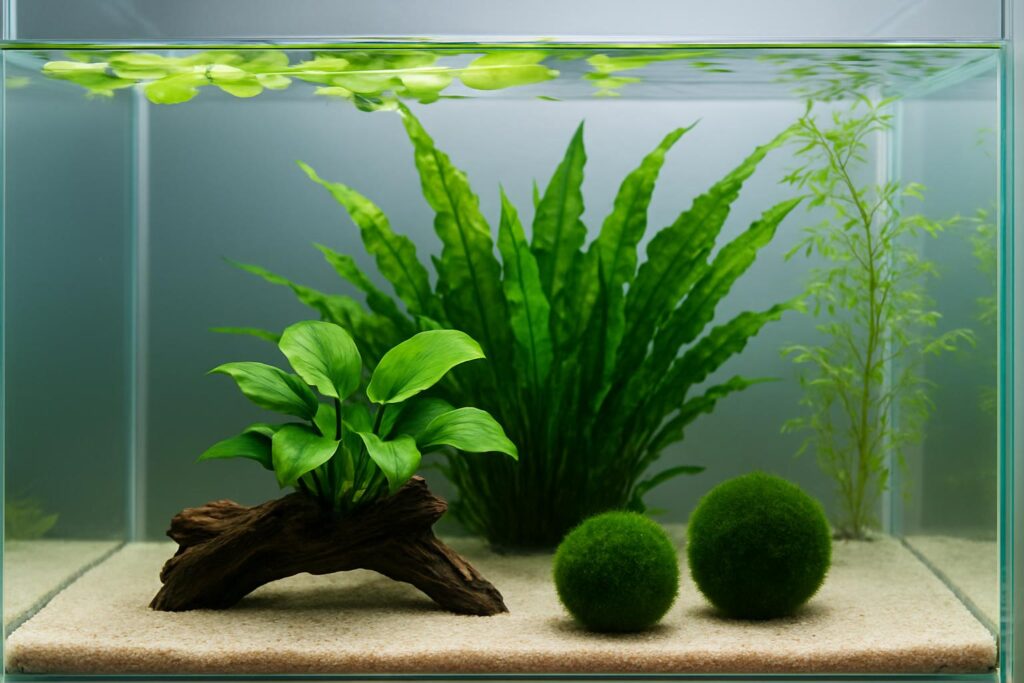
1. Greenpro Anubias Barteri Nana on Driftwood
A classic betta perch. Anubias nana offers thick, broad leaves that bettas lounge on, pre-attached to a small driftwood piece for instant scape impact. The rhizome grows slowly, tolerates low light, and resists algae better than many broadleaf species when not overlit.
Care snapshot
Low light. Do not bury the rhizome. Place midground. 75 to 82 F. Liquid fertilizer optional. No CO2 needed.
Why it helps: Wide leaves create natural resting pads near the surface where bettas like to breathe and nap. Being on wood keeps the rhizome safe from substrate rot and makes placement effortless.
Best for: Beginners and low-maintenance tanks; anyone who wants instant structure without planting.
Potential downsides: Very slow growth. Under strong light or long photoperiods, leaves can collect spot algae if nutrients run low.
Pro tip: Angle the wood so a leaf sits an inch below the surface to make a favored hammock spot.
2. Greenpro Java Fern Microsorum pteropus
Java fern is as tough as Anubias but taller, giving a leafy backdrop that frames a betta without crowding swim space. It attaches to wood or rock and spreads by producing plantlets on leaf tips, which you can reattach for a fuller look.
Care snapshot
Low to medium light. Tie to wood or rock. 72 to 82 F. Liquid fertilizer helps but is not required. No CO2 needed.
Why it helps: Soft, rippling leaves diffuse line of sight, reduce mirror stress, and entice gentle exploring. Attachment growth keeps substrate open for easy cleaning.
Best for: Background in 5 to 10 gallon tanks; low-tech scapes that need vertical greenery.
Potential downsides: Burying the rhizome causes rot. Under very high light, black spots or algae can appear on older leaves.
Pro tip: Use cotton thread or gel superglue on the rhizome to anchor to decor; new roots will grip in a few weeks.
3. Aquatic Arts Marimo Moss Balls
Marimo are spherical algae colonies that act as living pre-filters, trapping debris and hosting biofilm. Bettas roll and rest on them, and their velvety texture is fin safe. They also help seed beneficial microorganisms in new setups.
Care snapshot
Low light. Place anywhere. 70 to 80 F preferred; keep shaded in warmer tanks. Turn weekly to maintain round shape.
Why it helps: Gentle surface for exploration, extra microbial capacity, and a simple indicator of water quality because marimo stay plush and deep green when conditions are stable.
Best for: Nano tanks with minimal equipment; beginners who want zero-planting effort.
Potential downsides: Warm tanks above 80 F can stress marimo. If neglected, they flatten on the bottom and collect detritus.
Pro tip: Squeeze gently in removed tank water during water changes to release trapped debris, then rotate.
4. Greenpro Amazon Frogbit Limnobium laevigatum
Frogbit is a floating plant with smooth, round leaves and trailing roots that bettas love to weave through. It calms surface glare, supports bubble nest building, and absorbs excess nutrients fast.
Care snapshot
Low to medium light. Float at the surface. Gentle surface flow. 72 to 82 F. Occasional liquid fertilizer supports growth.
Why it helps: Shade reduces stress and algae on lower leaves. Long roots create a safe, suspended thicket without blocking swimming lanes below when thinned regularly.
Best for: Tanks with brighter lights or skittish bettas that perk up under shade.
Potential downsides: Strong surface agitation tears roots and stalls growth. If left unchecked, it can cover the surface and restrict gas exchange.
Pro tip: Corral frogbit with airline tubing to form a floating ring that keeps the surface patch tidy and away from the filter outflow.
5. Mainam Water Wisteria Hygrophila difformis
Water wisteria is a fast, lacey stem plant that adapts to a range of conditions. It can be rooted in fine gravel or sand, or even floated for softer growth and quick nutrient export. Fast growth helps outcompete algae in young tanks.
Care snapshot
Medium light preferred but tolerates low. Root in substrate or float. 74 to 82 F. Root tabs boost growth if planted. No CO2 required.
Why it helps: Rapid nutrient uptake stabilizes water quality and offers dense cover for shy bettas. Floating stems create a soft canopy that diffuses light.
Best for: New tanks that need quick balance; keepers who want dynamic growth without CO2.
Potential downsides: Fast growth needs trimming every one to two weeks in strong light. Fragile stems can break if handled roughly.
Pro tip: Replant top cuttings and discard the older base to keep a fresh, compact hedge.
Planting and care tips for long term success
Dial in light and photoperiod
Start with 6 to 8 hours of light per day. If algae appears, shorten to 6 hours and improve nutrient balance rather than blasting more light. Frogbit can buffer brighter fixtures by shading the water column.
Fertilizer and substrate
Use an all purpose liquid fertilizer weekly for leaf feeders like Anubias and Java fern. Add root tabs under wisteria if you plant it in sand or inert gravel. Dose lightly and watch plant response before increasing.
Flow management
Bettas prefer calm surfaces. Use a sponge filter or baffle the outflow. This also protects frogbit roots and makes bubble nests more stable.
Quarantine and rinse
Rinse new plants in dechlorinated water to remove debris. If possible, hold them a few days in a separate container to monitor for snails or hitchhikers before adding to the display tank.
Trim with a purpose
Remove yellow leaves on Anubias and Java fern to direct energy to new growth. Thin frogbit weekly to keep at least one third of the surface open. Replant healthy wisteria tops and discard older stems to maintain form.
Stable betta parameters
Most of these plants thrive alongside bettas at 76 to 80 F, gentle filtration, and weekly partial water changes. Consistency beats perfection.
Conclusion
Pick two to three complementary species for a balanced layout. A wood mounted Anubias or Java fern for structure, frogbit for shade, and either marimo or wisteria for nutrient control creates a resilient, low maintenance habitat. Keep the light moderate, dose lightly, trim on schedule, and your betta will respond with brighter color, steadier activity, and confident behavior.
FAQ
Q: Do these plants need CO2 injection
A: No. All five picks grow well in low tech tanks without CO2 when given modest light and basic nutrients.
Q: Which plant provides the best resting spots near the surface
A: Anubias Barteri Nana on Driftwood creates broad leaf hammocks and can be positioned close to the surface to support easy resting.
Q: My light is bright. How can I reduce glare and stress for my betta
A: Add Amazon frogbit to create a soft canopy that shades the tank and calms surface glare.
Q: What is the simplest option if I do not want to plant anything
A: Marimo moss balls require no planting, just place them in the tank, rotate weekly, and gently squeeze during water changes.
Q: How should I anchor Java fern and Anubias
A: Tie or glue the rhizome to wood or rock and avoid burying it, which can cause rot.