
We are reader supported. When you purchase through links on our site, we may earn an affiliate commission. Also, as an Amazon affiliate, we earn from qualifying purchases.
Clear, stable water is the foundation of a healthy betta. Without the right test kit, you are guessing. In 2026, there are faster, simpler, and more accurate options than ever. This guide compares the five best betta water test kits, explains which one fits your routine, and shows how to build a testing plan that keeps your fish thriving.
How to choose a betta water test kit
Know the must-test parameters
For a betta tank, the essentials are ammonia, nitrite, nitrate, and pH. Ammonia and nitrite must stay at 0 ppm. Nitrate should be kept low, ideally under 20 ppm with regular water changes. Bettas prefer a stable pH between 6.5 and 7.5.
Choose the format that fits your routine
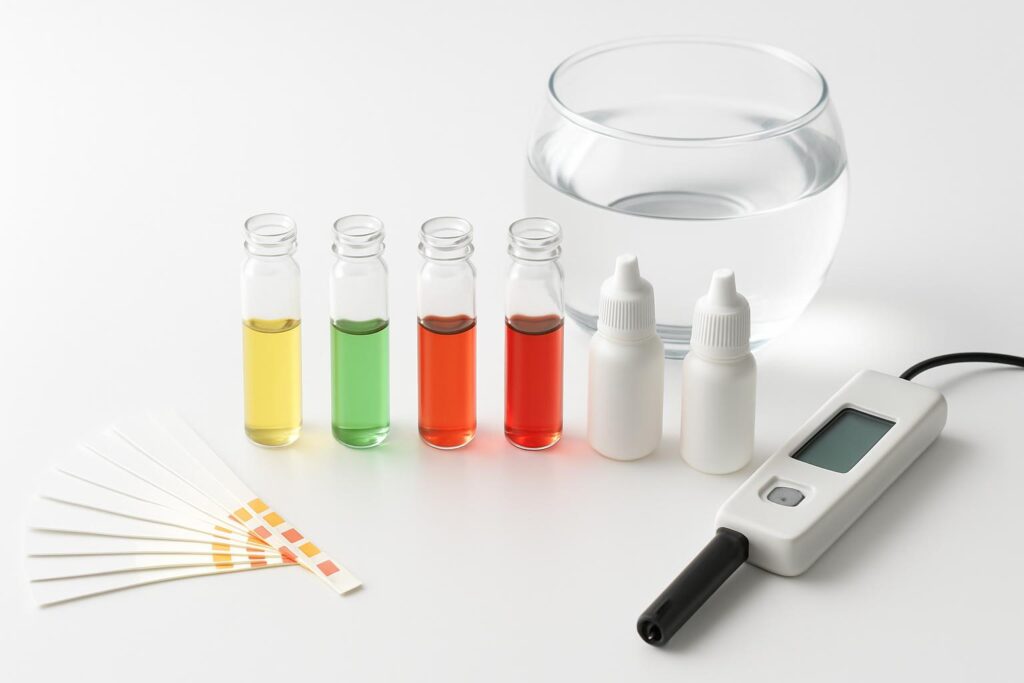
Liquid drop kits are very accurate and cost effective for ongoing testing. Test strips are fast and simple for quick checks. Digital meters are best for high precision pH. Continuous monitors offer at-a-glance alerts between regular tests.
Build a simple schedule
New tanks need testing every 1 to 2 days until the cycle is complete. Established tanks do well with weekly tests for ammonia, nitrite, and nitrate, and a pH check weekly or biweekly. Test more often after a filter change, deep cleaning, or when your betta shows stress.
1) API Freshwater Master Test Kit
What it tests and why it stands out
This classic liquid kit measures ammonia, nitrite, nitrate, low-range pH, and high-range pH with high accuracy. It is the gold standard for cycling new tanks and for ongoing weekly checks. Each reagent set lasts for many tests, making it cost efficient over time.
Why it helps: Gives precise readings for the four parameters that matter most for bettas, so you can catch problems early and fine tune water changes.
Best for: New tank cycling, weekly monitoring, owners who want reliable numbers over convenience.
Potential downsides: Color matching is subjective under poor lighting. The process takes a few minutes per test. Reagents expire over time and need replacing.
Pro tips for accurate results
Rinse the glass tubes with tank water before each test. For nitrate, shake bottle number 2 very hard for 30 seconds, then the test tube for a full minute, and wait the full development time before reading. View the color against the chart in bright natural light.
2) Tetra EasyStrips 6-in-1
What it tests and why it stands out
These strips measure pH, nitrite, nitrate, chlorine, GH, and KH in about a minute. They are ideal for quick scans before a water change or after maintenance. KH and GH readouts help you understand stability and mineral content, both useful for betta care in different tap waters.
Why it helps: Fast routine checks encourage consistency. You get a broader snapshot of water chemistry with one dip.
Best for: Busy owners who want a quick overview and a simple yes or no on whether to change water now.
Potential downsides: Less precise than liquid tests. Ammonia is not included, so pair with a dedicated ammonia test. Strips degrade if exposed to humidity.
Pro tips for accurate results
Open only when needed and close the lid promptly. Do not touch the pads. Read at the exact time listed in the instructions. Store in a dry, cool place to maintain reliability.
3) Seachem MultiTest Ammonia
What it tests and why it stands out
This kit measures both free ammonia and total ammonia. Free ammonia is the toxic form that harms fish, while total ammonia includes bound forms that may be detoxified by conditioners like Prime. The kit includes a reference sample so you can verify accuracy at home.
Why it helps: Removes confusion when using ammonia detoxifiers and during cycling. You see the number that actually matters for safety right now.
Best for: Owners cycling a new tank, anyone using water conditioners that bind ammonia, and those troubleshooting unclear ammonia readings.
Potential downsides: More steps than a basic test. Only tests ammonia, so pair with nitrite and nitrate monitoring.
Pro tips for accurate results
Test shortly before and a few hours after dosing conditioners to understand both free and total readings. Keep the kit parts clean and follow the timing windows closely for consistent results.
4) Apera Instruments PH20 Waterproof pH Tester
What it tests and why it stands out
This digital meter gives fast, high precision pH readings with automatic temperature compensation. It calibrates easily with standard solutions and stores readings reliably when cared for. For bettas, stable pH is the goal, and a digital meter makes tracking small shifts simple.
Why it helps: Removes guesswork from color charts and makes it easier to confirm pH stability over time.
Best for: Owners who adjust water with conditioners or buffers, keep multiple tanks, or want a consistent pH baseline.
Potential downsides: Requires proper storage solution and periodic calibration to stay accurate. Higher upfront cost than strips or liquid pH tests.
Pro tips for accurate results
Always keep the probe moist in storage solution, not dry. Calibrate monthly or after heavy use. Rinse the probe in distilled water between tests to prevent contamination.
5) Seachem Alert Combo Ammonia and pH
What it tests and why it stands out
These in-tank indicators continuously display free ammonia and pH using color-changing sensors. They add an extra layer of protection between scheduled tests by alerting you to sudden spikes, power outages, or filter issues that can raise ammonia.
Why it helps: Continuous monitoring offers a quick glance assurance that everything is stable without opening a kit.
Best for: Small betta tanks, new setups, and anyone who wants a passive early warning system.
Potential downsides: Not as precise as dedicated tests. Sensors need replacing periodically and do not measure nitrite or nitrate.
Pro tips for accurate results
Place the alerts where you can see them easily. Use them alongside weekly liquid or strip testing so you track nitrate and confirm exact values.
Putting it all together
Simple testing toolkit for a betta
Combine a core kit with a convenience tool. Use the API Freshwater Master Test Kit for accurate ammonia, nitrite, nitrate, and pH numbers. Add Tetra EasyStrips for quick pre water change scans or a Seachem Alert for continuous peace of mind. If you adjust pH or want high accuracy, include a digital pH meter like the Apera PH20. If you rely on conditioners that bind ammonia, keep the Seachem MultiTest Ammonia on hand for clarity.
Routine that works
Weekly: test ammonia, nitrite, nitrate, and pH. After big maintenance or a filter change: add an extra test day. During cycling: test every 1 to 2 days. Note results in a simple log. Stability, not chasing perfect numbers, is the goal.
FAQ
Q: Which parameters should I test most often for a betta
A: Ammonia, nitrite, nitrate, and pH. Keep ammonia and nitrite at 0 ppm, and nitrate ideally under 20 ppm with regular water changes.
Q: Are liquid tests better than strips for bettas
A: Liquid kits are more precise and cost effective over time, while strips are faster for quick scans. Many owners use both for convenience and accuracy.
Q: Do I need to test GH and KH for a betta
A: It helps. KH supports stable pH, and GH reflects minerals. The Tetra 6 in 1 strips include both and give a useful snapshot of stability in different tap waters.
Q: How often should I test a betta tank
A: Weekly in established tanks, more often during cycling or after major maintenance. Test extra when your betta shows stress.
Q: How do I get accurate nitrate readings with a liquid kit
A: Shake the nitrate reagent vigorously, shake the mixed test for a full minute, and wait the full development time before comparing the color in bright light.