
We are reader supported. When you purchase through links on our site, we may earn an affiliate commission. Also, as an Amazon affiliate, we earn from qualifying purchases.
Driftwood turns a basic betta tank into a stable, low-stress habitat. It creates cover, softens water with gentle tannins, builds biofilm for natural grazing, and anchors plants. The right piece also fits a small footprint, keeps edges smooth for delicate fins, and will not crash pH. Below are the top three driftwood choices for 2026, plus simple prep and care so you get the benefits without surprises.
How driftwood helps bettas
Cover and confidence
Bettas relax when they have shaded hideouts and broken sight lines. A good branch or arch gives shelter without blocking swim space. This reduces stress and flaring and leads to steadier feeding and brighter color.
Gentle tannins and stability
Many driftwoods release tannins. These lightly lower pH and soften water within a safe range in most tap setups. Tannins also create a mild tea tint that calms fish and supports a balanced microbiome.
Biofilm and grazing
New wood supports biofilm and beneficial bacteria. Bettas pick at these surfaces, and the added microbial diversity helps stabilize a young tank, especially in nano volumes.
What to look for in betta-safe driftwood
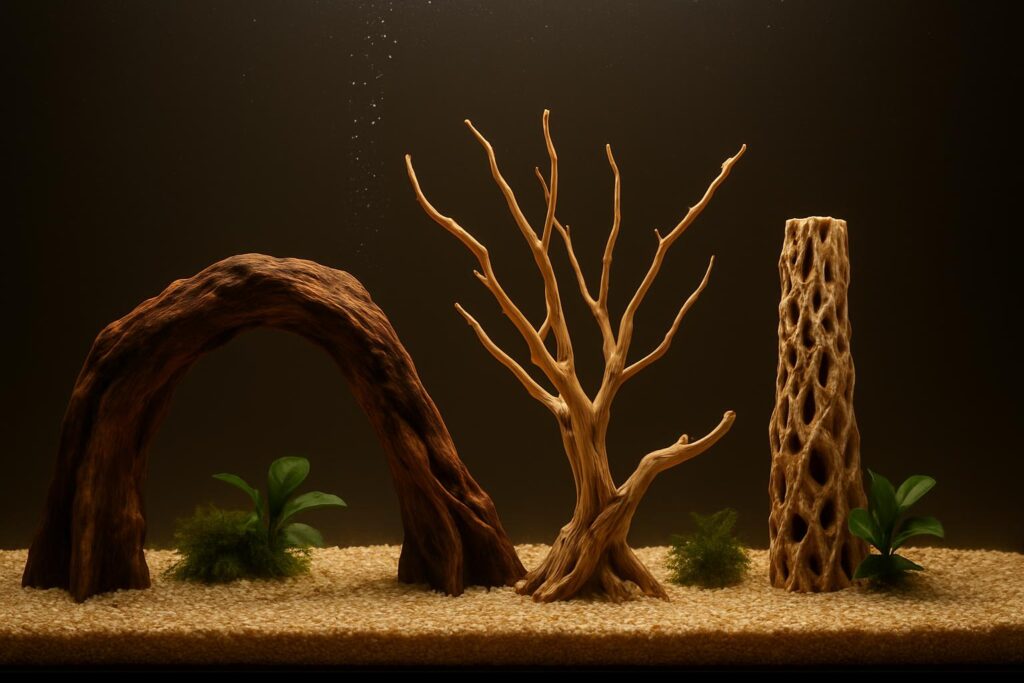
Focus on smoothness and shape. Avoid sharp points and rough cuts. Choose sizes that fit 3 to 10 gallon tanks without crowding the surface where bettas breathe. Consider tannin strength. Mopani is high, spider wood is moderate, cholla is light. Expect to pre-soak floating woods. Spider wood often floats for days, while Mopani sinks quickly.
Match the piece to your water. If your tap is already very soft and acidic, pick a lower-tannin wood. If your tap is hard and alkaline, a higher-tannin wood can help nudge parameters in a betta-friendly direction.
The 3 best betta driftwood pieces for 2026
Zoo Med Mopani Wood Aquarium Decoration, Medium
Mopani is a classic two-tone hardwood that sinks fast and releases a healthy dose of tannins. The medium size suits a 5 to 10 gallon tank and provides a natural arch with a compact footprint. The dense grain resists decay, so one piece can last for years.
Why it helps: Mopani offers instant stability thanks to its density and tannins. It creates a shaded cave and a solid anchor for anubias or java fern. It also sits flat and rarely shifts, which protects glass and plants.
Best for: Betta keepers who want a blackwater vibe, gentle pH reduction, and a sink-ready piece with minimal float time. Great in small tanks where a single statement piece defines the scape.
Potential downsides: Tannins can be strong for the first weeks. Expect tea-colored water and a mild pH drop. If you prefer crystal clear water, you will need extra pre-soaking and a few larger water changes. Some pieces have a smooth face and a gnarlier back; pick the smoother side for exposed areas to protect fins.
Setup tips: Scrub, then soak 3 to 7 days, changing water daily until tannin output slows. Boiling helps but can deepen color release at first, so monitor. Place the arch so your betta can pass under it without brushing fins on edges. Tie rhizome plants to shaded crevices with cotton thread.
Emours Natural Spider Wood Root
Spider wood, also called azalea root, has branching arms that create intricate cover without large bulk. It is ideal for bettas because it breaks sight lines while keeping open water for slow cruising and bubble nest building.
Why it helps: The fine branching gives multiple perches and shaded pockets. It grows biofilm quickly, which supports a stable micro-ecosystem and grazing behavior. It looks mature with minimal effort and pairs well with small epiphytes and moss.
Best for: Aquascapers who want a natural, airy layout in 3 to 10 gallon tanks. It is perfect for soft scapes with floating plants and leaf litter, or for a planted nano with carpeting and delicate stems.
Potential downsides: Spider wood usually floats for several days and may weep a white biofilm in the first month. The film is harmless and often eaten by shrimp or snails. Keep edges smooth by trimming sharp tips and lightly sanding where needed.
Setup tips: Pre-soak 1 to 2 weeks with daily water changes. Weigh it down with a rock or bury the base slightly until it waterlogs. If biofilm appears, siphon it during water changes or gently brush it off. Use fishing line or glue to attach moss to branch forks for extra cover.
SunGrow Natural Cholla Wood for Shrimp and Fish
Cholla wood is a lightweight cactus skeleton with tunnel-like holes. Small pieces are easy to place in nano tanks and create natural hideouts for shy bettas without blocking the surface. It releases light tannins and softens water gently.
Why it helps: The porous walls host biofilm quickly, offering grazing and microbial diversity. The tunnels act as quick retreats that lower stress. The compact size fits even 3 to 5 gallon setups.
Best for: Beginners who want a simple, budget-friendly piece that conditions water lightly and adds instant interest. It works well with sand substrates and leaf litter.
Potential downsides: Some cuts can have rough rims. Lightly sand any sharp edges to protect fins. Cholla floats at first and gradually softens over months, so plan to replace pieces as they wear down. Because of the hole size, do not wedge it against glass where fins could snag during tight turns.
Setup tips: Boil 10 to 20 minutes to remove trapped air, then soak until it sinks. Rinse well before placement. Tuck a small anubias or moss into a tunnel for extra cover and a more natural look.
Preparation and placement checklist
Rinse and scrub every piece to remove dust. Pre-soak until tannins and buoyancy settle to your liking. Test pH and hardness before and after adding the wood. Place the piece so your betta can access the surface easily at all times. Leave clear swimming lanes along the front glass for viewing and routine feeding.
Add plants to increase cover without clutter. Anubias, java fern, and moss attach well and tolerate low light. Use cotton thread or fishing line, avoid burying rhizomes. Check all contact points for snags. If in doubt, sand it smooth.
Ongoing care and water chemistry
Expect a mild amber tint at first, strongest with Mopani. This is normal and often beneficial. If the color is too dark, increase partial water changes or add fresh carbon temporarily. Monitor pH. Most tanks stabilize within a few weeks. Siphon debris from around the base during weekly maintenance, and brush away any film that lingers on spider wood.
Conclusion
Choose Mopani if you want a sink-ready, tannin-rich centerpiece with long life. Choose spider wood if you prefer airy branches, fast biofilm, and a natural scape with open water. Choose cholla if you need compact tunnels, light tannins, and simple placement in a small tank. With proper prep and smooth edges, any of these options will raise betta comfort and help your aquarium mature with fewer swings.
FAQ
Do bettas need driftwood
No, but the right wood adds cover, gentle tannins, and biofilm that reduce stress and support a stable tank. It also makes a small aquarium feel more natural and secure.
Will driftwood lower my pH
Yes, slightly. Mopani tends to lower pH the most, spider wood is moderate, and cholla is light. Always test before and after adding wood and adjust water changes as needed.
How should I prepare driftwood before adding it
Scrub, then pre-soak until it stops floating and tannins slow down. Boiling helps cholla sink faster and can speed initial leaching on Mopani and spider wood. Rinse well, then place with smooth edges facing outward.
Is white fuzz on new driftwood normal
Yes. Spider wood often develops a harmless white biofilm in the first month. Shrimp or snails will graze it, and you can brush or siphon it during water changes.
What size wood fits a 5 gallon betta tank
A single medium Mopani arch or a 6 to 10 inch spider wood branch works well. Keep open water near the surface so your betta can breathe and build nests without obstruction.