
We are reader supported. When you purchase through links on our site, we may earn an affiliate commission. Also, as an Amazon affiliate, we earn from qualifying purchases.
A nano aquarium is a compact, rewarding start to fishkeeping. The small size keeps costs and maintenance low, but it also demands good planning and careful species selection. Choose fish that thrive in tight spaces, tolerate small fluctuations, and show natural behavior in groups or as calm solo fish. This guide walks you through the best small fish species for a first nano tank, simple setup rules, stocking examples, and daily care that keeps fish healthy and active.
What Counts as a Nano Aquarium
Most hobbyists consider tanks under 15 gallons or about 57 liters as nano. Common sizes are 5 gallons, 10 gallons, and 15 gallons. Smaller water volume means faster swings in temperature and water quality. Because of this, stable equipment, modest stocking, and regular water changes matter more than in larger tanks.
Core Principles for Nano Success
Start with a fully cycled filter. Use beneficial bacteria and a fishless cycle with bottled bacteria and ammonia. Wait until ammonia and nitrite are consistently at zero before adding fish.
Keep parameters steady. Aim for stable temperature, pH, and hardness that match your chosen species rather than chasing exact numbers with additives.
Choose gentle filtration. Low to moderate flow prevents stress in small tanks. A sponge filter or a small internal or hang-on-back filter with a pre-filter sponge works well.
Heat tropical tanks. Most nano fish like 72 to 78 Fahrenheit or 22 to 26 Celsius. Use an adjustable heater sized for your tank to avoid swings.
Light for plants, not algae. Use a modest LED, run 6 to 8 hours daily, and add live plants to balance nutrients.
Test weekly. Check ammonia, nitrite, nitrate, and pH. Adjust maintenance to keep nitrate under 20 to 30 ppm.
Water Parameters Simplified
Most recommended nano fish do well at pH 6.5 to 7.5 and soft to moderate hardness. Keep temperature within the range listed for each species. White cloud mountain minnows prefer cooler water. Bettas and many tropical tetras and rasboras do best in the mid 70s Fahrenheit. Stability is more important than chasing an exact number.
Best Small Fish Species for Beginners
Ember Tetra
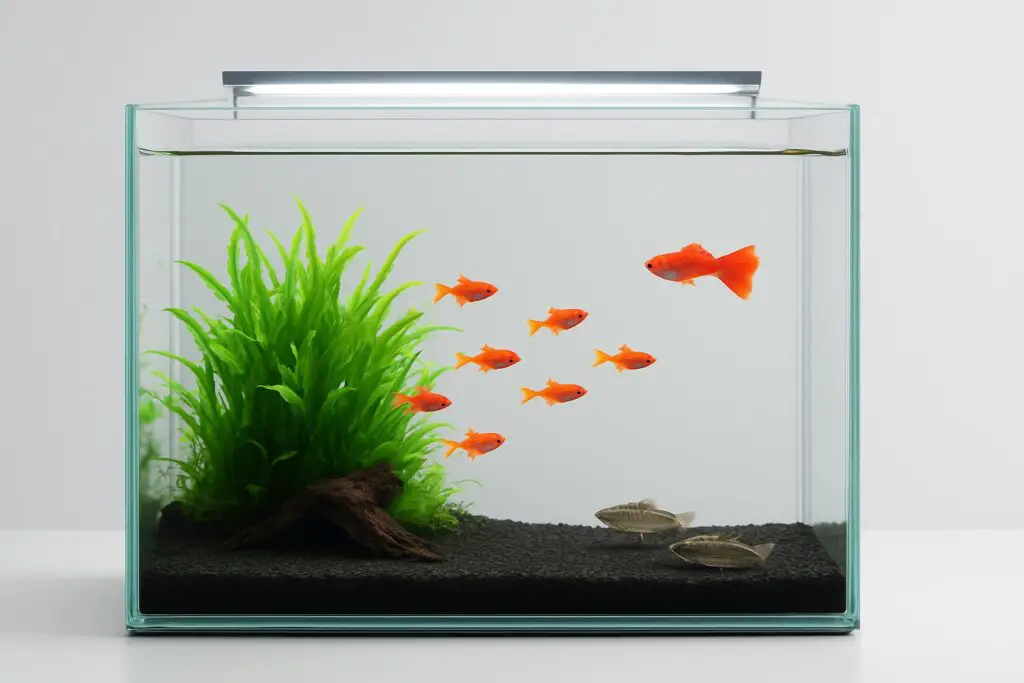
Size up to 0.8 inch or 2 cm. Peaceful, bright orange, and very active in groups. Keep 6 to 8 in a 5 gallon or 8 to 12 in a 10 gallon. Temperature 72 to 80 Fahrenheit. They show best color over dark substrate and plants. Feed micro pellets and crushed flakes, with frozen or live baby brine shrimp for variety.
Harlequin Rasbora and Lambchop Rasbora
Size 1.5 to 2 inches or 3.5 to 5 cm. Calm schoolers with strong group behavior. Keep at least 8 to 10 in a 10 gallon, or 12 to 16 in a 15 gallon. Temperature 74 to 78 Fahrenheit. These fish handle beginner mistakes better than many tetras and remain active without being nippy.
White Cloud Mountain Minnow
Size 1.5 inches or 4 cm. Hardy, peaceful, and ideal for unheated or cool tanks. Temperature 64 to 72 Fahrenheit. Keep 8 to 12 in a 10 to 15 gallon. They appreciate flow and oxygenation, so a small power filter with a gentle outflow works well. Avoid mixing them with warm water species.
Endler Livebearer
Size 1 inch or 2.5 cm. Colorful and very hardy. Keep a male-only group of 5 to 8 in a 5 to 10 gallon to avoid fry. Temperature 72 to 78 Fahrenheit. Endlers eat most foods and stay active without harassing tankmates. Cover any small filter intakes to protect their fins.
Male Guppy
Size 1.5 to 2 inches or 3.5 to 5 cm. Vibrant and lively. Keep 4 to 6 males in a 10 gallon, or 6 to 8 in a 15 gallon. Temperature 72 to 78 Fahrenheit. Choose male-only groups to avoid rapid breeding. They like some surface plants for security.
Celestial Pearl Danio
Also called galaxy rasbora. Size 1 inch or 2.5 cm. Shy at first but settle in planted tanks. Keep 10 to 12 in a densely planted 10 gallon. Temperature 72 to 76 Fahrenheit. Gentle flow and floating plants help them feel safe. Combine with calm bottom fish, not fast swimmers.
Pygmy Corydoras
Species include Corydoras pygmaeus, C. habrosus, and C. hastatus. Size 1 inch or 2.5 cm. Social micro catfish that school midwater and forage on the bottom. Keep 8 to 12 in a 10 gallon or 12 to 16 in a 15 gallon. Temperature 72 to 78 Fahrenheit. Use sand or smooth fine gravel to protect barbels. Feed sinking micro pellets and small frozen foods.
Sparkling Gourami
Size 1 to 1.5 inches or 2.5 to 3.5 cm. Quiet, perching labyrinth fish that breathe air and like calm flow. Keep a single in a 5 gallon, or 1 male with 1 to 2 females in a 10 gallon. Temperature 76 to 80 Fahrenheit. Provide cover with tall plants and wood. Avoid boisterous tankmates.
Betta Splendens
Size up to 2.5 inches or 6 cm. A single betta is a strong beginner choice when kept alone. Keep one in a 5 to 10 gallon with a gentle filter. Temperature 76 to 80 Fahrenheit. Avoid fin nippers such as many danios and some tetras. Add floating plants and calm flow. Some bettas tolerate shrimp and snails, but always monitor.
Least Killifish
Heterandria formosa. Size 1 inch or 2.5 cm. One of the smallest livebearers. Peaceful and slow moving. Keep 8 to 12 in a 5 to 10 gallon with fine foods. Temperature 72 to 78 Fahrenheit. A lid is essential because they can jump. Heavily planted tanks suit them well.
Species to Add Later or With Care
Otocinclus catfish are peaceful algae grazers, but they need a mature tank with steady biofilm. Wait at least three months before adding them. Chili rasboras are beautiful but sensitive to water quality swings and do best in seasoned planted tanks. Pea puffers and some killifish are advanced due to feeding needs or aggression patterns.
Stocking Rules and Numbers That Work
Avoid the inch per gallon rule. Use adult size, activity level, and group needs to decide stocking. More filtration does not replace adequate space. Start light, let the bacteria grow, and add fish slowly over weeks.
Good starting numbers:
Ember tetra 6 to 8 in a 5 gallon, 8 to 12 in a 10 gallon.
Harlequin rasbora 8 to 10 in a 10 gallon, 12 to 16 in a 15 gallon.
White cloud mountain minnow 8 to 12 in a 10 to 15 gallon.
Endler livebearer 5 to 8 males in a 5 to 10 gallon.
Male guppy 4 to 6 in a 10 gallon, 6 to 8 in a 15 gallon.
Celestial pearl danio 10 to 12 in a 10 gallon.
Pygmy corydoras 8 to 12 in a 10 gallon, 12 to 16 in a 15 gallon.
Sparkling gourami a single in a 5 gallon, or 1 male with 1 to 2 females in a 10 gallon.
Betta splendens a single in a 5 to 10 gallon.
Least killifish 8 to 12 in a 5 to 10 gallon.
Sample Nano Community Setups
For a 5 Gallon
Betta solo tank. One betta, soft filtration, floating plants, and weekly care. Add a nerite snail only if the betta ignores it.
Ember tetra species tank. Six to eight embers with plants and wood. Gentle flow and weekly water changes.
Endler male group. Five to six males with easy plants. Bright, active, and simple to feed.
For a 10 Gallon
Harlequin rasbora and pygmy corydoras. Eight rasboras with eight pygmies. Sand or fine gravel and moderate planting. Balanced mid and bottom activity.
Celestial pearl danio with shrimp. Ten CPD in a heavily planted tank with a lid. Add a small shrimp colony if water quality is stable.
Guppy males with pygmy corydoras. Six male guppies and six pygmies. Keep flow gentle and provide hiding spots.
For a 15 Gallon
Harlequin rasbora with sparkling gourami and pygmy corydoras. Ten to twelve rasboras, one male sparkling gourami with one to two females, and eight to ten pygmy corys. Heavily planted with calm flow.
White cloud mountain minnow cool water tank. Twelve white clouds in a well filtered unheated tank. Add hardscape and hardy plants that handle cooler water and moderate flow.
Feeding Made Simple
Feed small portions once or twice per day. Use quality micro pellets and crushed flakes sized for small mouths. Supplement two to three times per week with frozen or live foods such as baby brine shrimp, daphnia, or bloodworms for larger species. For pygmy corys, include sinking micro pellets and small frozen foods that reach the bottom. Remove uneaten food after a few minutes to keep water clean.
Live Plants and Hardscape That Help
Plants improve water quality, reduce stress, and give fish cover. Good beginner plants include java fern, anubias, cryptocoryne, hornwort, water sprite, and floating plants such as salvinia. Attach epiphytes to wood or rock. Use fine sand for pygmy corys. Add leaf litter or botanicals only after you understand how they affect water color and parameters.
Equipment Checklist for a Stable Nano
Filter with gentle flow and a pre-filter sponge.
Heater with thermostat for tropical species.
LED light on a daily timer for 6 to 8 hours.
Thermometer and liquid test kit for ammonia, nitrite, nitrate, and pH.
Dechlorinator that treats ammonia and chloramine.
Lid or tight cover to prevent jumps, especially for danios and killifish.
Step by Step Setup
Rinse the tank and equipment. Add substrate and hardscape. Plant heavily from day one. Fill with dechlorinated water and start the filter and heater. Add bottled bacteria and a measured ammonia source for a fishless cycle. Test every few days. When ammonia and nitrite read zero within 24 hours of dosing and nitrate is present, the filter is cycled.
Perform a large water change to reset nitrate. Add the first fish group only after the cycle is complete. Quarantine if possible. Feed lightly at first. Wait a week or two before adding the next species. Keep notes on parameters and adjust the schedule as needed.
Common Mistakes to Avoid
Skipping the cycle. This leads to ammonia burns and fish loss.
Overstocking and overfeeding. Both cause spikes and algae blooms.
Mixing incompatible species. Avoid fin nippers with bettas and avoid warm water species with white clouds.
Chasing pH with chemicals. Stability beats a perfect number.
Neglecting maintenance. Small tanks need regular water changes and filter care.
Maintenance Routine That Works
Change 30 to 50 percent of the water every week. Vacuum lightly over the substrate without disturbing plant roots. Clean the filter sponge in a bucket of tank water monthly to protect bacteria. Wipe the glass and trim plants as needed. Top off only with dechlorinated water and recheck parameters after any change.
Reading Fish Behavior
Healthy fish school or display calmly, show clear color, and eat readily. Warning signs include clamped fins, gasping at the surface, hiding, rapid breathing, flashing against objects, or loss of appetite. If you see these, test water immediately. Correct ammonia or nitrite with a large water change and dose dechlorinator that binds toxins. Reduce feeding until parameters stabilize. Check temperature and flow. Observe for aggression and be ready to rehome problem fish.
Beginner Friendly Shortlist
For a first nano tank, start with ember tetras, harlequin rasboras, white cloud mountain minnows for cool water, Endler livebearers, male guppies, celestial pearl danios in planted setups, pygmy corydoras for bottom activity, sparkling gourami as a calm centerpiece, or a single betta for a solo display. Choose one or two species that share the same temperature and temperament, stock lightly, and build from there.
Conclusion
Nano aquariums deliver color and movement in a small space when you match the right fish to the right setup. Focus on stable water, gentle filtration, and species that enjoy groups or quiet solo life. Cycle the tank, plant it well, test weekly, feed lightly, and perform regular water changes. Begin with proven nano fish like embers, rasboras, Endlers, guppies, CPD, pygmy corys, sparkling gourami, or a single betta. With this plan, your first nano aquarium will grow into a healthy, low stress display that is easy to enjoy and easy to maintain.
FAQ
Q: Do I need a heater for a nano aquarium.
A: Use a heater for tropical species that prefer 72 to 78 Fahrenheit, while white cloud mountain minnows do well in cooler water without a heater.
Q: How many fish can I keep in a 5 gallon tank.
A: Good options include a single betta, six to eight ember tetras, or five to six Endler males, with strong filtration and weekly water changes.
Q: What are the best beginner fish for a nano tank.
A: Ember tetras, harlequin rasboras, white cloud mountain minnows, Endler livebearers, male guppies, celestial pearl danios, pygmy corydoras, sparkling gourami, and a single betta are strong choices.
Q: How often should I change water in a nano aquarium.
A: Change 30 to 50 percent of the water every week and clean the filter sponge monthly in tank water.
Q: Can a betta live with other fish in a nano tank.
A: A single betta in a 5 to 10 gallon is reliable, and you should avoid fin nippers and fast tankmates that cause stress.