
We are reader supported. When you purchase through links on our site, we may earn an affiliate commission. Also, as an Amazon affiliate, we earn from qualifying purchases.
Shipping fish safely is about controlling three things: oxygen, temperature, and movement. The right bag and the right insulated box keep water clean, air exchange steady, and heat swings minimal. New to shipping? Start with proven gear, follow a simple packing routine, and your fish arrive calm and healthy.
What Makes Fish Shipping Safe
Oxygen availability. Standard poly bags trap air, while breather bags pass oxygen and carbon dioxide through the film. Choose based on species, trip length, and how you pack.
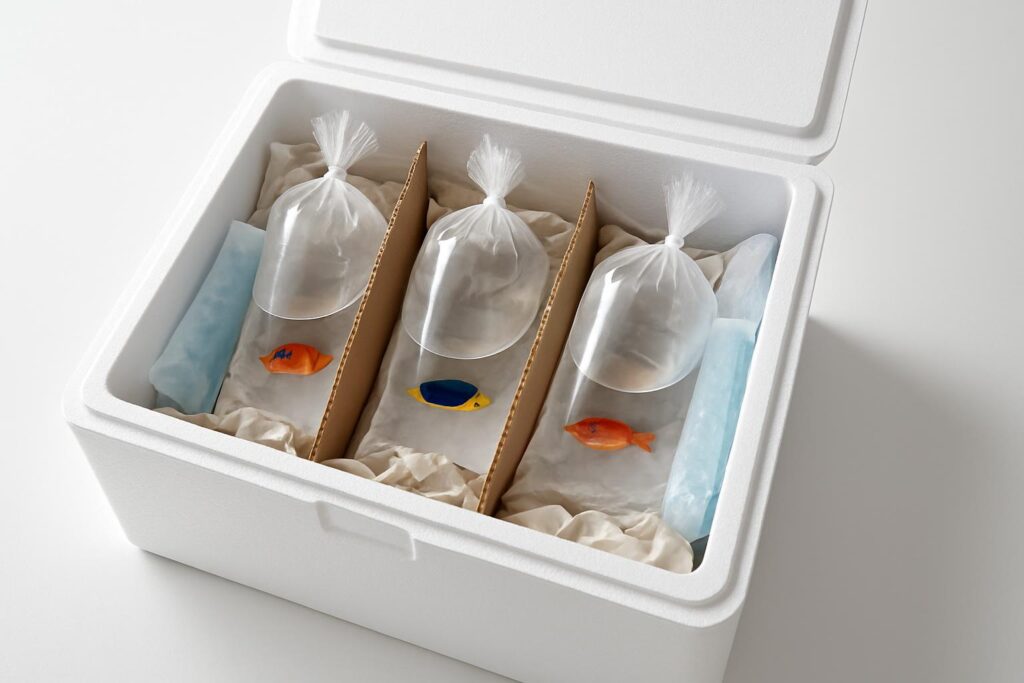
Temperature stability. Thick-walled insulated boxes slow down temperature swings. Combine with heat or cold packs when ambient temps demand it, and always separate packs from bags with cardboard or newspaper.
Leak resistance. Clear, durable LDPE or LLDPE bags rated 2–4 mil help prevent punctures. Flat-bottom bags stand upright and reduce pressure on seams.
Movement control. Tight packing with void-fill prevents bags from tipping or sloshing. Double-bagging reduces leak risk.
How to Choose Bags and Boxes
Bag type. Breather bags excel for single fish per bag and longer durations. Standard poly bags are versatile, allow air space, and suit multiple fish of hardy species when used correctly.
Bag size and thickness. Use small bags for nano fish and shrimp, medium for most community fish, and larger for cichlids and goldfish. Go 3–4 mil for spiny or larger fish.
Box insulation. For mild weather or short trips, 3/4 inch wall foam boxes work. For hot or cold routes or overnight trips, 1–1/2 inch wall foam is safer.
Fit and fill. Match bag size to box interior. Minimal empty space prevents shifting and temperature drops.
The 5 Best Fish Shipping Bags and Insulated Boxes
1) Kordon Breather Bags
Oxygen-permeable bags that let gases pass through the film, keeping dissolved oxygen stable and carbon dioxide vented. Ideal for sensitive species and longer transit times.
Why it helps: Continuous gas exchange means fish do not rely on trapped air. Lower risk of ammonia stress when packed correctly and not overfed before shipping.
Best for: Small to medium community fish, nano species, shrimp, and delicate wild-caught fish shipped singly per bag.
How to pack: No air gap. Fill bag fully with conditioned, well-oxygenated water, double-bag, and place upright between cardboard. Do not use with air in the bag. Avoid sharp decor or netting spines against the film.
Potential downsides: Not ideal for multiple fish in one bag. Requires careful external packing to prevent compression or punctures.
2) Lifegard Aquatics Flat-Bottom Fish Bags, 3 mil
Clear LDPE bags with a gusseted, flat base that stands upright for more stable packing. Durable seams and good clarity for quick condition checks.
Why it helps: A flat bottom reduces slosh and seam strain. Thicker 3 mil walls resist fin spines and hardscape edges. Works well for oxygenated air-space packing.
Best for: Community fish, juvenile cichlids and goldfish, livebearers, and plants. Also practical for grouped shrimp when properly bagged and oxygenated.
How to pack: Fill one-third water, two-thirds air or oxygen. Double-bag with opposing seams. Secure with two tight rubber bands or a heat sealer, then band. Place upright with void-fill around the bag to prevent tipping.
Potential downsides: Less forgiving on long routes without added oxygen. Not as temperature stable alone; relies on a proper insulated box.
3) Polar Tech 205C Insulated Shipping Carton, 3/4 inch wall

Polar Tech 291C Thermo Chill Insulated Carton with Foam Shipper, Large, 22-3/4" Length x 10" Width x 4-1/2" Depth (Case of 3)
View on AmazonA compact foam cooler with a corrugated outer box, suitable for mild climates or short overnight routes.
Why it helps: 3/4 inch EPS foam slows temperature swings without adding too much bulk or shipping weight. Fits small to medium bag loads and a single heat or cold pack when needed, separated by cardboard.
Best for: Hardy community fish, shrimp, and plants shipped overnight in spring or fall conditions.
How to pack: Line the bottom with cardboard or newspaper. Stand bags upright, fill gaps with crumpled paper so nothing moves. Tape gel pack to the lid or place along a side with a barrier. Seal all seams of the outer box with quality packing tape.
Potential downsides: Limited protection for extreme heat or cold. Not ideal for multi-day routes.
4) Polar Tech 301C Insulated Carton, 1–1/2 inch wall
Thicker EPS foam walls for high-risk routes or sensitive species. Extra insulation reduces temperature drift and buffers against handling.
Why it helps: 1–1/2 inch walls substantially extend the safe temperature window. Gives you margin if carriers delay a delivery or weather is unstable.
Best for: Discus, wild-caught tetras, dwarf cichlids, fancy goldfish, and invertebrates in hot summers or cold winters. Also useful for longer ground shipments.
How to pack: Pre-condition the box indoors to room temperature. Use breathable packing material, keep gel packs off bags using corrugated dividers, and ensure a snug lid fit. Label sides with Live Fish and This Side Up as a handling cue.
Potential downsides: Larger external dimensions mean higher dimensional weight. Overheating risk if too many heat packs are used without vent holes, so match packs to season.
5) Polar Tech Foam Cooler and Outer Box, 10 qt class
A versatile mid-size insulated kit that balances protection and size for most hobby shipments. Common interior dimensions fit two to four medium fish bags standing upright.
Why it helps: Enough space for multiple bags plus one or two gel packs with a divider. Foam lid compresses gently to minimize movement. Good all-rounder for community fish and plants.
Best for: Mixed orders of tetras, rasboras, Corydoras, and plants where you need a simple, dependable cooler.
How to pack: Group similar species by temperature needs. Place heavier bags at the bottom, lighter above, always separated by cardboard. Fill voids so nothing shifts when you shake the box lightly.
Potential downsides: Not as protective as the thick-wall models during weather extremes. Plan heat or cold packs conservatively and monitor local forecasts.
Pro Packing Routine for Fewer Losses
Fast fish for 24 hours. Reduces waste and ammonia buildup.
Use clean, conditioned water. Match temperature to tank water and add an ammonia binder when using standard poly bags.
Bag smart. One fish per bag is safest. For small, hardy fish, do not overcrowd. Double-bag everything. Use breather bags for delicate species or long routes.
Stabilize the box. Fill voids, isolate gel packs, and tape all seams. Avoid direct contact between gel packs and bags.
Ship early in the week. Prevents weekend holds. Track the package and notify the receiver.
Conclusion
Safe fish shipping comes down to the right bag, the right box, and disciplined packing. Kordon Breather Bags shine for delicate, single-fish shipments. Lifegard Aquatics flat-bottom poly bags are reliable workhorses. Pair either with Polar Tech insulated cartons that match your weather risk and route length. Follow the routine, control oxygen and temperature, and your arrivals will be consistent.
FAQ
Q: When should I choose breather bags over standard poly bags
A: Use breather bags for single fish per bag, delicate species, and longer routes where continuous gas exchange helps keep oxygen stable.
Q: How thick should fish bags be for safe transport
A: Go 3–4 mil for spiny or larger fish, while 2–3 mil can be fine for small, smooth-bodied species when double-bagged.
Q: What insulation thickness is best for extreme weather
A: Choose 1–1/2 inch wall insulated cartons for hot or cold routes, while 3/4 inch works for mild conditions and short trips.
Q: How much water and air should I use in standard poly bags
A: Fill one-third water and two-thirds air or oxygen, then double-bag with opposing seams and secure with tight bands.
Q: Where should I place heat or cold packs in the box
A: Tape gel packs to the lid or place along a side with a cardboard barrier, never directly touching the bags.