
We are reader supported. When you purchase through links on our site, we may earn an affiliate commission. Also, as an Amazon affiliate, we earn from qualifying purchases.
Hillstream loaches are built to graze across fast-flowing, algae-covered rocks. In the home aquarium, they stay healthy when you copy that diet and feeding rhythm. This guide shows you the best staple foods, how to present them, and a simple schedule that keeps these fish active, well-fed, and clean-bellied.
What Hillstream Loaches Eat In Nature
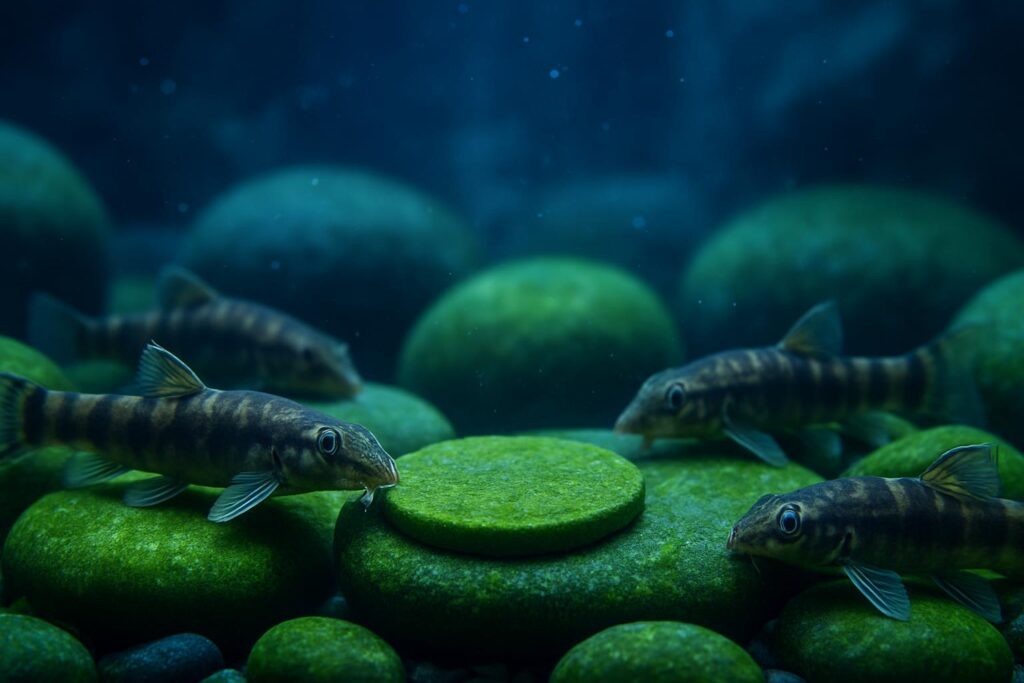
In the wild, hillstream loaches scrape biofilm, green and diatom algae, and tiny invertebrates from smooth stones. That mix is rich in plant matter with moderate protein. In tanks, they thrive on algae-forward foods, gel diets that mimic biofilm, and occasional small live or frozen prey.
Core Feeding Principles
Match the algae and biofilm base
Make algae and biofilm the foundation. Provide spirulina or kelp rich foods and encourage natural algae growth on stones you can rotate into the tank.
Use flow to your advantage
These fish feed best in current. Place foods where water moves and on flat stones to trigger natural rasping behavior.
Small portions, more often
Feed modest amounts twice daily. Hillstream loaches have small stomachs and constant grazing habits. Remove any uneaten food within a few hours to protect water quality.
Control competition
If you keep faster eaters, split portions across several spots. Feed after lights dim to give the loaches a calmer window to graze.
The 4 Best Foods For Hillstream Loaches
1. Hikari Algae Wafers
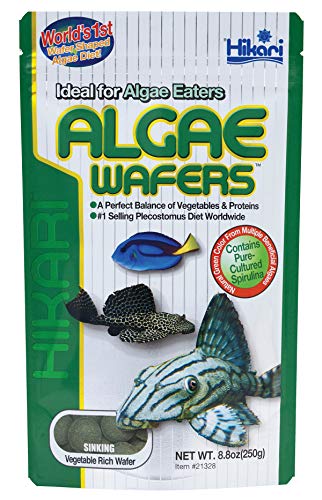
Hikari® Algae Wafers™ Sinking Wafers for Bottom-Feeding Tropical Fish, 8.8 oz (250g)
View on AmazonHikari Algae Wafers are a reliable staple for algae grazers. The discs are firm, sink fast, and hold up long enough for rasping. They deliver spirulina and plant matter in a format that encourages natural scraping.
Key ingredients: Spirulina algae, plant meals, stabilized vitamins
Why it helps: High plant content supports constant grazing and smooth digestion
Best for: Daily staple feeding and building body condition
Feeding tip: Place wafers on a flat rock in moderate flow so loaches can cling and rasp
Potential downsides: Can foul water if overused; break wafers to avoid excess
2. Repashy Soilent Green Gel Food
Repashy Soilent Green is a powder you cook into a gel that bonds to surfaces. Spread a thin layer on pebbles or a slate to create a biofilm like sheet that loaches instinctively graze. It is a strong stand in for periphyton.
Key ingredients: Algae based blend with plant proteins and vitamins
Why it helps: Mimics biofilm texture, maximizes contact feeding, and reduces waste scatter
Best for: Picky fish that ignore hard wafers and for conditioning new arrivals
Feeding tip: Gel thin on smooth stones, chill to set, then place in current; refrigerate leftovers per label
Potential downsides: Requires a quick prep; too thick a layer may lift off the stone
3. NorthFin Kelp Wafers

Northfin Kelp Wafers Bottom Feeder Food, Sinking Algae Wafers, 14mm, 500g | Kelp Wafers; sinking algae wafers for plecos & other bottom feeders; organic kelp first ingredient; crafted in Canada
View on AmazonNorthFin Kelp Wafers focus on kelp as a first ingredient and keep fillers low. The wafers sink, soften, and hold together well enough for slow grazers. They balance fiber and plant micronutrients.
Key ingredients: Kelp meal forward formula with minimal starch binders
Why it helps: High quality kelp supports gut health and steady energy without bloating
Best for: Rotating with spirulina heavy foods to broaden plant nutrition
Feeding tip: Offer a half wafer per small group, then adjust based on leftover after two hours
Potential downsides: Softer texture can attract other fish first; distribute pieces in multiple spots
4. Fluval Bug Bites Pleco Formula Algae Crisps

Fluval (3 Pack) Bug Bites Bottom Feeder Pleco Formula for Medium to Large Fish
View on AmazonFluval Bug Bites Pleco Formula blends insect protein with spirulina and algae. The crisps sink and break into grazeable surfaces that loaches can rasp. The insect meal adds moderate, digestible protein without overdoing it.
Key ingredients: Black soldier fly larvae meal, spirulina, plant matter
Why it helps: Adds varied proteins and fatty acids while keeping an algae forward profile
Best for: Growth phases and variety days in a weekly rotation
Feeding tip: Use a smaller portion than pure algae wafers; rotate rather than feed daily
Potential downsides: Too much animal protein can crowd out algae intake; keep it as a supplement, not the base
How To Present Food So Loaches Actually Eat
Anchor on hardscape: Place wafers or gel on slate, river stones, or a feeding tile. This imitates natural foraging and reduces food drifting under decor.
Feed into flow: Use a small powerhead or the filter outflow to push scent downstream. Loaches cue in and climb the rock to graze.
Time it right: Offer the main portion shortly after lights dim. Shy loaches emerge and face less competition from midwater fish.
Weekly Meal Plan Example
Use this as a starting point and tweak by observing bellies and leftovers.
Day 1 AM Hikari Algae Wafers small piece per fish. PM Repashy Soilent Green thin on a stone.
Day 2 AM NorthFin Kelp Wafers small shared piece. PM Rotate in a gel stone or a second wafer spot in higher flow.
Day 3 AM Fluval Bug Bites crisps in moderation. PM Blanched zucchini slice clipped near flow.
Day 4 AM Hikari Algae Wafers. PM Repashy stone.
Day 5 AM NorthFin Kelp Wafers. PM A few frozen daphnia or baby brine shrimp for variety.
Day 6 AM Hikari Algae Wafers. PM Fluval Bug Bites crisps light portion.
Day 7 AM Rest or a small algae wafer piece if bellies look flat. PM Rotate in a new algae grown stone from a windowsill jar.
Supplementary Options That Work
Blanched vegetables
Zucchini, spinach, and green beans offer fiber and grazing surface. Blanch until soft but intact, clip near current, and remove within six hours. Cucumber is less nutrient dense, so use it occasionally.
Frozen or live protein in moderation
Daphnia, baby brine shrimp, and small bloodworms can boost variety. Offer once or twice per week in small amounts so the algae base stays dominant.
Encourage Natural Algae Growth
Keep a set of smooth river stones in a jar on a bright windowsill or under a spare light. Let green algae establish, then swap a couple stones into the tank each week. Rotate them back to regrow. This simple cycle gives your loaches a familiar buffet and stabilizes appetite.
Water Quality And Clean Up
Hillstream loaches prefer oxygen rich, cool to moderate water with strong flow. Overfeeding quickly burdens filtration. Start with small portions and watch how much remains after two hours. Siphon leftovers, rinse feeding stones, and keep nitrates low with regular changes.
Common Feeding Mistakes
Overusing animal protein: Too many worms or insect foods reduce algae intake and can bloat sensitive fish.
Dropping big wafers in one spot: This invites competition and waste. Break and spread.
Feeding only at peak light: Shy loaches may miss the meal. Use dim periods.
Ignoring biofilm: A gel coated stone or algae grown rock often solves picky eating.
Conclusion
Feed hillstream loaches like the grazers they are. Make algae and biofilm the base with Hikari Algae Wafers, Repashy Soilent Green, NorthFin Kelp Wafers, and Fluval Bug Bites crisps used in rotation. Present foods on stones in flow, keep portions modest, and support the tank with real algae covered surfaces. Do this consistently and you will see steady color, active grazing, and clean, healthy fish.
FAQ
Q: What should be the main food for hillstream loaches
A: An algae and biofilm based diet using spirulina and kelp rich staples like wafers and gel foods, supported by natural algae grown on stones.
Q: How often should I feed hillstream loaches
A: Offer modest portions twice daily and remove leftovers within a few hours.
Q: Do hillstream loaches need protein foods
A: Yes, but in moderation. Use options like Fluval Bug Bites crisps or small frozen foods once or twice per week so algae stays dominant.
Q: How can I get picky loaches to start eating
A: Spread Repashy Soilent Green as a thin gel on smooth stones and place it in moderate flow to mimic natural biofilm grazing.
Q: How do I reduce waste when using wafers
A: Break wafers into smaller pieces, place them on rocks in several spots, and siphon any leftovers after two hours.