
We are reader supported. When you purchase through links on our site, we may earn an affiliate commission. Also, as an Amazon affiliate, we earn from qualifying purchases.
Kuhli loaches are gentle, nocturnal scavengers that thrive when their diet matches how they naturally forage. They prefer small, soft, sinking foods and do best with a mix of protein and plant matter. If your loaches ignore flakes or surface foods, the solution is simple: give them sinking wafers, micro pellets, and meaty frozen items that reach the substrate where they hunt. Below is a practical guide to the four best foods for kuhli loaches, how to feed each one, and how to build a simple weekly plan that keeps them active, well-fed, and healthy.
What Kuhli Loaches Eat in Nature
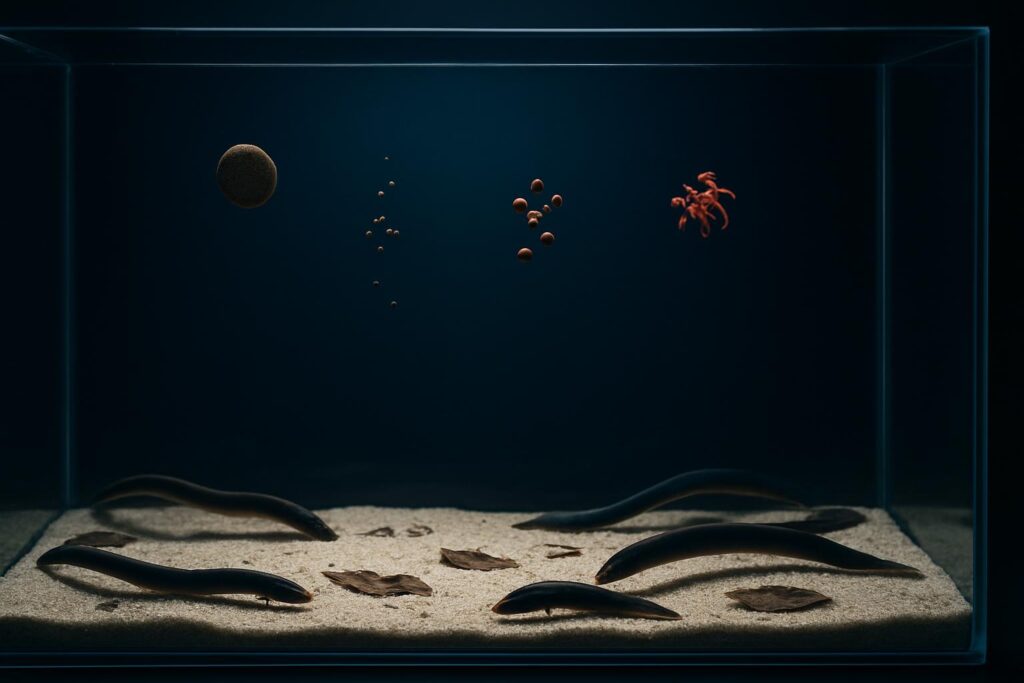
In the wild, kuhli loaches sift through leaf litter and sand for insect larvae, tiny crustaceans, and decaying plant material. They eat small, frequent meals and prefer soft textures. In an aquarium, you should mirror this with fine, sinking foods that are easy to swallow.
Feeding Rules for Healthy Kuhlis
Feed at the right time
They are most active after lights out. Offer food 30 to 60 minutes after the aquarium lights turn off so bolder fish do not outcompete them.
Use sinking and soft foods
Choose micro pellets, wafers, and frozen items that quickly sink and break down into bite-size bits.
Small portions, repeat often
Feed small amounts once or twice per day. Remove any leftovers after 2 to 3 hours to keep water quality high.
Rotate foods
Alternate between wafers, pellets, and frozen meals to cover protein, fats, fiber, and trace nutrients.
The 4 Best Foods for Kuhli Loaches
1. Hikari Sinking Wafers
These compact wafers are a staple for bottom feeders. They sink fast, hold together long enough for loaches to graze, and soften into a texture that is easy to rasp and swallow. The formula balances protein with plant matter for steady growth and stable digestion.
Why it helps: Consistent sinking behavior and a soft interior let shy kuhli loaches feed without rushing. The mix of fish meal and vegetable content supports energy and gut health.
Best for: Daily staple feeding, mixed tanks with other bottom fish, and new keepers who need a reliable baseline food that does not foul water fast.
How to feed: Offer half to one wafer per 5 to 6 kuhli loaches after lights out. Break larger wafers to spread food so timid loaches can find a piece. Remove any large leftovers by morning.
Potential downsides: If overused alone, diet variety can suffer. Balance with protein-rich pellets and frozen foods a few times per week.
Check Price Now
2. Fluval Bug Bites Bottom Feeder Formula
Bug-based pellets align with what kuhli loaches naturally eat. This formula uses black soldier fly larvae as the first ingredient, delivering highly digestible protein and lipids. The pellets are small, sink reliably, and soften quickly for easy consumption.
Why it helps: Insect protein supports lean growth and strong feeding response. Natural fats and micronutrients aid skin and barbel condition.
Best for: Building body condition, picky eaters that ignore generic pellets, and tanks where quick-sinking food reduces competition from midwater fish.
How to feed: Start with a small pinch per feeding for a group of 6 to 10 kuhli loaches. Pre-soak for a few seconds if your flow is strong so pellets drop straight to the bottom.
Potential downsides: High protein means it can raise waste if you overfeed. Keep portions modest and increase only if no food remains after 2 hours.
Check Price Now
3. Omega One Sinking Shrimp Pellets
Shrimp-based pellets are a strong attractant for nocturnal scavengers. These pellets sink immediately and break down into small fragments that kuhli loaches can mouth and swallow. Added omega fatty acids support color and overall vitality.
Why it helps: Whole shrimp and salmon deliver dense nutrition and a smell that draws out shy loaches. The pellet form spreads across the substrate, improving access.
Best for: Conditioning breeding groups, boosting appetite in new arrivals, and alternating with wafers to diversify amino acids.
How to feed: Offer a small pinch per 6 to 8 loaches two to three times per week. Drop food in multiple spots to reduce crowding.
Potential downsides: Can cloud water if overfed or if your tank has low flow. Vacuum leftovers during weekly maintenance.
Check Price Now
4. Hikari Frozen Blood Worms
Frozen bloodworms are a high-protein, high-moisture treat that triggers a strong feeding response. The soft texture and movement in the current mimic natural prey, making them ideal for shy kuhli loaches that ignore dry foods at first.
Why it helps: Moist, meaty morsels provide fast energy, promote activity, and help thin fish regain weight. The small size suits the narrow mouths of kuhli loaches.
Best for: Weekly treats, boosting appetite in new or stressed fish, and rounding out a rotation with fresh protein.
How to feed: Thaw a small portion in tank water and target feed to the substrate with a pipette or turkey baster. Offer once or twice per week.
Potential downsides: Very rich, so use as a supplement rather than a daily staple. Remove uneaten bits to prevent ammonia spikes.
Check Price Now
How to Combine These Foods
Use this simple rotation and adjust portions based on how much is left after 2 hours:
- Monday: Hikari Sinking Wafers
- Tuesday: Fluval Bug Bites Bottom Feeder Formula
- Wednesday: Hikari Sinking Wafers
- Thursday: Omega One Sinking Shrimp Pellets
- Friday: Hikari Sinking Wafers
- Saturday: Frozen Blood Worms
- Sunday: Light feeding or skip if bellies look full
This plan balances plant matter and protein, prevents boredom, and keeps water clean through portion control.
Portion control made easy
Start with less than you think you need. A good rule is to feed what the group finishes within 2 hours. If food remains, reduce next time. If it is gone in minutes and the fish stay active, increase slightly.
Placement and access
Drop food in multiple spots across the tank. Spread wafers or pellets near caves, wood, and plants where kuhli loaches hide. This reduces crowding and helps timid fish eat in peace.
Troubleshooting Common Feeding Issues
Loaches do not come out to eat
Feed after lights out, reduce surface feeding of other fish before you feed the bottom, and add more cover such as leaf litter, caves, or dense plants so kuhli loaches feel secure.
Food sits untouched
Switch to stronger smelling options like shrimp pellets or frozen bloodworms for a few days. Once they respond, reintroduce wafers or bug-based pellets.
Cloudy water or rising nitrates
You are overfeeding. Cut portions by 25 to 50 percent, add an extra midweek gravel vacuum, and increase filtration flow if debris lingers on the substrate.
Competition from faster fish
Target feed with a pipette, feed the upper fish first with floating food to distract them, then place sinking foods directly where kuhli loaches forage.
Conclusion
Kuhli loaches thrive on soft, sinking foods that match their natural grazing style. Build your foundation with sinking wafers, rotate in insect-based and shrimp-based pellets for dense nutrition, and use frozen bloodworms as a high-protein treat. Feed at night, portion small, and spread food across the substrate. With these four foods and simple habits, your kuhli loaches will show better activity, stronger condition, and steady long-term health.
FAQ
Q: What is the best time to feed kuhli loaches?
A: Feed 30 to 60 minutes after lights out so bolder fish do not outcompete them.
Q: Should I use floating flakes for kuhli loaches?
A: No, they prefer small, soft, sinking foods like wafers, micro pellets, and frozen items that reach the substrate.
Q: How often should I feed kuhli loaches?
A: Offer small amounts once or twice per day and remove leftovers after 2 to 3 hours.
Q: Are frozen bloodworms a daily food for kuhli loaches?
A: No, they are very rich and should be used as a supplement once or twice per week.
Q: How can I reduce competition from faster tankmates?
A: Target feed to the substrate, feed upper fish first to distract them, and place sinking foods near kuhli hiding spots.