
We are reader supported. When you purchase through links on our site, we may earn an affiliate commission. Also, as an Amazon affiliate, we earn from qualifying purchases.
Otocinclus catfish are gentle, tireless grazers that thrive on biofilm and soft algae. A stable, plant-rich tank with mature surfaces is the foundation, but smart feeding closes the gap when natural growth cannot keep up. This guide breaks down four reliable foods Otocinclus will actually use, plus simple routines to keep them full without fouling your water.
Why diet matters for Otocinclus
Wild Otocinclus spend the day rasping microalgae, diatoms, and biofilm. In aquariums, those layers come and go, so targeted foods keep them from slipping into hunger, especially right after introduction. Focus on high-fiber, algae-forward items that sink, hold shape, and allow natural grazing. Rotate options to cover vitamins and to keep interest high.
Feeding routine that works
Timing and portions
Feed a small wafer piece once daily after lights out. Use about a pea-sized piece per 3–4 Otocinclus. Remove any leftovers after 6–8 hours.
Placement
Place foods on smooth stones, glass, or leaves so Otocinclus can rasp at their own pace. Break wafers into several small bits to reduce competition and get food to shy fish.
Balance with natural growth
Do not rely on wafers alone. Otocinclus need constant access to biofilm on real surfaces. Use wafers and fresh vegetables as support, not as the only diet.
The 4 best foods for Otocinclus catfish
1) Hikari Algae Wafers
Hikari Algae Wafers are a classic staple for algae grazers. They sink instantly, keep shape for hours, and are widely accepted by Otocinclus.
Why it helps: Spirulina-rich formula supports steady energy and clean digestion. The firm wafer lets Otocinclus rasp naturally without dissolving into mush.
Best for: Daily baseline feeding when the tank’s biofilm is light or inconsistent.
Feeding tips: Snap a wafer into small shards and spread them. Tuck a piece on a clean stone or leaf to mimic natural grazing.
Potential downsides: Community fish and shrimp may outcompete Otocinclus. Feed after lights out and place food near where Otocinclus rest.
2) Omega One Veggie Rounds
Omega One Veggie Rounds use whole kelp and spirulina with minimal fillers, offering strong vitamins and omega fatty acids from natural seaweed.
Why it helps: High-quality algae sources support color, immune function, and gut health. Rounds soften gradually so Otocinclus can graze without the food dissolving quickly.
Best for: Rotating with another wafer to provide different algae profiles and broaden nutrition.
Feeding tips: Split rounds into quarters. Place pieces in two to three zones to reduce crowding and help timid Otocinclus feed.
Potential downsides: If left too long, rounds can draw snails and elevate waste. Stick to small portions and remove excess on schedule.
3) Repashy Soilent Green (gel food)
Repashy Soilent Green is a gel-based food you mix with hot water and set into a soft block. It adheres to rocks or glass, creating a grazeable sheet very close to natural feeding.
Why it helps: Balanced plant-based profile with spirulina and aquatic greens. The gel texture encourages slow, steady rasping, reducing competition and stress.
Best for: Finicky or newly imported Otocinclus that ignore hard wafers.
Feeding tips: Spread a thin layer on a smooth stone or on the glass using a feeding clip. Refrigerate or freeze extra portions for quick use.
Potential downsides: Requires a few minutes to prepare. Do not over-portion; thin applications are easier to control and remove.
Repashy Soilent Green often converts finicky Otocinclus because it mimics a soft biofilm sheet on surfaces.
4) Fluval Bug Bites Pleco Formula (algae crisps)
Fluval Bug Bites Pleco Formula combines insect protein with spirulina in slow-sinking crisps designed for bottom grazers.
Why it helps: Insect meal offers amino acids that support recovery and growth, while spirulina keeps the algae-first focus.
Best for: Occasional protein boost in a plant-based rotation, especially for active, well-established Otocinclus groups.
Feeding tips: Offer small amounts on rotation nights. Break crisps to reduce competition and keep the focus on grazing rather than gulping.
Potential downsides: Higher protein than pure algae wafers, so keep portions tight to avoid bloating or water quality issues.
High-protein foods are fine as a supplement, but keep an algae-heavy base. Use Fluval Bug Bites Pleco Formula only 2–3 times per week.
Fresh foods your Otocinclus will actually eat
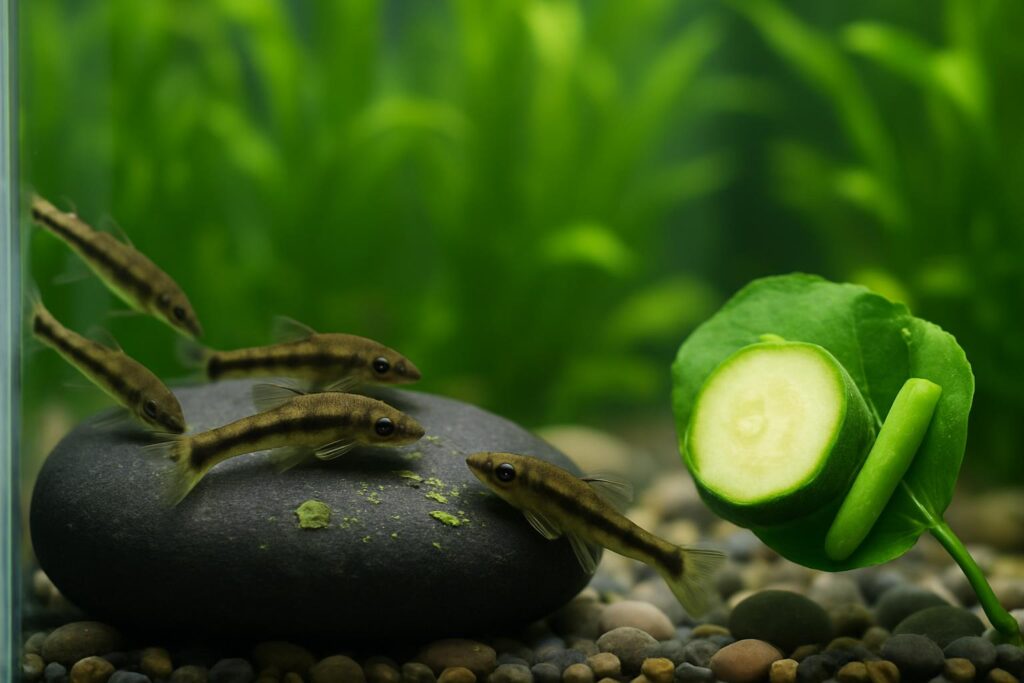
Zucchini and cucumber
Offer blanched zucchini or cucumber slices. Blanch for 1–2 minutes, cool, and sink with a clip. Replace vegetable slices after 12–24 hours.
Green beans
Use plain, unsalted green beans. Blanch briefly, split open to expose the soft interior, and clip near a resting area. Many Otocinclus discover beans quickly because the inside is easy to rasp.
Safety and cleanup
Start with small pieces to test interest. Always remove uneaten vegetable material on time to prevent ammonia spikes and cloudy water.
How to choose between these foods
Newly added, shy, or thin Otocinclus
Lead with Repashy Soilent Green or a small piece of Hikari Algae Wafer. Spread food in two to three quiet spots away from current.
Settled groups in planted tanks
Rotate Hikari Algae Wafers and Omega One Veggie Rounds on alternate nights, and slot in Fluval Bug Bites Pleco Formula two nights per week for variety.
When algae is already plentiful
Cut processed foods to half portions and rely more on fresh vegetables two to three times per week. Observe bellies and activity to fine-tune amounts.
Troubleshooting
They ignore wafers
Switch to Repashy spread thin on a stone, or offer lightly blanched zucchini at lights out. Reduce competition by feeding other fish higher in the water column first.
Leftovers persist
Your portions are too large or timing is off. Stick to pea-sized pieces per group and place food closer to known resting areas.
Bloating or soft stools
Dial back protein and emphasize algae wafers and fresh vegetables. Increase water changes until waste normalizes.
Conclusion
A thriving Otocinclus group needs mature surfaces, stable water, and consistent plant-based feeding. Use Hikari Algae Wafers or Omega One Veggie Rounds as your backbone, Repashy Soilent Green to unlock picky eaters, and Fluval Bug Bites Pleco Formula as a measured protein boost. Add blanched zucchini, cucumber, and green beans to mimic natural grazing. Keep portions small, timing precise, and cleanup routine, and your Otocinclus will stay active, round-bellied, and resilient.
FAQ
Q: How often should I feed Otocinclus wafers?
A: Feed a small wafer piece once daily after lights out.
Q: What portion size is right for a small group?
A: Use about a pea-sized piece per 3–4 Otocinclus.
Q: How long can wafers or vegetables stay in the tank?
A: Remove any leftovers after 6–8 hours.
Q: Will Otocinclus eat cucumber or zucchini?
A: Offer blanched zucchini or cucumber slices.
Q: Can Otocinclus live on wafers alone?
A: Do not rely on wafers alone.