
We are reader supported. When you purchase through links on our site, we may earn an affiliate commission. Also, as an Amazon affiliate, we earn from qualifying purchases.
Pea puffers are tiny predators with big appetites and strong opinions about food. They want moving, meaty prey and will often reject flakes. The right menu keeps them active, well-colored, and helps control teeth growth. This guide covers four reliable foods across frozen, live, and prepared categories, with clear reasons to use each, how to feed them, and what to watch for.
What Pea Puffers Need From Food
High animal protein and natural hunting behavior
Pea puffers thrive on invertebrates like worms, snails, and small crustaceans. Foods that trigger their chase and strike instincts keep them engaged and reduce aggression.
Variety to prevent pickiness
Feeding only one item can create stubborn eaters. Rotating frozen, live, and prepared options helps maintain interest and covers nutritional gaps.
Right size, fresh handling, and cleanliness
Food pieces should be small enough to swallow whole. Thaw frozen items properly, rinse live foods when possible, and remove leftovers within 10 minutes to protect water quality.
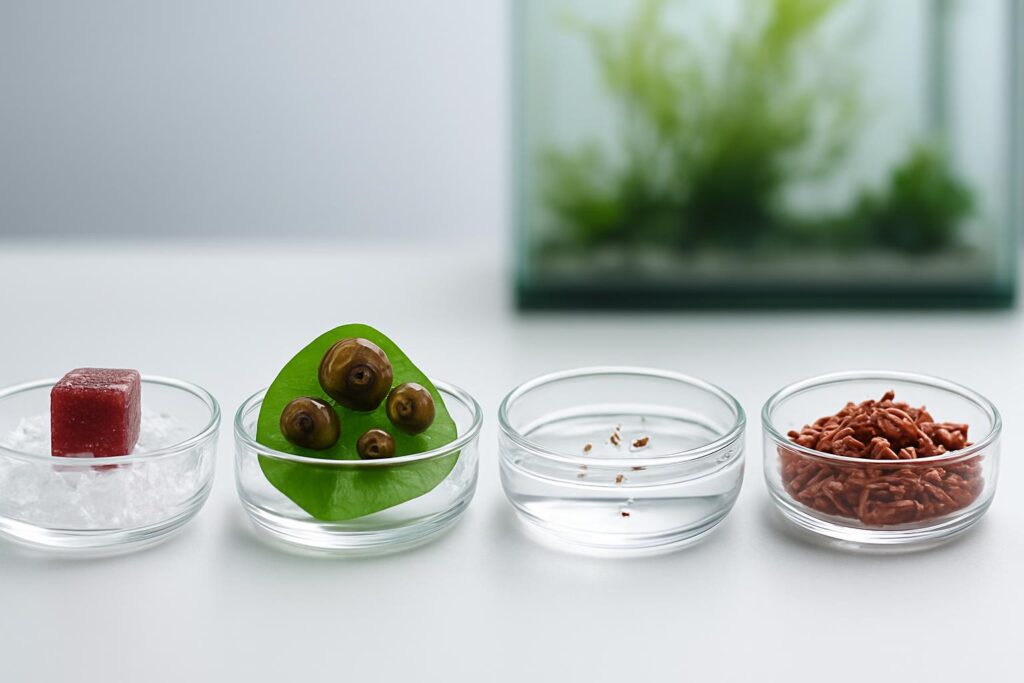
The 4 Best Foods for Pea Puffers
1. Hikari Bio-Pure Frozen Blood Worms
Frozen bloodworms are a staple that nearly all pea puffers accept. The texture and scent are irresistible, and the cube format makes portioning simple for nano tanks.
Why it helps: High in protein, soft-bodied, and easy to digest. A strong feeding response encourages shy or new puffers to eat confidently.
Best for: Daily feeding rotation, conditioning underweight fish, and transitioning new puffers to a stable routine.
How to feed: Thaw a small portion in tank water, then target feed with tweezers or a pipette. Offer what they finish within 5 to 10 minutes. Start with half a pea-sized amount per fish and adjust by observation.
Potential downsides: Overfeeding can foul water quickly. Some batches may vary in size; halve larger worms with scissors for very young puffers.
Pro tip: Soak briefly in tank water to reduce air and improve sinking behavior. Scatter lightly across the tank to reduce squabbling.
2. Live Ramshorn Snails by Aquatic Arts
Small live snails are both food and dental care. Pea puffers have ever-growing teeth that need abrasion. Ramshorns are ideal because their shells are not too hard and their size ranges suit juveniles and adults.
Why it helps: Natural prey that provides enrichment, calcium, and mild shell wear for tooth control. Live hunting reduces boredom and aggression.
Best for: Weekly enrichment feedings and ongoing dental maintenance. Especially valuable for puffers that ignore non-moving foods.
How to feed: Add 1 to 3 tiny snails per puffer once or twice a week. Choose sizes smaller than the puffer’s eye for juveniles. Remove empty shells during regular maintenance.
Potential downsides: If uneaten, snails can reproduce and become a nuisance. Pre-rinse and observe for a few days before introducing to the display tank.
Pro tip: Keep a small breeder box or spare tank to culture a steady supply of tiny snails, ensuring consistent sizes for small mouths.
3. Daphnia Magna Live Culture by Aquatic Arts
Daphnia are bite-sized, active, and clean live foods that stimulate strong hunting behavior without the mess of larger prey. They are excellent for conditioning and for puffers that prefer constant movement.
Why it helps: Constant twitching triggers natural feeding instincts. Daphnia are lower in fat and help prevent constipation while still delivering quality protein.
Best for: Midday snacks, training sessions for shy individuals, and gut health support alongside heavier foods like worms.
How to feed: Rinse through a fine net, then release into the tank. Offer small pulses until the puffers slow down. Culture at home to maintain a reliable, fresh supply.
Potential downsides: Nutritional profile depends on what the daphnia are fed. Gut-load with microalgae or quality coral foods for 12 to 24 hours before feeding to your fish.
Pro tip: Use a turkey baster to deliver small clouds of daphnia near territories to reduce chasing and stress.
4. Hikari Bio-Pure Freeze-Dried Blood Worms
Freeze-dried bloodworms are the most convenient way to offer a worm-based meal without defrosting. Many pea puffers accept them if you pre-soak and target feed.
Why it helps: Shelf-stable, easy to portion, and cleaner than frozen when used carefully. Good for quick meals and for keepers who cannot store frozen foods.
Best for: Backup feedings, travel days, and training prepared-food holdouts. Also useful for mixing with vitamin supplements.
How to feed: Pre-soak for a few minutes to avoid buoyancy and air ingestion. Offer small pieces with tweezers so the puffer sees a distinct target. Rotate with live and frozen options to maintain interest.
Potential downsides: Some puffers refuse dry textures. Can cause constipation if it becomes the only item on the menu.
Pro tip: Crush lightly between fingers after soaking to create smaller bites for juveniles and reduce spitting.
Feeding Schedule and Practical Tips
Daily rhythm
Feed adult pea puffers once or twice per day, small portions they finish within 5 to 10 minutes. juveniles may need two small meals. Rotate foods across the week to prevent pickiness and cover nutrition.
Teeth care plan
Include hard-shelled prey like small ramshorn or bladder snails once or twice a week. Watch for signs of overgrown teeth such as dropping food or repeated spitting. If you never see them crush shells, increase snail frequency with appropriately small sizes.
Water quality control
Use a pipette or tweezers to target feed and limit waste. Siphon uneaten pieces right after feeding. Strong filtration and frequent small water changes keep nano systems stable despite meaty diets.
Training stubborn eaters
Start with live daphnia or snails to trigger interest, then mix in thawed bloodworms. Once they strike reliably, introduce pre-soaked freeze-dried pieces in the same feeding zone. Consistency builds acceptance.
Conclusion
A smart pea puffer menu balances excitement, nutrition, and practicality. Frozen bloodworms anchor the routine. Live ramshorn snails maintain teeth and reduce boredom. Live daphnia deliver clean, active feeding sessions. Freeze-dried bloodworms fill gaps when convenience matters. Rotate these four and you will keep puffers engaged, healthy, and ready for every meal.
FAQ
Q: How often should I feed pea puffers each day?
A: Feed adults once or twice per day in portions they finish within 5 to 10 minutes, while juveniles may need two small meals.
Q: Do pea puffers need snails for their teeth?
A: Yes, small ramshorn or bladder snails once or twice a week help wear down teeth and provide natural enrichment.
Q: Are freeze-dried bloodworms enough on their own?
A: No, use freeze-dried as a convenient backup and rotate with frozen bloodworms and live foods to prevent constipation and pickiness.
Q: How do I avoid water quality issues when feeding meaty foods?
A: Target feed with tweezers or a pipette, offer small portions, and remove leftovers within 5 to 10 minutes.
Q: What live food is best for training picky pea puffers?
A: Start with live daphnia or small ramshorn snails to trigger a strong feeding response, then mix in thawed bloodworms.