
We are reader supported. When you purchase through links on our site, we may earn an affiliate commission. Also, as an Amazon affiliate, we earn from qualifying purchases.
Healthy mystery snails build thick, bright shells only when their diet covers daily calcium needs. If shells look thin or chipped, food is the first place to fix. This guide shows the four best calcium-rich feeding options that are easy to use, consistent, and safe for community tanks. You will also learn how much to feed, how to avoid spikes in waste, and how to watch your water hardness while keeping shells in top condition.
Why Calcium Matters For Mystery Snails
Shell growth and repair
Snail shells are mostly calcium carbonate. Without steady intake, snails pull minerals from existing shell to grow new sections. That leads to thinning, chips, and weak edges. A calcium-forward diet lets them add layers and repair daily wear.
Water parameters and calcium sources
Snails absorb calcium from both food and water. Foods carry predictable doses. Dissolving sources like cuttlebone release calcium into the water, which snails absorb passively. Balanced use of both keeps growth steady.
Clear signs of deficiency
Look for thin, translucent shell edges, pitting or chips on the whorl, and slowed growth. Correct these fast with reliable calcium foods and clean husbandry.
How To Feed Calcium Safely
Portion sizes and schedule
Feed small portions 3 to 4 times per week and leave a piece of cuttlebone in the tank at all times. This covers peak needs without flooding the substrate with leftovers.
Clean up routine
Most pellets and gels should be eaten within a few hours. Remove uneaten food after 12 hours. This keeps ammonia low and biofilm stable for natural grazing between meals.
Compatibility in community tanks
Yes, community fish and shrimp rush sinking foods, so feed after lights out or drop pellets near the glass right in front of the snail. Target feeding avoids competition and reduces overeating by fish.
The 4 Best Calcium-Rich Foods For Mystery Snails
1) Zoo Med Turtle Bone Cuttlebone
Cuttlebone is a pure, slow-release calcium source that snails rasp as needed. It also dissolves slightly into the water column, supporting stable shell growth between meals.
Why it helps: Pure calcium carbonate supports dense shell layers and daily repair. As it softens, snails can consume it directly without clouding the water.
Best for: Continuous baseline calcium in tanks of all sizes. Ideal if you keep multiple snails or soft-water species that need a hardness boost.
How to use: Rinse, then float or wedge a thumbnail-sized piece near hardscape. Replace when the piece gets spongy, hollow, or is mostly consumed.
Potential downsides: Cuttlebone slowly raises GH and KH, which most mystery snails appreciate, but in soft-water community tanks start with a small piece and monitor pH and hardness.
2) Hikari Crab Cuisine Sinking Pellets
These pellets are designed for crustaceans, but mystery snails eat them eagerly. The formula includes minerals that support exoskeleton and shell integrity, with a clean sinking profile that limits mess.
Why it helps: Added minerals, including calcium, support hard tissue formation. Dense pellets sink fast and hold shape, making target feeding easy.
Best for: Mixed tanks where shrimp, snails, and bottom fish feed together. Works well as a main calcium meal 2 to 3 times per week.
How to use: Offer one or two small pellets per adult snail. Place near the snail’s path or use tongs to drop next to the glass for visibility.
Potential downsides: High competition in community tanks. Fish may finish pellets before snails find them. Use after lights out or offer two pellets in separate spots.
3) Fluval Bug Bites Shrimp Formula
This shrimp formula is fortified for shell development, and its small granules are easy for snails to graze. The insect base offers high digestibility and steady energy alongside minerals.
Why it helps: Fortified with calcium for shell development, providing consistent mineral intake in a balanced, palatable format.
Best for: Snails in planted tanks where you want minimal residue and a slow, grazeable sink rate.
How to use: Pinch a small amount and let granules settle near your snails. Start light, watch response, and adjust so everything is gone within a few hours.
Potential downsides: The small size can scatter. Drop in a low-flow area or use a feeding dish to contain the granules.
4) Aquatic Arts Calcium Supplement Sticks for Snails and Shrimp
These sticks are formulated to deliver extra calcium straight to inverts. They hold together underwater, making them simple to portion, recover, and replace.
Why it helps: Direct calcium supplementation ensures snails meet daily needs even in very soft water or high-growth phases.
Best for: Breeding setups, grow-out tanks, and any system with frequent shell nicks or thin edges.
How to use: Offer a small section per feeding session. Break sticks into pieces so each snail gets a spot to feed without crowding.
Potential downsides: Overuse can raise waste and film on the substrate. Keep portions small and remove remnants at the 12-hour mark.
Quick Feeding Plan For Beginners
Simple weekly template
Offer a small algae or shrimp pellet every other day, place cuttlebone once and replace when it gets soft or consumed, and remove uneaten food after 12 hours. This balances pellets for calories and minerals with 24 or 7 baseline calcium from cuttlebone.
Adjusting for growth
Juveniles grow fast and need more frequent meals. Add one extra micro feeding midweek. Adults do better with consistency, not more food. If you see leftover pellets or cloudy water, cut portions.
Watching your parameters
Test GH and KH weekly when you start using cuttlebone or mineral sticks. Aim for stable numbers rather than chasing a target. If hardness rises too quickly, reduce the size of the cuttlebone piece.
Extra Tips That Keep Shells Smooth
Pre-soak dense foods
Briefly pre-soak pellets so they sink cleanly and do not float into filters. This also makes them softer for small snails.
Use a feeding dish
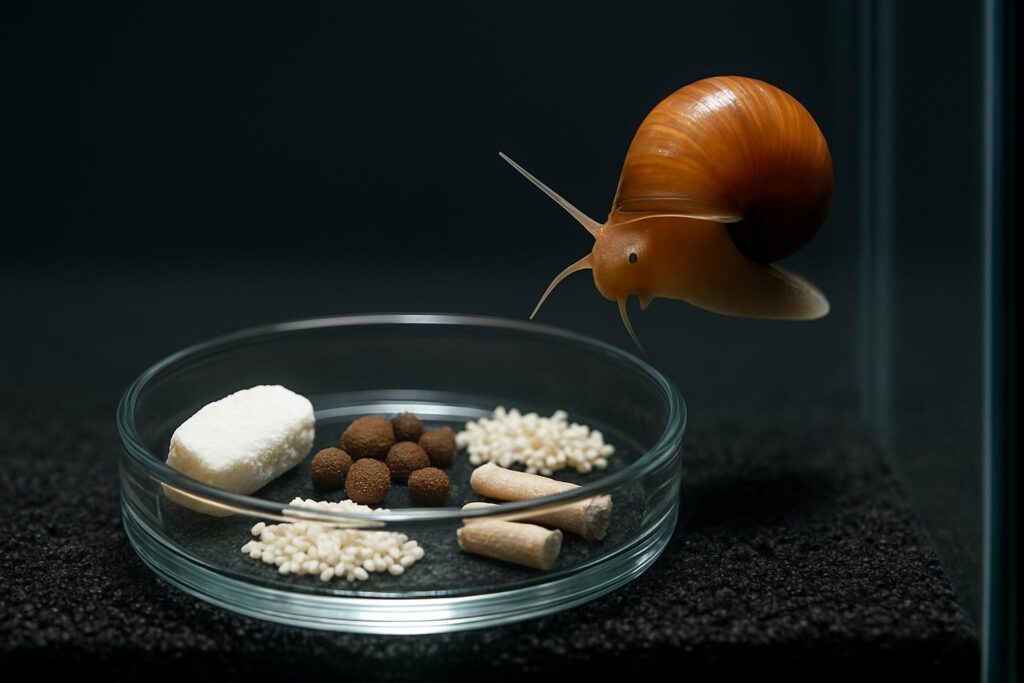
A small glass or ceramic dish collects crumbs and simplifies removal. It also trains snails to a spot so you can target feed without fish stealing everything.
Pair diet with clean water
Even perfect calcium fails if ammonia or nitrite spike. Keep up on water changes, do not overfeed, and vacuum debris from the dish area.
Conclusion
Strong shells come from consistent calcium and clean feeding habits. Cuttlebone provides round-the-clock mineral support, while pellets and sticks deliver a focused boost several times per week. Pick one baseline source and one or two targeted foods, feed lightly, and watch your snails for tight, glossy growth. Small changes compound fast when calcium is steady and waste is under control.
FAQ
Q: How often should I feed calcium-rich foods to mystery snails?
A: Feed small portions 3 to 4 times per week and leave a piece of cuttlebone in the tank at all times.
Q: Can cuttlebone change my water parameters?
A: Cuttlebone slowly raises GH and KH, which most mystery snails appreciate, but in soft-water community tanks start with a small piece and monitor pH and hardness.
Q: What are signs of calcium deficiency in mystery snails?
A: Look for thin, translucent shell edges, pitting or chips on the whorl, and slowed growth.
Q: What is a simple starter feeding plan?
A: Offer a small algae or shrimp pellet every other day, place cuttlebone once and replace when it gets soft or consumed, and remove uneaten food after 12 hours.
Q: Will fish and shrimp steal these foods?
A: Yes, community fish and shrimp rush sinking foods, so feed after lights out or drop pellets near the glass right in front of the snail.