
We are reader supported. When you purchase through links on our site, we may earn an affiliate commission. Also, as an Amazon affiliate, we earn from qualifying purchases.
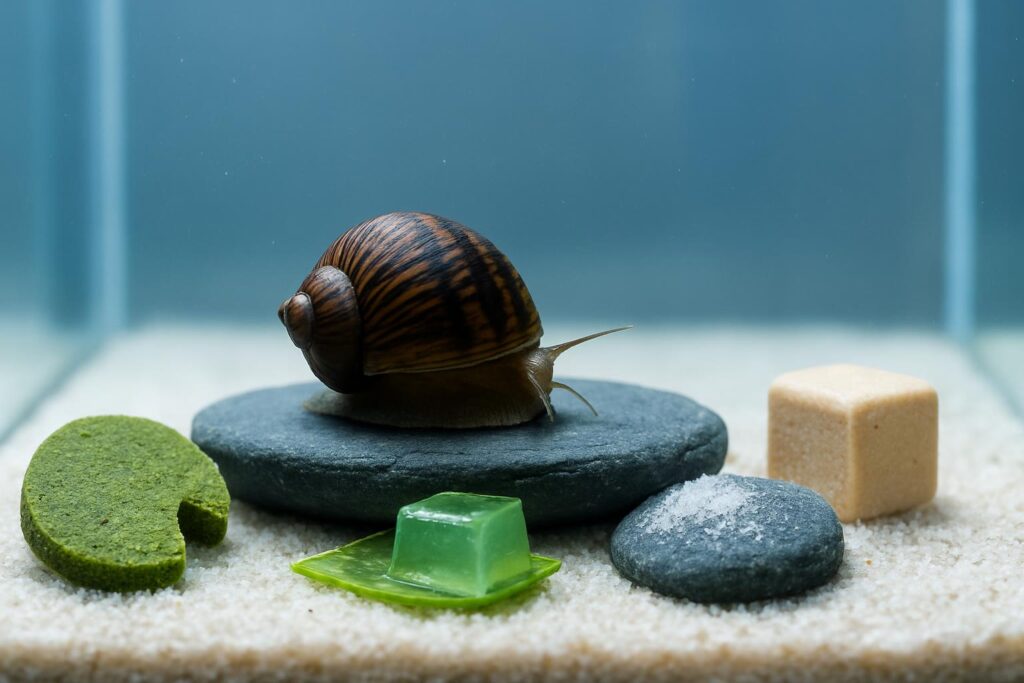
Nerite snails are efficient algae grazers, but a clean tank can leave them short on natural food. When algae is low, you need dependable alternatives that keep them active, healthy, and grazing without fouling the water. Below are four proven foods that match nerite feeding behavior, support shell health, and keep water quality stable when used correctly.
How to pick backup foods for nerite snails
Good supplemental foods for nerites should be algae or biofilm forward, easy to portion, and safe for water quality. Calcium support is a plus for strong shells. The four choices below cover daily grazing, gel-based nutrition, biofilm growth, and slow-release calcium with light feeding.
Signs your nerites need more food
- Constant glass cruising with little time spent grazing on surfaces
- Visible thinning or minor pitting on the shell over time
- Reduced activity after lights out
- No interest in typical grazing spots that used to have algae
1) Hikari Algae Wafers
What it is
A compact sinking wafer with a high spirulina content designed for herbivorous grazers. It holds together long enough for slow feeders like nerites to rasp at it.
Why it helps: Reliable plant-based nutrition that mimics the algae profile nerites seek. The wafer texture lets them graze naturally, reducing stress and pacing.
Best for: Everyday backup feeding in community tanks, especially when you notice nerites roaming more than grazing.
How to feed: Break a wafer into small chips. Start with a piece no larger than a pea for a small group of nerites. Place near glass or on a smooth rock where they already explore. Remove any uneaten bits after 3 to 4 hours to protect water quality.
Potential downsides: Overfeeding leads to mushy leftovers that pollute water. Portion control is essential in low-bioload or nano setups.
2) Repashy Soilent Green Gel Food
What it is
A powdered gel premix rich in algae and plant matter. You cook it with boiling water, let it set, then cut into small squares for controlled feeding.
Why it helps: Highly nutritious and customizable. The gel stays intact longer than many pellets, so nerites can graze over hours without the food crumbling into the substrate.
Best for: Tanks where you want precise portions and minimal mess. Useful for mixed invertebrate tanks with shrimp that also graze on soft foods.
How to feed: Mix the powder with boiling water per label ratio and let it firm up. Cut pea-sized pieces for small tanks. Offer a piece in a feeding dish or on a clean flat stone. Replace leftovers within 12 to 24 hours. Store prepared gel in the fridge for several days and freeze extra for longer storage.
Potential downsides: Requires a few minutes of prep. Overly large pieces can raise nutrients if left too long. Keep sizes small and remove any uneaten gel promptly.
3) GlasGarten Bacter AE Micro Powder
What it is
A concentrated biofilm and microorganism booster used in shrimp keeping. It coats surfaces with a fine layer of edible film that nerites and other micrograzers can rasp.
Why it helps: Nerites are surface grazers first. Biofilm replicates the natural grazing layer they prefer, especially valuable in new or very clean tanks lacking mature films.
Best for: Nano tanks, new setups, or tanks with diligent algae control. Also helpful for juvenile or smaller nerites that struggle with larger food chunks.
How to feed: Use a very small pinch for the entire tank and dust it over high-flow areas so it disperses. Start light and increase slowly over weeks as you observe snail activity. Ensure good filtration and aeration to keep water clear while biofilm establishes.
Potential downsides: Heavy dosing can cloud water and raise nutrients. Patience and minimal portions are key. Adjust changes based on snail activity and water tests.
4) Zoo Med Nano Banquet Food Blocks with Calcium
What it is
Small slow-dissolving blocks that supply minerals and a light food source over time. They contribute calcium that supports shell strength for snails.
Why it helps: Provides steady grazing and essential minerals between direct feedings. Useful as a backup when you travel or when you want to spread feeding across days.
Best for: Supplemental feeding in tanks with soft water or slightly lower GH. Good insurance for periods when you cannot feed daily.
How to feed: Place a small piece of block in the tank where flow is moderate. Let it dissolve slowly and observe snail interest. Remove leftover chalky residue after a few days and refresh as needed. Monitor hardness and pH if your water is already on the hard side.
Potential downsides: Can raise GH and pH. Not ideal for tanks that already have high hardness or sensitive soft-water livestock.
Feeding schedule and rotation that works
Rotate foods to cover nutrition and reduce waste. Here is a simple plan you can adapt:
- Twice per week: Small chip of Hikari Algae Wafer for grazing sessions
- Once per week: Pea-sized Repashy Soilent Green piece, removed after 12 to 24 hours
- Every 2 to 3 days as needed: Tiny dusting of Bacter AE to maintain biofilm
- As supplemental support: Small piece of Nano Banquet block for a day or two, then remove residue
Watch the snails. If wafers vanish quickly and shells look strong, you are on track. If leftovers persist, reduce portions or lengthen intervals.
Maintenance tips while supplementing
- Use small portions, especially in nano tanks
- Place foods on a flat feeding tile or dish for easy removal
- Siphon any mushy leftovers after 3 to 4 hours
- Increase aeration slightly when using biofilm boosters
- Test nitrate weekly and adjust feeding to keep levels stable
- Support shell health with stable KH and GH alongside calcium sources
Conclusion
Nerite snails thrive when they can graze steadily on clean, stable surfaces. When algae runs low, shift to targeted foods that match their habits. Algae wafers cover daily needs, Repashy gel adds balanced nutrition with control, biofilm powder rebuilds natural grazing layers, and a calcium block supports shells while offering slow feeding. Keep portions small, remove leftovers, and rotate options. With a simple plan, your nerites stay active and well-fed without compromising water quality.
FAQ
Q: What is the best daily backup food for nerite snails when algae is low?
A: A small chip of Hikari Algae Wafer is a reliable daily backup because it is algae rich, easy to portion, and holds together for grazing.
Q: How often should I feed algae wafers to nerite snails?
A: Start with a pea-sized chip two to three times per week and remove any uneaten pieces after 3 to 4 hours.
Q: Is Repashy Soilent Green good for nerites and how do I use it?
A: Yes, prepare the gel per the label, cut pea-sized pieces, offer on a dish or stone, and replace leftovers within 12 to 24 hours.
Q: Can I use Bacter AE for nerite snails and will it cloud the water?
A: It is useful because it builds biofilm for grazing, but start with a very small pinch and increase slowly to avoid clouding and nutrient spikes.
Q: Do nerite snails need calcium and what is a simple option?
A: Calcium supports shell strength and a small piece of Zoo Med Nano Banquet block offers slow-release minerals and light feeding.