
We are reader supported. When you purchase through links on our site, we may earn an affiliate commission. Also, as an Amazon affiliate, we earn from qualifying purchases.
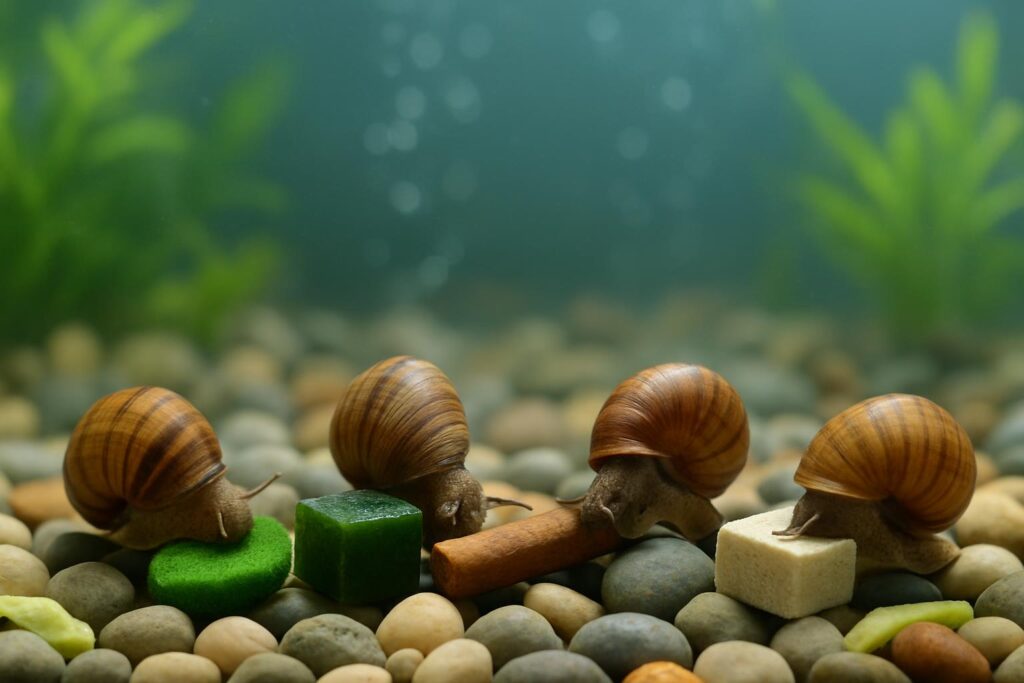
Rabbit snails are slow, deliberate eaters with high calcium needs. They thrive on a plant-forward diet with steady mineral support for shell growth. If you keep their meals clean, varied, and enriched with calcium, their shells stay smooth, their colors sharpen, and their activity stays consistent. The list below breaks down four proven foods that align with those goals, plus a simple schedule to use them without polluting your tank.
What Rabbit Snails Need From Food
Plant-first nutrition
Rabbit snails graze on biofilm, algae, and soft plant matter in nature. In the aquarium, prioritize sinking foods rich in algae, spirulina, and vegetables. This keeps digestion steady and reduces waste compared to high-protein fish foods.
Calcium and shell integrity
Calcium is non-negotiable for snails. It supports new shell growth and repairs minor chips. A diet with built-in calcium or a supplemental calcium source helps prevent pitting, erosion, or thin shell edges.
Clean delivery and tank stability
Snails eat slowly, so food must hold together underwater and release nutrients without clouding. Choose dense wafers, gel foods, or controlled-release blocks. Remove leftovers before they break down.
4 Best Foods for Rabbit Snails
1) Hikari Algae Wafers
These classic sinking wafers are a staple for herbivores. They are dense, tidy, and rich in plant matter, which suits the slow feeding pattern of rabbit snails. The wafer format allows controlled portions that are easy to remove if uneaten.
Why it helps: High vegetable content and stabilized vitamins support daily grazing without bloating. The wafers soften slowly, so snails can rasp at them over hours.
Best for: Daily baseline feeding, mixed tanks with plecos or other algae eaters, and keepers who want a low-mess staple.
How to feed: Start with half to one wafer per 2 to 4 snails. Place near their usual path after lights out. Remove leftovers after 6 to 8 hours.
Potential downsides: Overuse can raise organics and film on glass. If your tank is small or lightly filtered, reduce portions.
2) Repashy Soilent Green (Gel Food)
Repashy Soilent Green is a powdered gel mix formulated for periphyton and aufwuchs grazers. It binds spirulina and other greens into a firm gel that releases minimal debris. You control the firmness by adjusting water ratio, which is ideal for snail pacing.
Why it helps: The gel locks plant nutrients into a sliceable block that does not scatter in flow. This keeps the substrate clean while giving snails a broad, soft surface to graze.
Best for: Dedicated snail tanks, high-bio-load setups that demand clean feeding, and keepers who pre-portion food for the week.
How to feed: Mix boiling water with powder per label, pour into a shallow dish, cool, and refrigerate. Cut pea-sized to thumbnail-sized cubes depending on snail count. Offer 2 to 4 times per week and remove leftovers the next morning.
Potential downsides: Preparation takes a few minutes and fridge space. If you make the gel too soft, it can break down faster in warm tanks.
3) Hikari Crab Cuisine
Although designed for crustaceans, Crab Cuisine sinking sticks include calcium for exoskeleton and shell support. For rabbit snails, this is an efficient way to deliver both minerals and a moderate protein bump to support growth and reproduction.
Why it helps: Added calcium supports thick, even shell growth. The sticks hold shape under water, so snails can work them down without dissolving clouds of particles.
Best for: Juveniles building shell fast, adults with minor edge chipping, and weekly mineral top-ups.
How to feed: Offer 1 to 3 small sticks per 5 to 8 snails once or twice per week. Place in a feeding dish or on a bare corner for easy cleanup.
Potential downsides: More protein than pure algae foods. Overfeeding can increase waste and film. Keep protein days limited if you have sensitive water quality.
4) Zoo Med Nano Banquet Food Blocks Calcium
These are time-release blocks that slowly dissolve, releasing food and calcium. They are useful if you are away for a weekend or need a gentle, ongoing mineral source. Rabbit snails graze the block surface and benefit from the dissolved calcium in the water column.
Why it helps: Continuous low-level calcium supports shell maintenance without daily dosing. The block format prevents rapid fouling.
Best for: Vacation feeding, backup food for shy snails, and tanks where you want steady calcium without adding separate powders.
How to feed: Use a small block per 10 to 20 gallons as needed. Place in an area with mild flow. Replace when mostly dissolved.
Potential downsides: Can raise hardness and pH slightly if you use too many at once. In small tanks, start with half blocks and track parameters weekly.
Feeding Schedule and Portions
Simple weekly plan
Use a plant-first rhythm with targeted calcium support:
Day 1 Algae wafers
Day 2 Repashy gel
Day 3 Algae wafers
Day 4 Protein and calcium day with Crab Cuisine
Day 5 Repashy gel or blanched vegetable
Day 6 Algae wafers
Day 7 Rest day with optional Nano Banquet block
Adjust portions to what your snails finish in 6 to 8 hours. In tanks under 20 gallons, use smaller pieces and feed after lights out to reduce competition.
Reading appetite and waste
Good signs include steady rasping, visible bite marks on wafers or gel, and clear water the next morning. Cut back if you see leftover food after lights on, cloudy water, or a sulfur smell from the substrate. Increase slightly if snails crowd the dish and leave nothing within 2 hours.
Water Parameters That Support Feeding
Hardness and pH
For shell health, aim for GH 6 to 12 dGH and KH 3 to 8 dKH. Keep pH stable between 7.2 and 8.2. These ranges help calcium stay available and reduce shell erosion.
Temperature and oxygen
Warm, stable water encourages steady feeding. Ensure good surface agitation so slow-eating foods do not deplete oxygen overnight. Run sponge filters or add gentle flow in heavily stocked snail tanks.
Simple Add-ons From the Kitchen
Blanched vegetables
Zucchini rounds, green beans, and kale strips make excellent fresh sides. Slice thin, blanch for 1 to 2 minutes, cool, and weigh down with a plant weight. Remove after 12 to 24 hours. Rotate with prepared foods to keep variety without spiking waste.
Extra calcium, if needed
If shells show minor pitting or thin edges, combine the foods above with a slow-release source such as a small cuttlebone shard or a Nano Banquet block. Track GH, KH, and pH weekly to avoid overshooting hardness.
Conclusion
Keep rabbit snails on a plant-forward base with consistent, measured calcium. Hikari Algae Wafers and Repashy Soilent Green cover daily grazing needs cleanly. Hikari Crab Cuisine adds targeted mineral and protein support. Zoo Med Nano Banquet Food Blocks provide a steady safety net when you are away or want a gentle calcium lift. Feed modest portions, clear leftovers, and stabilize hardness and pH. Do that, and your rabbit snails will show strong shells, steady growth, and calm, reliable behavior.
FAQ
Q: What is the best daily staple for rabbit snails
A: A plant-first sinking food like Hikari Algae Wafers or a clean gel such as Repashy Soilent Green works well for daily feeding.
Q: How do I give my rabbit snails enough calcium
A: Use foods with built-in calcium like Hikari Crab Cuisine and add a steady source such as a Zoo Med Nano Banquet block, while keeping GH 6 to 12 dGH and pH 7.2 to 8.2.
Q: How often should I feed
A: Offer small portions most days, let them finish within 6 to 8 hours, and include one rest day with an optional Nano Banquet block.
Q: What are signs I am overfeeding
A: Leftover food in the morning, cloudy water, or a sulfur smell from the substrate mean portions are too large or too frequent.
Q: Can I use fresh vegetables
A: Yes, blanched zucchini, green beans, or kale are good add-ons that should be removed after 12 to 24 hours to prevent fouling.