
We are reader supported. When you purchase through links on our site, we may earn an affiliate commission. Also, as an Amazon affiliate, we earn from qualifying purchases.
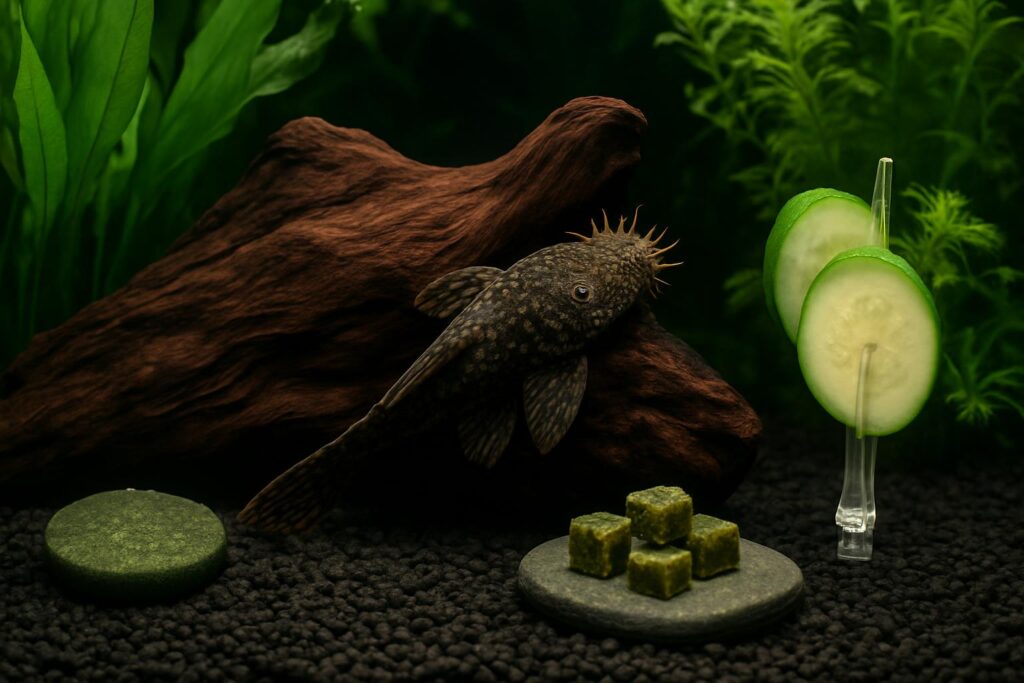
Bristlenose plecos are hardy, peaceful, and great at cleaning glass and decor. But they do not thrive on algae alone. The right foods bring out strong color, steady growth, and long life. Below are four proven foods that match what bristlenose plecos need day to day. You will also find how to feed them, how much to offer, and common mistakes to avoid.
What Bristlenose Plecos Eat in Nature
Herbivore with a fiber focus
Bristlenose plecos are mainly herbivores. In the wild they graze on biofilm, soft algae, and plant matter. They also rasp on wood. The wood and tough plant fiber help digestion and keep the gut moving well.
Why a varied diet matters
A single food rarely covers all needs. A mix of wafers, plant-based gels, fresh vegetables, and driftwood keeps fiber high, minerals steady, and protein moderate. This balance supports healthy growth, strong fins, and robust immune function.
The 4 Best Foods for Bristlenose Plecos
1) Hikari Algae Wafers
Hikari Algae Wafers are a staple for plecos. They sink fast, hold shape, and deliver stable nutrition through the night when plecos are most active. The formula is rich in algae and plant matter with added vitamins for long-term health.
Why it helps: Consistent plant-based fuel with good fiber and vitamins. Stays intact, reducing cloudiness and waste.
Best for: Daily baseline feeding in community tanks and pleco-only setups.
Feeding tips: Start with 1 wafer per adult pleco nightly. In tanks with heavy biofilm or other foods, reduce to half a wafer. Adjust based on what is fully eaten in 2 to 3 hours.
Potential downsides: If overfed, any wafer can boost nitrates. Keep up with water changes and do not let uneaten wafers sit until morning.
2) Repashy Soilent Green Gel Food
Repashy Soilent Green is a powder you mix with boiling water to set into a firm gel. Once cooled, it can be cut into cubes or spread thin so plecos can rasp it from wood or rocks. It is heavy on algae and plant content with clean ingredients and good minerals.
Why it helps: High-quality algae profile, easy to digest, and sticks to surfaces to promote natural grazing behavior.
Best for: Target feeding shy plecos and boosting nutrition during growth, stress, or recovery.
Feeding tips: Prepare a small batch and refrigerate portions for up to a week. Feed a cube about the size of a pea to a young pleco or a marble-sized portion to an adult at lights out. Remove leftovers within 12 to 24 hours.
Potential downsides: Requires prep time. If the gel is too soft, it may crumble. Use the correct powder to water ratio and let it set fully.
3) Zoo Med Mopani Wood
Driftwood is not just decor for bristlenose plecos. It is part of the diet. Mopani wood is dense and sinks fast. It grows a thin layer of biofilm that plecos love and offers natural fiber as they rasp the surface.
Why it helps: Adds constant grazing surface, supports gut health with lignin and cellulose, and releases gentle tannins that many fish prefer.
Best for: Any pleco tank, especially if you want steady grazing between feedings.
Setup tips: Rinse and pre-soak or boil to reduce tannins and help it sink. Place it where plecos can park under cover.
Potential downsides: Tannins can tint water. This is harmless but can be reduced with water changes or carbon if you want clear water.
4) Fresh Zucchini and Cucumber Slices
Fresh vegetables are a simple way to add moisture, fiber, and natural minerals. Zucchini and cucumber are easy wins that most bristlenose plecos accept quickly. Spinach and green beans also work once softened.
Why it helps: Clean plant nutrition with high fiber and low fat. Encourages natural rasping and longer feeding sessions.
Best for: Weekly variety and boosting fiber alongside wafers or gel foods.
Feeding tips: Slice into coins or strips. Blanch 2 to 3 minutes so pieces soften and sink. Secure with a veggie clip or a fork. Remove leftovers within 12 to 24 hours.
Potential downsides: Overfeeding vegetables can raise waste if not removed. Start small and increase only if fully eaten.
How to Build a Simple Weekly Feeding Plan
Daily baseline
Feed a sinking algae wafer each night after lights out. Monitor how much is gone by morning and adjust the portion.
Vegetable nights
Offer fresh zucchini, cucumber, blanched spinach, or green beans two to three times per week in place of part of the wafer portion. Slice them, blanch 2 to 3 minutes to soften and sink, then remove leftovers within 12 to 24 hours.
Gel boost
Use Repashy Soilent Green two to three times per week in small portions to cover trace nutrients and encourage steady grazing. Spread a thin layer on a smooth rock to simulate a grazing mat.
Rest day
Include one light feeding or fast day each week to prevent excess waste and keep water quality stable.
Always keep driftwood in the tank
Driftwood provides ongoing biofilm and fiber. It is not a one-time feeding but a permanent part of the diet.
Portion Control and Water Quality
Right amount, right time
Brislenose plecos are crepuscular and nocturnal. Feed once daily after lights out so food reaches them without daytime grazers taking it first.
Prevent overfeeding
Feed only what is eaten in 2 to 3 hours, secure vegetables so they do not float, remove uneaten food promptly, and keep ammonia and nitrite at zero with nitrates under 20 to 40 ppm.
Common Mistakes and How to Avoid Them
Relying on tank algae
Can a pleco live on tank algae alone. No. Algae in most tanks is not enough, so add sinking wafers, plant-based gel foods, fresh vegetables, and a piece of driftwood.
Skipping fiber
Without plant fiber and wood, digestion can slow and waste can accumulate. Keep driftwood in the tank and use high-fiber foods.
Ignoring leftovers
Leftover vegetables and gels rot fast. Remove them within 12 to 24 hours. Vacuum the substrate around pleco feeding spots.
Conclusion
Strong bristlenose plecos need more than algae on glass. Give them a reliable wafer, a clean gel food, steady access to driftwood, and regular fresh vegetables. Feed at night, control portions, and keep the tank clean. This simple routine brings out steady growth, bold color, and a relaxed, active pleco that grazes all day.
FAQ
Q: How often should I feed a bristlenose pleco
A: Feed once daily after lights out; offer fresh vegetables 2 to 3 times per week; include one light feeding or fast day each week to prevent excess waste.
Q: Do bristlenose plecos need driftwood
A: Yes. Driftwood provides constant grazing surface, natural fiber for digestion, and a secure place to rest.
Q: Which vegetables are safe and how do I prepare them
A: Use zucchini, cucumber, blanched spinach, or green beans. Slice them, blanch 2 to 3 minutes to soften and sink, then remove leftovers within 12 to 24 hours.
Q: Can a pleco live on tank algae alone
Q: How do I prevent overfeeding and water quality issues
A: Feed only what is eaten in 2 to 3 hours, secure vegetables so they do not float, remove uneaten food promptly, and keep ammonia and nitrite at zero with nitrates under 20 to 40 ppm.