
We are reader supported. When you purchase through links on our site, we may earn an affiliate commission. Also, as an Amazon affiliate, we earn from qualifying purchases.
Apistogramma are small, charismatic dwarf cichlids with big appetites for high-quality protein and variety. Get the food right and you will see stronger color, steady growth, and reliable breeding. Get it wrong and you risk picky eating, bloat, and wasted food fouling the water. This guide narrows down the best pellet, frozen, and live options that match their natural feeding style while staying practical for everyday care. Keep reading for clear picks, exact feeding tips, and a weekly plan you can start today.
Why Apistogramma Need a Varied Diet
Natural micro-predators
In the wild, Apistogramma hunt small invertebrates among leaf litter and roots. They peck, sift, and ambush. They prefer small, sinking foods that move or at least look alive.
Nutritional targets
Focus on quality animal proteins and easy-to-digest items. Aim for small sinking pellets for daily use, then layer in frozen and live foods a few times a week for conditioning and color.
Key goals
- High-protein, clean ingredients
- Small size and sinking behavior
- Variety to prevent nutrient gaps
- Moderation with richer foods like bloodworms
How to Feed Apistogramma Day to Day
Portion, schedule, and size
- Feed small portions 1–2 times per day. All food should be gone within 2–3 minutes.
- Choose sub-1 mm micro pellets for juveniles and 0.5–1.2 mm for adults.
- Soak dry pellets for 30–60 seconds if fish are prone to gulping air or bloat.
- Target feed shy individuals with a pipette or turkey baster to ensure even intake.
- Use one light fast day per week if you notice overfeeding or mild bloat tendencies.
The 4 Best Foods for Apistogramma
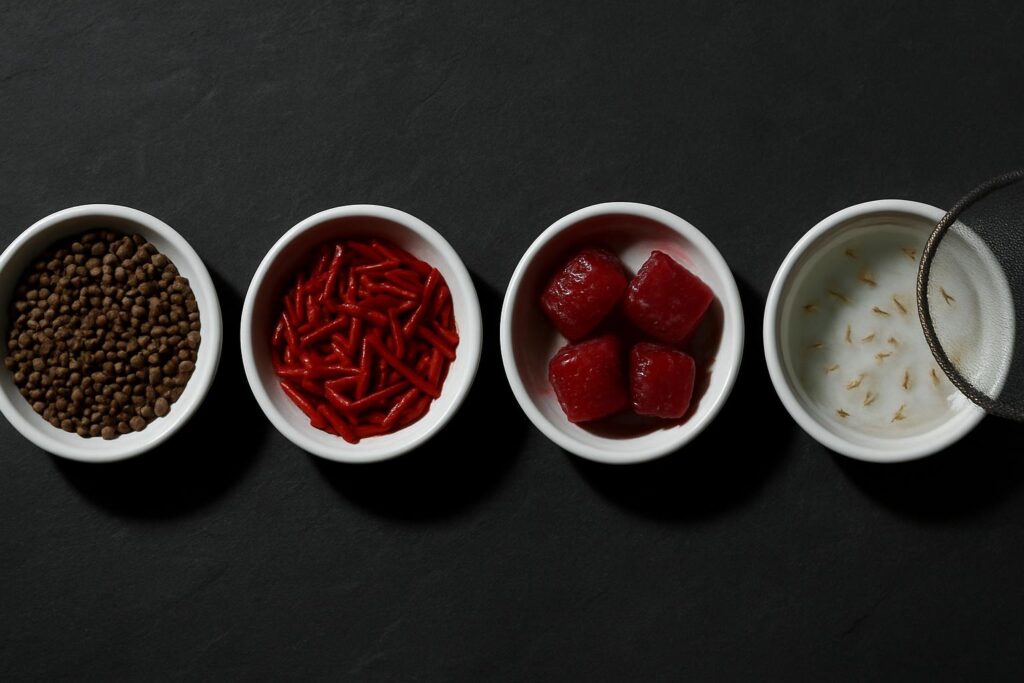
1) Fluval Bug Bites Tropical Micro Granules
What it is: A slow-sinking micro pellet made from black soldier fly larvae and salmon. The granules are small, hold shape in water, and trigger natural pecking behavior.
Why it helps: Insect meal matches how Apistos forage in the wild. These granules sink slowly, letting fish pick bites off the bottom and mid-water. Clean ingredients support daily feeding without dirtying the tank.
Best for: Daily staple use for juveniles and adult Apistogramma. Great when you need a reliable, complete base diet that fish accept quickly.
Potential downsides: Can be slightly big for very small juveniles. If your fish are extra finicky, pre-soak or crush lightly.
How to feed: Start with a pinch once or twice per day. Let it sink in the feeding zone. Adjust so no food remains after a few minutes.
2) Hikari Vibra Bites
What it is: Worm-shaped sinking sticks designed to mimic insect larvae movements. Often accepted by picky cichlids that ignore round pellets.
Why it helps: The shape and slow sink rate switch on predation instincts. It works well as a stepping stone to get reluctant eaters onto prepared foods.
Best for: Transitioning wild-caught or shy Apistogramma that refuse standard pellets. Also effective during conditioning before spawning.
Potential downsides: Overfeeding can cause waste and digestive issues. Rotate with other foods rather than relying on it exclusively.
How to feed: Offer a small pinch and watch acceptance. Combine with micro pellets on alternating days to balance nutrition.
3) San Francisco Bay Brand Frozen Bloodworms Cubes
What it is: Flash-frozen bloodworms in easy-to-portion cubes. High palatability for conditioning and color.
Why it helps: Frozen bloodworms spark feeding response in even the most selective Apistos. They are excellent for short-term conditioning and for helping new arrivals settle.
Best for: A few meals per week to enhance color and body condition, especially for breeding pairs.
Potential downsides: Rich and can be fatty. Do not feed daily. Alternate with daphnia or brine shrimp to reduce the risk of bloat.
How to feed: Thaw a cube in tank water. Strain if desired. Target feed with a pipette. Remove any uneaten bits within a few minutes.
4) Brine Shrimp Eggs Artemia Cysts, High Hatch Rate
What it is: Brine shrimp eggs you hatch at home to produce live baby brine shrimp. Freshly hatched nauplii are nutrient dense and perfectly sized for Apistos.
Why it helps: Live foods trigger natural hunting. Baby brine shrimp boost activity, color, and breeding readiness. They are also ideal for fry and juveniles.
Best for: Weekly supplementation for adults and staple use for fry growth. Essential when conditioning pairs for spawning.
Potential downsides: Requires a simple hatchery and daily attention. Rinse nauplii to avoid introducing excess salt.
How to feed: Harvest freshly hatched shrimp, rinse through a fine net, and target feed small amounts 1–2 times per week for adults. Offer more frequently to fry.
Feeding Tips That Prevent Problems
Keep it clean
- Use a feeding ring or a fixed corner. This builds routine and limits food scattering.
- Remove leftovers within five minutes. Uneaten food is the fastest route to cloudy water and stress.
Watch behavior, not just bellies
- If a fish is hiding during meals, target feed it first.
- If you see stringy white feces or repeated floating after dry food, reduce portions and pre-soak pellets.
Use a stable pellet base and layer in frozen and live foods. Rotate to keep nutrients balanced and appetites strong.
- Mon: Fluval Bug Bites AM, light snack PM
- Tue: Hikari Vibra Bites AM, Fluval Bug Bites PM
- Wed: Thawed frozen bloodworms AM only
- Thu: Fluval Bug Bites AM, small portion PM
- Fri: Freshly hatched baby brine shrimp AM, pellets PM
- Sat: Mixed micro pellets only
- Sun: Light feeding or one light fast day if fish look full
Adjust frequency for fry or breeding pairs, which can handle smaller, more frequent meals. Always match portions to what is eaten in a few minutes.
Conclusion
Apistogramma thrive on small, sinking, protein-rich foods with regular variety. A clean micro pellet forms a dependable base. Frozen bloodworms and live baby brine shrimp add the movement and nutrition that sharpen color and condition. Keep portions tight, rotate foods, and target feed shy fish. With this approach, you support health, breeding behavior, and the natural foraging that makes these dwarf cichlids compelling to watch.
FAQ
Q: How often should I feed Apistogramma
A: Feed small portions 1–2 times per day. All food should be gone within 2–3 minutes.
Q: Do Apistogramma need live food
A: Live foods trigger natural hunting, boost activity, color, and breeding readiness, and are ideal as weekly supplementation for adults and staple use for fry.
Q: Are bloodworms safe for Apistogramma
A: Yes, but use in moderation. They are rich and can be fatty, so do not feed daily and alternate with daphnia or brine shrimp to reduce the risk of bloat.
Q: What pellet size works best
A: Choose sub-1 mm micro pellets for juveniles and 0.5–1.2 mm for adults.
Q: How do I prevent bloat from dry foods
A: Reduce portions, pre-soak pellets for 30–60 seconds, and rotate in frozen and live foods for easier digestion.