
We are reader supported. When you purchase through links on our site, we may earn an affiliate commission. Also, as an Amazon affiliate, we earn from qualifying purchases.
Placing a fish tank is not only about looks or fish care. In Feng Shui, water represents cash flow, movement, and opportunity. A well placed aquarium can lift the energy of a home and support wealth, while a poorly placed tank can create stress and block progress. This guide gives you clear, beginner friendly rules to choose the right spot. You will learn where a tank supports wealth, what to avoid, and how to balance good Feng Shui with real fish keeping needs.
Introduction
Aquariums bring life, motion, and sound into a room. In Feng Shui, this movement activates wealth energy. Yet not every corner is suitable. The goal is simple. Place your tank where it nourishes the home without burdening the people, the structure, or the fish. Use the steps below to find a location that is safe, easy to maintain, and aligned with classic Feng Shui principles.
How Feng Shui Sees Aquariums
Water symbolizes money, opportunities, and flow. Clean moving water draws in beneficial energy. Fish add vitality and amplify this effect. For wealth support, the aquarium should be lively yet calm, visible but not intrusive, and integrated into daily life.
What Makes a Placement Auspicious
Three factors decide if a spot helps or hurts. First, the flow of people and air. The tank should sit near activity but not in the line of fast traffic or doors. Second, elemental balance. Water should support the room element, not clash with it. Third, practicality. The tank must be easy to maintain so water stays clear and fish remain healthy. A struggling tank disrupts energy rather than improving it.
Core Placement Rules You Can Trust
Best Compass Directions
Use a phone compass to map your home. Favor these directions:
1. Southeast. Associated with wealth and growth. Water nourishes the Wood element here. This is the top choice for a wealth activating aquarium.
2. North. Linked to career and life path. Water belongs naturally in the North and supports progress.
3. East. Connected to health and family. Water also nourishes East Wood, which can steady family finances through stability.
Directions to avoid or handle with care:
1. Center of the home. The center is Earth. Heavy moisture and movement here can create instability for the whole house.
2. Southwest and Northeast. These are strong Earth areas. Earth controls water, so large aquariums here can be draining. Avoid or keep very small water features if you must use these sectors.
3. South. The South is Fire. Water extinguishes Fire, which can weaken recognition and reputation. Be cautious. If the South is your only option, use a modest size and keep the display calm.
Rooms That Work Best
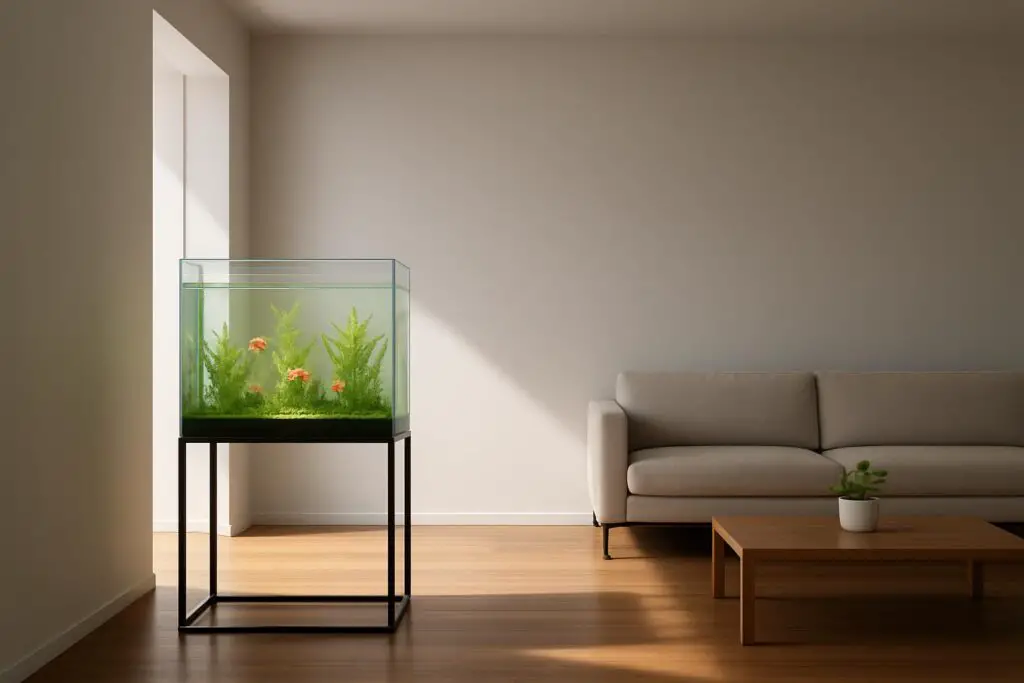
Living room. This is the main social area where energy should be active but comfortable. A living room aquarium attracts and circulates positive energy for the whole household.
Entry or foyer. If space allows, an aquarium near the entry can greet incoming energy and slow it gently so it settles in the home. Ensure it does not block the door or make movement awkward.
Rooms To Avoid
Bedrooms. Rest needs calm, still energy. The sound, lights, and movement of an aquarium can disturb sleep and create long term fatigue.
Kitchen. Fire and water clash. Heat, grease, and steam stress fish and increase maintenance. The symbolism of water extinguishing fire can also weaken household vitality in this area.
Center of home and tight corridors. These placements disrupt circulation and can create pressure and mishaps.
Left or Right of the Door
Stand inside the main living room and face the entry door. Place the tank on the left side. Traditional practice favors active features on the left side to support protective and helpful energy. Avoid placing a large aquarium on the right side where it can agitate relationships or create tension.
Practical Tank Siting For Real Homes
Light, Heat, and Drafts
Avoid direct sun. Sunlight overheats water, stresses fish, and explodes algae growth. Keep at least one meter from large sun facing windows or use blinds. Avoid vents and strong drafts that swing temperature and pH. Keep away from heaters, radiators, and ovens.
Weight and Support
A filled aquarium is heavy. A 120 liter or 30 gallon tank with stand can exceed 160 kilograms. Place across joists on solid flooring or along a load bearing wall. Use a purpose built stand that is level and rated for your tank size. Add a foam mat or leveling pad to protect the base and distribute load.
Power and Maintenance Access
Locate near grounded outlets with GFCI or RCD protection. Add drip loops on all cords to prevent water from reaching outlets. Leave clear space above the tank for feeding and maintenance. Ensure you can reach it with a siphon hose to a drain or a bucket path without crossing rugs or stairs.
Noise and Rest Areas
Keep filters quiet. Vibrations can carry through walls and stands. Do not place an aquarium against a shared wall with a bedroom or neighbor if noise is a concern. Use rubber feet under equipment and balance impellers to reduce hum.
Finding the Spot Step by Step
1. Map your floor plan. Mark the main door, sofas, windows, vents, stairs, and load bearing walls. Note the compass directions.
2. Circle the living room and the entry first. If you have options in Southeast, North, or East within these rooms, highlight them.
3. Remove conflicting spots. Cross out places that block doors, sit in direct sunlight, or are under beams or stairs.
4. Check structure and power. Confirm a stable stand, level floor, joists below, and safe outlets nearby. Avoid extension cords that cross walkways.
5. Visual test. Sit on the main sofa and at the dining table. The tank should be visible and pleasant, not glaring or imposing.
6. Flow test. Walk from the entry to the main areas. The tank should slow and gather energy without forcing people to squeeze by.
7. Finalize size and shape based on the chosen spot. Keep scale in balance with the room.
Room by Room Guidance
Living Room
Place the aquarium on a solid wall, not floating in the middle. If the living room has a Southeast corner, that is a prime location. North or East walls are also supportive. Keep the tank to the left side when you face the entry from inside the room. Do not let the aquarium dominate the TV wall. Ensure at least 60 centimeters of clearance on one side for maintenance.
Entry and Foyer
Position the tank where it is seen upon entry but not directly opposite the door in a straight line. Offset slightly to the left. Keep enough space to open the door fully and move luggage or packages without risk. Use a closed canopy or cover to manage humidity in small foyers.
Home Office or Study
A North wall in a home office supports focus and career flow. Keep the tank behind or to the side of your desk, not directly in front where it can distract. Use soft water movement and stable lighting to avoid glare on screens. Ensure the filter is quiet for calls and meetings.
Dining Room
An aquarium in the dining area can feel abundant if proportionate. Use the East or Southeast side if possible. Keep the tank slightly away from the dining table so chairs do not bump the stand. Avoid facing mirrors that double the tank visually and can feel chaotic.
Hallways and Stairs
Avoid long hallway alignments where the tank faces a door at the end. This can speed energy out. Do not place a tank under stairs. It compresses energy and adds structural concerns from water weight and vibration.
Kitchen and Bedroom Warnings
Do not place an aquarium in a bedroom. Sleep and restoration need calm, and pumps and lighting are disruptive. Avoid the kitchen. Fire and water clash. Heat and grease harm fish and increase algae and maintenance.
Bathrooms and Laundry Nearness
Do not place the tank next to a toilet or within direct line of a bathroom door. Humidity, odor, and water symbolism are not supportive here. Keep the aquarium at a healthy distance and on a clean, dry wall.
Scale, Shape, and Orientation
Tank Size Relative to the Room
Choose a tank that feels substantial but not overwhelming. As a simple rule the tank footprint should be about five to ten percent of the room floor area, large enough to be stable but not so large that it dominates the space. In a small room, lean toward the low end of that range. In a large living room, a medium to large tank is suitable if the stand is solid and maintenance is manageable.
Shape and Proportions
Rectangular tanks are stable and easy to maintain. Curved fronts soften edges and can feel gentle in narrow spaces. Very tall and narrow columns look striking but are harder to filter and plant, and they concentrate weight on a small area. Prioritize stability and accessible dimensions.
Height and Viewing Level
Set the viewing window near seated eye level. The center of the display around 100 to 120 centimeters from the floor suits most living rooms. This allows relaxed viewing and reduces back strain during maintenance.
Water Movement, Cleanliness, and Wealth Energy
Wealth energy follows clear, moving water. Gentle filtration that circulates the entire volume without harsh splashing is best. Aim for smooth surface movement to oxygenate water and keep proteins from building up. Keep the tank clean, trim plants, and remove waste on a regular schedule. A neglected tank weakens energy. A thriving, clear tank contributes to steady growth.
Lighting and Rhythm
Use a consistent light schedule of eight to ten hours per day with a timer. Avoid leaving lights on late into the night in living spaces. A calm night cycle supports both fish and human rest. Choose lighting that suits plants and fish color without glaring into seating areas.
Quiet Operation
Use quality filters and air pumps with low noise. Soft tubing, foam pads under canisters, and secure lids reduce rattles. Noise control keeps the atmosphere calm and makes the tank a positive presence.
Safety and Compliance
Use GFCI or RCD outlets and keep cords with drip loops. Seal cable entries and secure lids if children or pets are present. Never overload power strips. Check the floor structure for large tanks and consider consulting a professional for aquariums over 300 liters. Keep towels and a spill kit nearby for safe water changes. Insure valuable setups where possible.
Common Mistakes and Simple Fixes
Mistake. Placing the tank opposite the main door so you see it straight ahead when entering. Fix. Shift it to the left side and off the direct line of the door.
Mistake. Direct sun causing algae and heat spikes. Fix. Move the tank one meter away from the window or use blinds and reposition to a shaded wall.
Mistake. Oversized tank dominating a small room. Fix. Downsize or move to a larger room so the footprint sits within the five to ten percent guideline.
Mistake. Tank under a heavy beam or stairs. Fix. Relocate to a clear wall with even ceiling and better support.
Mistake. Bedroom placement for convenience. Fix. Move to the living room or entry and plan maintenance routes that do not rely on bedroom access.
Putting It All Together
Start with the right room. The living room or entry are your best bets. Use the compass to confirm Southeast, North, or East if available. Pick a solid wall on the left side of the entry line, avoid sun and drafts, and keep doors clear. Choose a tank that suits the room scale and your maintenance capacity. Keep water clean and movement steady. These steps work in apartments, townhomes, and large houses alike.
Conclusion
The right aquarium placement blends Feng Shui wisdom with practical fish keeping. Favor the living room and entry, use supportive compass directions, keep the tank visible but not obstructive, and avoid bedrooms, kitchens, and the center of the home. Choose a size that complements the room and sit it on a safe, level stand with proper power and access. Maintain gentle flow and clear water. When all these pieces align, your aquarium becomes a steady source of beauty, calm, and wealth energy for the household.
FAQ
Q: What is the best room to place a fish tank for wealth?
A: The living room or a bright entry area is best, where the tank is visible but not blocking the door, on a solid wall, and on the left side of the entry when you stand inside facing out.
Q: Which compass directions are best for a fish tank?
A: Southeast for wealth and growth, North for career and flow, and East for health and family; avoid the center of the home and be cautious with Southwest, Northeast, and South.
Q: Can I put a fish tank in the bedroom or kitchen?
A: Avoid bedrooms because the movement and noise disturb rest, and avoid kitchens because water clashes with fire and grease and heat stress fish.
Q: How big should the tank be relative to the room?
A: As a simple rule the tank footprint should be about five to ten percent of the room floor area, large enough to be stable but not so large that it dominates the space.
Q: What should I avoid near doors, windows, beams, stairs, and bathrooms?
A: Do not place the tank directly in line with a main door or a long hallway, under a heavy beam or staircase, in direct sun or strong drafts, or right next to a toilet or bathroom door.