
We are reader supported. When you purchase through links on our site, we may earn an affiliate commission. Also, as an Amazon affiliate, we earn from qualifying purchases.
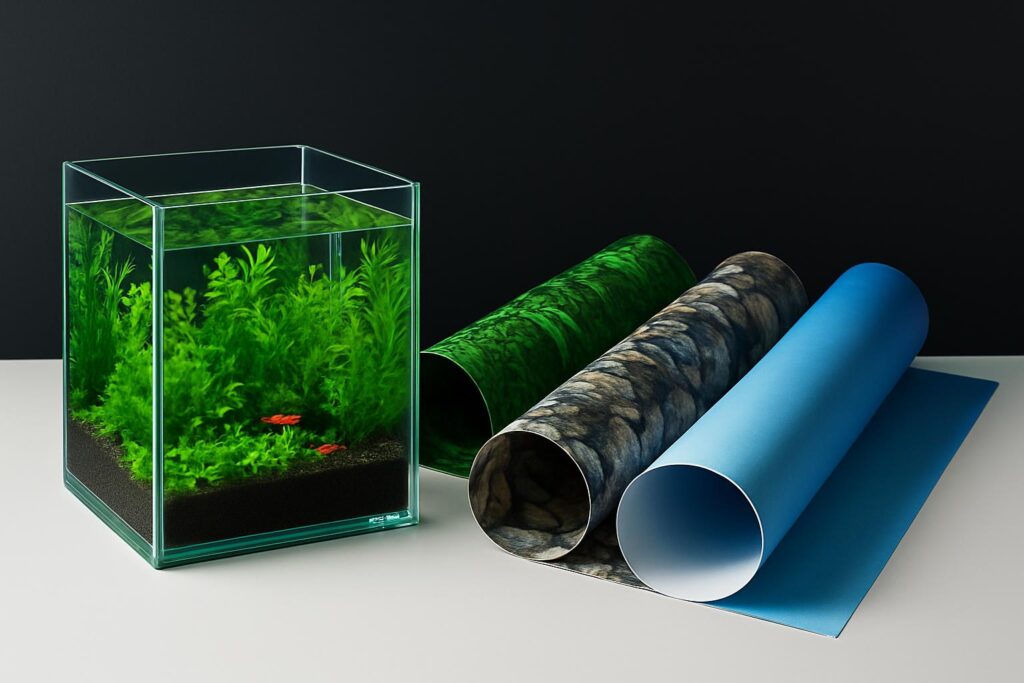
Nano aquariums benefit a lot from the right background. It hides cables, reduces reflections that stress fish, and boosts color contrast so plants and shrimp stand out. In small tanks there is no room for visual clutter. The five options below are reliable, easy to trim, and sized or cuttable for 5–20 gallon setups. Before choosing, scan the quick buying notes, then dive into the detailed picks and installation tips.
How a background helps small tanks
– Cuts glare and mirror reflections that can spook shy fish and shrimp
– Hides wires, sponges, and wall distractions
– Increases color pop and perceived depth
– Creates a clean, finished look for aquascapes
What to look for in 2026
Fit for nano sizes
Check the external glass width and height of the back panel and buy a background larger than that number. Trim to fit. For a standard 10 gallon, you typically need about 20 by 12 inches.
Install style
– Static cling: repositionable, renter friendly, easy to remove
– Poster film: attach with clear tape or application gel for bubble-free results
– Self-adhesive vinyl: clean look, long-term hold, takes a bit more care during install
Finish and glare control
Matte or low-gloss finishes reduce reflections. Glossy prints can look sharp but may mirror room lights in bright spaces.
Print scale and realism
For small tanks, choose prints with fine detail and correct scale so plants, rocks, and coral do not look oversized next to nano livestock.
Moisture resistance
Backgrounds should tolerate humidity and splashes. Use a gel or cling method rather than water alone to avoid silvering behind the film.
The 5 best nano aquarium backgrounds for 2026
1) Hygger Double-Sided Aquarium Background Poster 11.8 x 23.6 inches
This compact, double-sided film is sized for nano tanks out of the box and trims cleanly for custom fits. One side features a lush planted scape; the other side leans more open and blue, giving you two distinct looks without buying a second sheet.
Why it helps: The smaller base size minimizes waste for 5–10 gallon tanks and keeps the print scale appropriate for nano fish and shrimp.
Best for: 5–15 gallon freshwater aquascapes, betta tanks, shrimp tanks.
Standout details: Reversible design, sturdy film that resists creasing, color tones that enhance greens and reds.
Potential downsides: Poster-style film needs tape or application gel for the cleanest result.
Install notes: If you want a bubble-free finish, use a pea-sized line of application gel across the top, then squeegee down. Trim with a fresh blade along the tank rim for a tight edge.
2) Marina Double-Sided Aquarium Background 19 x 48 inches
A classic, budget-friendly roll with two contrasting scenes, typically a dense plantscape on one side and a rocky or open layout on the other. The generous length covers multiple nanos or provides margin to trim perfectly for a tall column tank.
Why it helps: Thin, flexible film conforms to rimless tanks and curved corners when trimmed carefully.
Best for: Beginners who want options, community tanks, classrooms.
Standout details: Lightweight sheet, easy to cut, colorfast prints that do not wash out under LED lighting.
Potential downsides: Glossier finish than matte vinyl; use gel to cut glare and prevent trapped air.
Install notes: Cut 0.25 inch oversize, apply gel, and squeegee from the center outward. Tape edges on the outside rim if you skip gel.
3) Penn-Plax Scenic Double-Sided Background 24 x 12 inches
This size lines up well with many 10 gallon tanks without much trimming. The two scenes often include a bright reef and a calmer kelp or rocky view, letting you tailor contrast to your livestock and lighting.
Why it helps: Balanced color saturation that makes fish pop without overpowering nano layouts.
Best for: 10–15 gallon tanks, mixed planted tanks, nano reefs running soft corals or macroalgae.
Standout details: Crisp details scaled for small fish, edges hold well with a minimal bead of gel.
Potential downsides: The reef side can look busy in very small volumes; flip to the calmer side if it competes with hardscape.
Install notes: If you have a HOB filter, cut a small notch at the rim clearance point instead of forcing the film under the bracket.
4) Seapora Self-Adhesive Black Aquarium Background 24 x 12 inches
A true matte black, self-adhesive vinyl that creates a clean studio look. It cancels reflections, hides cables, and boosts plant and fish color. This is a staple for aquascapers who value simplicity and contrast.
Why it helps: Dark, non-reflective finish calms skittish fish and makes greens, reds, and blues stand out clearly.
Best for: High-contrast planted nanos, shrimp displays, scapes focused on rock or wood structure.
Standout details: Self-adhesive back, removable when warmed gently, thicker construction that resists wrinkles.
Potential downsides: Requires more care during install to avoid trapped bubbles; once set, repositioning takes patience.
Install notes: Mist the glass lightly with a drop of dish soap in water, align, and squeegee slowly. Pierce persistent microbubbles with a fine pin and smooth out.
5) AquaTerra Double-Sided Aquarium Background 24 x 12 inches
A dependable double-sided poster that favors realistic textures and neutral color palettes. The riverbed and rocky themes pair well with hardscape-forward nanos and do not overpower foreground plants.
Why it helps: Natural tones increase depth perception in small tanks without adding visual noise.
Best for: 10 gallon nature-style scapes, shell dwellers, nano community fish.
Standout details: Reversible, trim-friendly material, balanced contrast under both warm and cool LEDs.
Potential downsides: As a poster film it needs tape or gel for a seamless look; not as glare-resistant as true matte vinyl.
Install notes: Use a soft card wrapped in a microfiber cloth as a squeegee to avoid scratching the print.
Quick install tips for nano tanks
Measure and pre-trim
Measure the outside width and height of the back panel. Pre-trim the background 3–6 mm oversize. Dry-fit before any adhesive step.
Clean glass
Wipe with isopropyl alcohol and a lint-free cloth. Dust and oils cause bubbles and poor adhesion.
Use application fluid or gel
A few drops of dish soap in water or a purpose-made gel lets you slide and level the film, then squeegee air out for a clear finish.
Work from the center out
Use firm, even strokes toward the edges. If the tank has braces or a HOB, notch the film instead of forcing it under hardware.
Trim final edges
After the film is set, run a sharp blade along the rim. For curved corners, cut small relief slits rather than over-stretching the film.
Conclusion
For nano aquariums, the background is not decoration; it is a functional upgrade that stabilizes fish behavior and sharpens the aquascape. Choose a reversible poster if you want flexibility, or a true matte black vinyl for maximum contrast and calm. Focus on fit, finish, and an installation method you are comfortable with. Get those right and even a 5–10 gallon tank looks cleaner, deeper, and more professional.
FAQ
Q: What background size fits a standard 10 gallon nano tank?
A: You typically need about 20 by 12 inches. Measure the external glass and buy slightly larger so you can trim to a perfect fit.
Q: Are static-cling or self-adhesive backgrounds better for beginners?
A: Static-cling and poster films are easier to position and remove, so they are more beginner and renter friendly. Self-adhesive vinyl looks very clean but needs more care during install.
Q: How do I avoid glare and bubbles behind the background?
A: Use application fluid or a purpose-made gel, then squeegee from the center outward. A matte or low-gloss finish also helps reduce reflections.
Q: Will a dark background stress fish less in a nano tank?
A: Yes. Dark, non-reflective backgrounds cut mirror reflections, which helps calm shy fish and shrimp.
Q: How do I trim around a HOB filter or curved corners?
A: Dry-fit, mark the clearance, and cut small notches with a sharp blade. For curved corners, make short relief slits and smooth the film rather than forcing a stretch.