
We are reader supported. When you purchase through links on our site, we may earn an affiliate commission. Also, as an Amazon affiliate, we earn from qualifying purchases.
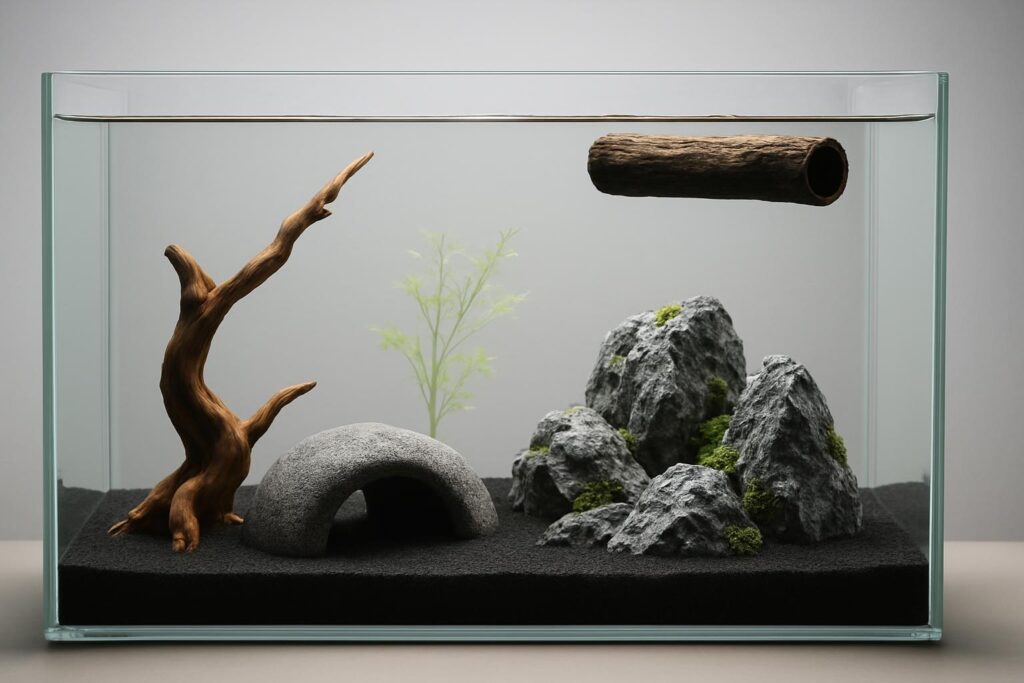
Nano tanks need smart decoration choices. Space is tight, livestock is often small and shy, and every piece you add affects flow, maintenance, and water chemistry. The right decor gives cover without stealing swim room, looks clean, and stays safe over time. Below are five proven decorations that work in tanks from 2 to 15 gallons, with clear guidance on who benefits, what to watch for, and how to set them up right.
How to choose nano aquarium decorations in 2026
Pick safe materials
Choose inert rock, aquarium-safe resin, fired ceramic, or hard woods intended for aquariums. Avoid sharp plastics and painted items that can chip. Cyanoacrylate gel is safe for attaching plants to wood or stone.
Scale and footprint matter
In small tanks, height and bulk can crowd fish and block flow. Aim for low or mid-height pieces that add cover but leave open water up front.
Check edges and openings
Run a finger over edges. If it snags, it can tear fins. For caves, ensure openings are wide enough for your largest fish to pass through without scraping.
Watch water chemistry
Some stones, such as Seiryu, can raise KH, GH, and pH. This can be useful for hard-water livestock but is not ideal for soft-water species. Test and plan accordingly.
Ease of cleaning
Textured pieces grow biofilm and algae. That is normal, but in nanos you should be able to lift decorations out for a quick rinse during water changes.
5 best nano aquarium decorations for 2026
1) Zoo Med Mopani Wood, Small
Mopani is dense, sinks fast, and brings a natural focal point to a nano layout. The twisted grain creates shaded pockets for shrimp and shy fish. It accepts plants like Anubias, Bucephalandra, Java fern, and moss with a drop of gel glue or thread.
Why it helps: Adds instant hardscape and cover, promotes biofilm for shrimp grazing, and breaks sight lines to reduce stress in small communities and betta setups.
Best for: Bettas, nano tetras, rasboras, dwarf corydoras, and Neocaridina shrimp. Works in low to medium flow layouts.
Potential downsides: Releases tannins that tint water tea-brown. This is generally safe and even beneficial, but it can color the water if you prefer a clear look.
Setup tips: Pre-soak 1 to 2 weeks or boil 1 to 2 hours to reduce tannins. Place with the broadest side down for stability. Attach epiphyte plants to soften lines and add biological surface.
2) Penn-Plax Deco-Replicas Granite Stone Hideaway, Small
This resin hideaway mimics stacked granite but keeps a compact footprint. Openings allow easy entry and exit, and the surface is smooth to protect fins. It provides instant shelter for shrimp, fry, and nano fish that like retreats.
Why it helps: Creates micro territories and safe zones without towering over the tank. Multiple entrances prevent trapping and encourage natural foraging.
Best for: Shrimp colonies, small rasboras, ember tetras, and fry grow-outs. Also useful for skittish fish settling into a new tank.
Potential downsides: Detritus can collect inside. Open the structure during water changes and swish in removed tank water to keep it clean.
Setup tips: Rinse well, then place slightly off-center to balance the scape. Keep a small gap around the piece to maintain circulation and prevent dead spots.
3) Landen Seiryu Stone Nano Mix
Seiryu stone brings dramatic texture and a sense of scale to tiny tanks. The ridges catch light and hold moss, giving depth in just a few inches of space. The nano mix packs include smaller, scape-ready pieces suited to 2 to 10 gallons.
Why it helps: Builds strong hardscape lines and stable planting zones for moss and small epiphytes. The rough surface provides excellent colonization area for beneficial bacteria.
Best for: Hard-water setups, livebearers, and Neocaridina shrimp. Ideal for Iwagumi-style layouts in small volumes.
Potential downsides: Can raise KH and GH and push pH upward. This is not ideal for soft-water species and Caridina shrimp unless you buffer and monitor closely.
Setup tips: Rinse thoroughly and test your baseline water. Use foam underlayment or a thin substrate layer to protect glass. Lock pieces together and secure moss with cyanoacrylate gel for long-term stability.
4) Marina Naturals Silk Plant, Small
Silk plants provide movement and cover without the upkeep of live plants. The soft fabric is gentle on delicate fins, making it a solid pick for bettas and long-fin varieties in nano tanks.
Why it helps: Adds vertical cover that reduces stress and gives fish a place to pause. The soft texture is less likely to snag fins than rigid plastic.
Best for: Bettas, guppies, endlers, small tetras, and shrimp that appreciate shaded, low-traffic zones.
Potential downsides: Can gather algae and mulm. A quick swish during water changes keeps it looking fresh. The base can show if not seated well.
Setup tips: Rinse before use. Bury the base slightly and angle leaves to break up sight lines across the tank. Mix with one hardscape piece for a balanced look.
5) Zoo Med Floating Betta Log
This floating log gives surface-oriented fish a shaded rest near the top where they prefer to hang. The interior is smooth, and the opening encourages exploration and gentle activity in a small footprint.
Why it helps: Reduces surface stress for bettas that like to lounge under cover. The top opening simplifies target feeding and lets fish breathe comfortably.
Best for: Single betta tanks from 2 to 10 gallons. Also useful for shy labyrinth fish in similarly sized enclosures.
Potential downsides: Biofilm can build on the underside. Rinse during water changes. Re-seat the suction cup if it drifts into the filter outflow.
Setup tips: Place opposite the filter output to avoid bouncing. Keep 1 to 2 inches of clearance under the lid or rim for easy access.
Setup and maintenance essentials
Rinse and test fit first
Rinse all pieces in warm tap water and scrub dust with a dedicated brush. Never use soap. Test fit the layout dry, then fill slowly to confirm stability.
Protect flow and access
Leave space around filter intakes and heater cables. Keep the front third of the tank open for feeding and easy cleaning.
Control tannins and minerals
Pre-soak wood to reduce tannins. If using mineralizing stones like Seiryu, track KH, GH, and pH weekly until stable.
Clean on a schedule
During water changes, lift decor and swish in removed tank water. For stubborn algae, spot treat outside the tank with a small amount of 3 percent hydrogen peroxide, then rinse thoroughly before returning the item.
Conclusion
In nano aquariums, the best decorations do more than look good. They create shelter, stabilize behavior, and make maintenance easier. Mopani wood adds natural form and biofilm. Stackable caves give shrimp and fry safe retreats. Seiryu stone builds dramatic structure if your water and livestock fit the chemistry. Silk plants supply fin-safe cover. A floating betta log supports surface rest. Start with one or two pieces, confirm flow and access, and let your livestock show you what works. Small tanks reward careful choices with stable, low-stress habitats.
FAQ
Q: Do I need to pre-soak Mopani wood for a nano tank?
A: Yes. Pre-soak 1 to 2 weeks or boil 1 to 2 hours to reduce tannins. Tannins are generally safe but can tint the water.
Q: Will Seiryu stone raise pH and hardness in a nano aquarium?
A: Yes. Seiryu can increase KH and GH and push pH upward, which suits hard-water livestock but not soft-water species without careful monitoring.
Q: Are silk plants better than plastic for bettas?
A: Yes. Silk is softer and less likely to tear fins while still providing cover and resting spots.
Q: What is a good way to create hides in small tanks without blocking flow?
A: Use a compact hideaway with multiple entrances, such as a small stackable cave, and leave space around it to maintain circulation.
Q: How do I clean decorations safely?
A: Rinse with warm tap water and swish in removed tank water. Avoid soap. For stubborn algae, spot treat outside the tank with 3 percent hydrogen peroxide and rinse thoroughly.