
We are reader supported. When you purchase through links on our site, we may earn an affiliate commission. Also, as an Amazon affiliate, we earn from qualifying purchases.
Humidity trapped inside aquarium cabinets ruins wood, corrodes hardware, and invites mold. Sump splashes and warm equipment make the space a perfect moisture trap. A compact dehumidifier in the cabinet keeps humidity stable, protects your stand and gear, and reduces musty odors. Below are three reliable cabinet-ready picks for 2026, plus practical setup advice to get consistent results.
Why cabinet humidity control matters
Cabinets are tight spaces with limited airflow. Evaporation from the sump, skimmer spray, and warm return pumps push moisture into every corner. Over time you see swollen panels, peeling finishes, rusty hinges, and salt creep on power strips. Stabilizing cabinet humidity reduces these risks and makes maintenance easier. Aim for a steady 45 to 60 percent relative humidity inside the stand.
How we selected these dehumidifiers
Cabinet conditions are different from open rooms. We prioritized:
- Small footprint that fits beside a sump or skimmer
- Low noise for living spaces
- Low heat output to avoid warming the cabinet
- Simple maintenance with clear fill or recharge indicators
- Proven reliability and widely available replacement support
The 3 best aquarium cabinet dehumidifiers for 2026
1) Eva-Dry E-333 Renewable Mini Dehumidifier
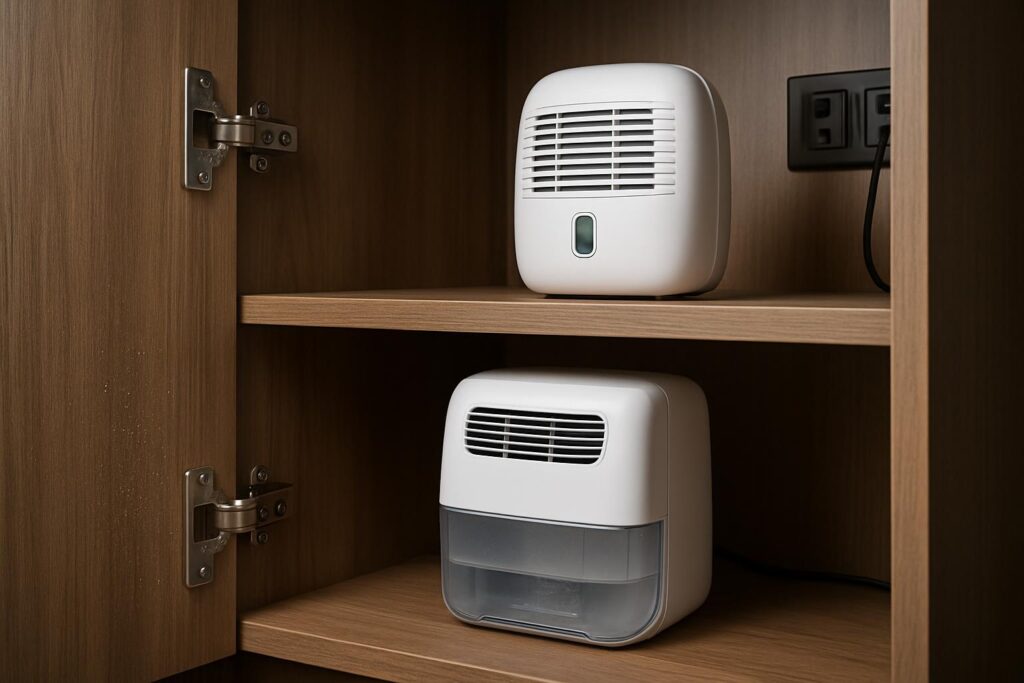
This cordless silica gel unit is a set-and-forget moisture absorber that thrives in tight, splashy cabinets. It uses desiccant beads that pull moisture without any fan noise or power cord during operation. When saturated, an indicator window changes color. Plug it into a wall outlet outside the cabinet for several hours to recharge and repeat the cycle.
In practice, a single E-333 handles many medium aquarium stands, especially if there is some natural ventilation through the back panel. It fits easily on a shelf or magnet board and never spills water because it stores moisture in the desiccant rather than a tank.
Why it helps: Silent, cord-free operation inside the cabinet, zero spill risk, and compact size make it ideal for cabinets with minimal space. It reduces rust on hinges and stabilizes humidity around controllers and power bars.
Best for: Tight cabinets up to roughly 10 to 30 cubic feet, sumps with moderate evaporation, and users who want zero-noise moisture control.
Potential downsides: Requires periodic recharging outside the cabinet, typically every 2 to 4 weeks depending on evaporation and airflow. Does not actively move air, so you get slower moisture removal compared with plug-in thermoelectric units.
Setup tips: Place it high on the drier side of the cabinet, not directly above a skimmer cup. Crack a rear panel vent or add a small passive grille to help it work more evenly. If your stand is large or very wet, run two units at opposite sides.
2) Pro Breeze Wireless Mini Dehumidifier
Similar to the Eva-Dry in function, the Pro Breeze wireless mini dehumidifier uses rechargeable silica gel to quietly absorb moisture. It is also cordless during use, completely silent, and features a color-changing window to show when regeneration is due. The compact enclosure makes it easy to tuck beside a sump without blocking doors or access panels.
Because it does not rely on a tank, there is no risk of an overflow. That alone makes it a smart fit for cabinets crowded with power strips and controllers. Many aquarists pair two wireless units for even coverage across a long stand.
Why it helps: No moving parts, no noise, and no liquid tank. It absorbs cabinet humidity at the source and keeps surfaces dry around sensitive electronics.
Best for: Nano to mid-size systems, stands with limited power outlets, and anyone who prefers low-maintenance humidity control without fans.
Potential downsides: Like all desiccant units, you must recharge it periodically. In high-evaporation cabinets, the interval between recharges shortens. It also does not circulate air, so placement and a small passive vent help performance.
Setup tips: Mount vertically on the inside wall using a shelf or bracket so air can reach both sides. Track humidity with a small digital hygrometer and add a second unit if readings stay above 60 percent.
3) Seavon Electric Mini Dehumidifier 35 oz
When evaporation is heavy and the cabinet is spacious, a plug-in thermoelectric unit offers faster moisture removal. The Seavon 35 oz mini dehumidifier uses Peltier cooling to condense moisture into a removable tank. It is compact, efficient in small spaces, and typically runs at a low hum that blends into normal home noise.
Unlike desiccant bricks, this unit actively pulls moisture with gentle airflow and can bring high humidity down more quickly after you open the cabinet or service the sump. Auto shutoff prevents overflow when the tank is full.
Why it helps: Faster moisture removal and gentle air circulation. Helps tame humidity spikes after water changes or skimmer cleaning, and reduces overall condensation inside large stands.
Best for: Larger cabinets, high-evaporation reef systems, and users with a spare outlet who want quicker humidity control.
Potential downsides: Adds mild heat to the cabinet and needs tank emptying. Many small units do not include a continuous drain port, so you must check the tank regularly.
Setup tips: Place it on a stable, level shelf with easy access to the tank. Keep at least a few inches of clearance around the intake and exhaust. If cabinet heat creeps up, add a small passive vent near the top rear panel to let warm air escape.
Dialing in your cabinet setup
Target a steady humidity range
Use a small digital hygrometer inside the stand and aim for 45 to 60 percent relative humidity. If readings creep above 60 percent, step up to a second wireless unit, improve passive ventilation, or switch to a plug-in mini dehumidifier.
Placement makes a difference
Do not place units directly over saltwater surfaces or skimmer lids. Put them on the opposite side, above the sump waterline, and away from salt spray. Keep cords and power strips mounted high and dry on the cabinet wall.
Mind heat and airflow
Thermoelectric units add mild warmth. Give them a bit of clearance and a small exit path for warm air. Wireless desiccant units add no heat, but benefit from a small passive vent so the cabinet does not stay saturated.
Maintenance rhythm
For wireless units, expect 2 to 4 weeks between recharges in average conditions. For plug-in units, check the tank weekly at first, then adjust based on your evaporation rate. Wipe salt spray from cabinet walls during water changes to reduce overall load on any dehumidifier.
Which one should you choose
Pick based on how wet and how large your cabinet is. If you want silent and simple, start with one Eva-Dry E-333 or Pro Breeze wireless unit, then add a second if you need more control. If your stand is big or humidity rebounds quickly after maintenance, the Seavon mini dehumidifier provides faster drying and steadier levels with minimal noise.
Conclusion
Aquarium cabinets live in a harsh microclimate. Consistent humidity control protects your stand, hardware, and electronics, and makes the space safer to work in. Choose a dehumidifier that fits your stand size and evaporation rate, place it smartly, and track humidity with a small hygrometer. With the right unit and a simple maintenance rhythm, your cabinet stays dry and trouble free.
FAQ
Q: What humidity level should an aquarium cabinet stay at
A: Aim for a steady 45 to 60 percent relative humidity inside the stand.
Q: Do wireless desiccant dehumidifiers work in aquarium cabinets
A: Yes. Cord-free silica gel units such as Eva-Dry E-333 and Pro Breeze absorb moisture silently and fit easily in tight stands.
Q: Where should I place the dehumidifier inside the cabinet
A: Place it high on the drier side of the cabinet, above the sump waterline, away from skimmer spray, with a small passive vent to help airflow.
Q: Will a plug-in mini dehumidifier heat the cabinet
A: It adds mild heat. Provide a few inches of clearance and a small rear vent so warm air can escape.
Q: How often do I need to recharge or empty the unit
A: Wireless units typically need recharging every 2 to 4 weeks, while plug-in units require periodic tank emptying based on evaporation.