
We are reader supported. When you purchase through links on our site, we may earn an affiliate commission. Also, as an Amazon affiliate, we earn from qualifying purchases.
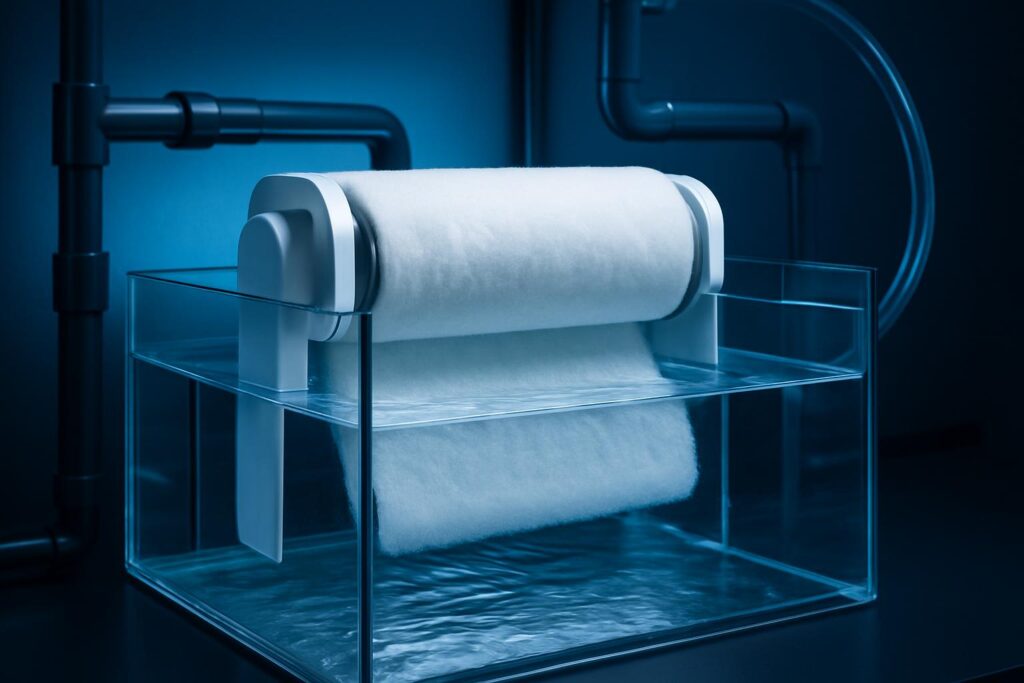
Roller filters changed how we handle mechanical filtration in reef and freshwater sumps. Instead of swapping dirty filter socks every few days, a motorized fleece advances on its own and traps detritus before it breaks down. Water stays crystal clear, nutrients trend lower, and maintenance becomes predictable. For 2026, the best options add smarter controls, quieter operation, and easier roll changes. Below are the three top picks, what they do best, and how to choose the right one for your system.
What a Roller Filter Does and Why It Matters
How a Roller Filter Works
Dirty water enters the unit and passes through a fine fleece. As the fleece clogs, water level in the chamber rises and triggers the motor to advance a fresh section. Waste is exported mechanically, not biologically, which reduces nitrate and phosphate production downstream.
Key Benefits Over Socks
Stable clarity because the unit advances on demand. Lower nutrients since organics exit the system quickly. Less work with no bleach cycles or sock changes. Better skimmer performance because load is consistent.
What to Check Before You Buy
Sump space and water level — measure height, width, and the water level range in your sump. Many roller filters need a stable water height or an internal baffle.
Flow needs — match the roller’s flow capacity to your return pump turnover. Oversizing the roller can help, but do not force water faster than the fleece can handle.
Micron rating — lower microns polish more, clog faster. For most tanks, 40 to 50 microns is a good balance.
Noise — look for enclosed drives and smooth gear trains if your tank is in a living space.
Roll availability and cost — make sure replacement rolls are easy to source and reasonably priced.
Controls — smart app control is useful for alerts, usage tracking, and pause modes during feeding.
Best Aquarium Roller Filters for 2026
1) Red Sea ReefMat 500 Smart Fleece Roller Filter
The ReefMat 500 focuses on simple install, sealed operation, and robust smart control. It is well suited to mixed reef and SPS systems that demand steady clarity and low maintenance. The design integrates neatly into many modern sumps.
Why it helps — The sealed path and consistent advance keep detritus out of the sump, so algae pressure on rocks and glass drops. The app tracks roll consumption and sends alerts before a runout, lowering the chance of bypass.
Best for — Medium reef systems where noise control, quick front-loading roll swaps, and app oversight are priorities.
Standout features
- Front-loading roll change with tool-free access
- Smart pause and feed modes to prevent unnecessary fleece use
- Quiet motor and enclosed drive reduce audible clicks during advances
Real-world use — Expect fewer water changes driven by detritus buildup and more stable skimmer behavior. In most moderate bioload tanks, rolls last several weeks; heavy feeding or new rock may reduce that window initially.
Potential downsides — Requires a stable sump water level. Taller than some budget units, so check clearance in stands with low headroom. Replacement rolls carry a premium compared to generic fleece.
Setup tips
- Place in the first sump chamber after the drain to catch the dirtiest water
- Use a return pump setting that avoids surges; steady flow means fewer false advances
- Enable notifications so you change rolls on schedule and avoid bypass
2) ClariSea SK-3000 Gen 2 Automatic Filter
The ClariSea SK-3000 Gen 2 remains a dependable, high-capacity option with flexible mounting. It is known for strong polishing with fine fleece and compatibility across a range of sump layouts.
Why it helps — Fine fleece traps micro-particulates early. The float control advances only when needed, reducing waste of fleece and steadying mechanical export day to day.
Best for — Medium to larger systems that want very clear water and do not require app connectivity. Good for experienced hobbyists comfortable with simple float-switch logic.
Standout features
- Modular brackets for hang-on or in-sump mounting
- Proven Gen 2 improvements for reliability and ease of threading new rolls
- Broad third-party fleece compatibility in common micron ratings
Real-world use — When sized correctly, the SK-3000 keeps detritus from reaching refugiums and return chambers. That eases glass film buildup and supports better coral coloration by reducing dissolved organics upstream.
Potential downsides — Can be sensitive to fluctuating water levels if the drain line splashes or surges. Footprint is larger than very compact rollers. No native app or usage stats.
Setup tips
- Install baffles or a water height control to keep the roller chamber stable
- Route the drain to minimize bubbles that might trigger premature advances
- Start with a mid-range micron fleece and adjust based on clarity and roll life
3) Bubble Magus ARF-1 Automatic Roller Filter
The ARF-1 is a compact, value-forward roller that fits many small to mid-size sumps. It prioritizes simple controls and straightforward maintenance without extra electronics.
Why it helps — Consistent detritus removal with a small footprint. The float switch advances fleece only when the chamber level rises, which supports stable performance with modest roll use.
Best for — Budget-conscious hobbyists with nano to medium tanks who want less sock work and a reliable mechanical export path.
Standout features
- Compact body that slips into tight first chambers
- Simple float-driven control and easy-to-thread rolls
- Widely available replacement fleece in common widths
Real-world use — In smaller sumps, the ARF-1 can dramatically cut the dusting on sand and rocks. Roll life ranges from a week to several weeks depending on feeding and fish load.
Potential downsides — Gear movement is more noticeable during advances compared to enclosed premium units. Roll capacity is smaller, so heavy bioloads may need more frequent swaps. Plastic brackets can flex if overtightened.
Setup tips
- Level the unit and ensure the float moves freely
- Keep the fleece path taut but not overly tight to avoid motor strain
- Pair with a skimmer sized to your bio-load for best nutrient stability
Installation and Tuning Tips
Place It First in the Chain
Install the roller in the first drain chamber. That location removes waste before it can break down in refugiums or skimmer sections.
Keep Water Height Stable
Use baffles or an ATO to prevent level swings that trigger unnecessary advancement. Stable levels extend roll life and keep noise down.
Balance Flow
Match return pump speed to the roller’s comfortable throughput. If water rushes through too fast, the fleece clogs quickly and advances more often.
Service on a Schedule
Check the take-up spindle weekly. Empty the waste roll before it grows too large and binds. Wipe the float and sensors to prevent salt creep errors.
Costs and Upkeep
Most users see roll life from one to eight weeks. Heavier feeding, new rock, or sandbed disturbances shorten that window. Replacement rolls are ongoing costs, but many aquarists offset them by reducing sock laundry time, detergent, and hot water use. Keep a spare roll on hand to avoid bypass if one runs out unexpectedly.
Which One Should You Choose
Want smart control, quiet advances, and easy roll changes — Choose Red Sea ReefMat 500.
Want strong polishing and flexible mounting without an app — Choose ClariSea SK-3000 Gen 2.
Need compact size and lower upfront cost — Choose Bubble Magus ARF-1.
Conclusion
Roller filters remove organics at the source and make clarity maintenance far easier than sock rotation. In 2026, the leading models offer cleaner installs, smarter control, and reliable fleece paths that protect against bypass. Select the unit that matches your sump space, flow rate, and maintenance style. Install it in the first chamber, stabilize water height, and track roll usage. Your tank will stay clearer, your nutrients steadier, and your routine lighter.
FAQ
Q: Do roller filters replace a protein skimmer
A: No. Roller filters remove particulates while skimmers remove dissolved organics, so they work best together.
Q: How often do I need to change a fleece roll
A: Most tanks see one to eight weeks per roll depending on feeding, bioload, and how stable the sump water level is.
Q: Are roller filters noisy
A: The best units advance quietly, but you may hear brief motor or gear noise during advancement if the drive is not fully enclosed.
Q: What micron rating should I choose
A: For most systems, 40 to 50 microns balances clarity and roll life; lower microns polish more but clog faster.
Q: Where should I place a roller filter in the sump
A: Install it in the first drain chamber so it catches waste before it can break down and raise nutrients.