
We are reader supported. When you purchase through links on our site, we may earn an affiliate commission. Also, as an Amazon affiliate, we earn from qualifying purchases.
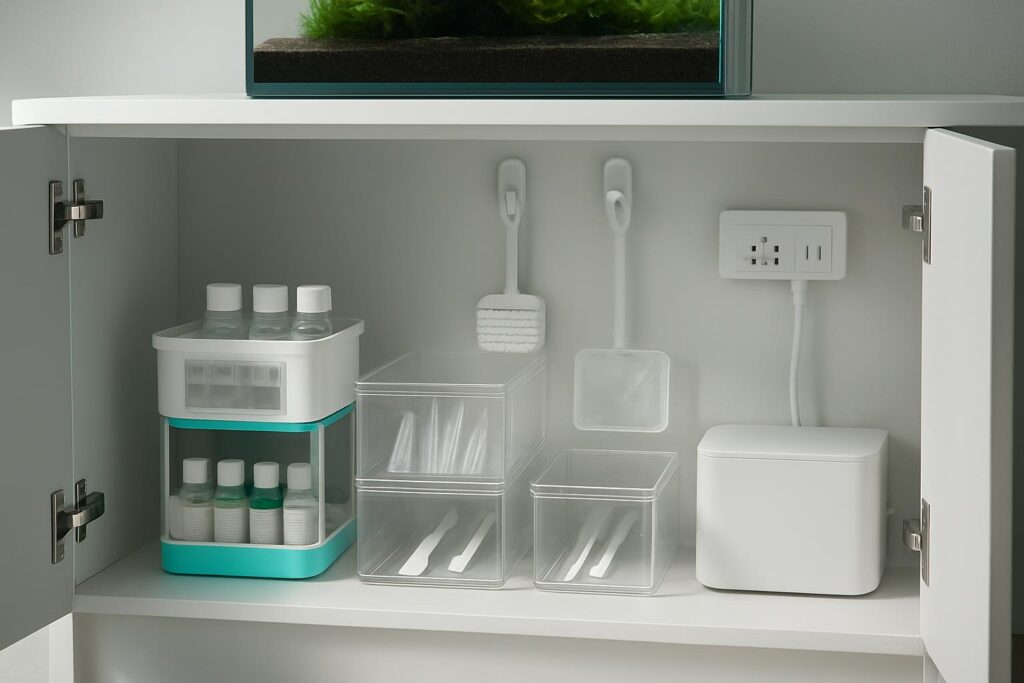
Nano aquariums look clean and minimal on the outside, but the cabinet often tells a different story. Power strips on the floor, tangled cables, dosing bottles buried behind foods, and a test kit that is always missing when you need it. A tight cabinet can be safe, quiet, and efficient with the right organizers. This 2026 guide focuses on compact, moisture-smart, and easy-access organizers that make nano maintenance faster and safer. Every pick below was chosen with cabinet depth, ventilation, splash control, and the small-footprint reality of nano tanks in mind.
SPACEKEEPER 2-Tier Under-Sink Sliding Organizer
This compact, two-level unit turns vertical space into reliable storage without blocking access. The lower basket slides out smoothly, so you can reach media, foods, or test kits without shuffling everything around. Side hooks and cups keep pipettes, algae scrapers, and brushes off the shelf and easy to grab.
What stands out
The sliding lower tray saves space and time in tight cabinets. The sturdy plastic resists moisture and salt creep better than bare steel mesh. The small footprint fits beside a nano ATO reservoir or a canister intake and leaves room for hoses.
Fit and capacity for nano setups
Use the bottom pull-out for daily-use items like fish food, pipettes, and test reagents. Keep backups, media bags, and towels up top. The side hooks handle nets and tubing loops so they dry between uses. It fits most nano stands without blocking ventilation.
Setup tips
Place a thin shelf liner under the organizer to catch drips and keep it steady. Leave a small gap behind it for airflow if your cabinet houses a power supply or canister filter. Label the top tier bins for fast restocking.
Why it helps: Clear access in a small footprint, moisture-resistant build, and built-in hooks for wet tools.
Best for: Owners who need quick daily access to foods, test kits, and algae tools without unloading a shelf.
Potential downsides: The plastic rails can bind if overloaded; avoid stacking heavy bottles on the sliding tier.
mDesign Stackable Clear Storage Bins with Handles
Clear bins cut the hunt time. These stackable containers let you group consumables by task and see everything from the cabinet door. Smooth handles make it easy to pull out a bin with wet hands.
What stands out
Transparent, rigid plastic with stackable design and low-friction bottoms. The walls are tall enough to corral small bottles and pipettes, but short enough to slide under most shelves. They are easy to sanitize and do not warp with normal cabinet humidity.
Fit and capacity for nano setups
Make task bins. Maintenance bin for towels, scraper blades, and spare sponges. Water chemistry bin for test kits, calibration fluids, and dosing lines. Feeding bin for pellets, nori, and tweezers. Stack two high in most nano stands.
Setup tips
Label the front edge. Set the most-used bins at hand level and rarely used spares up high. Keep desiccant packs in the test kit bin to reduce humidity effects. Combine with a thin liner to stop sliding when doors slam.
Why it helps: Transparent, stackable grouping prevents duplicates and lost supplies.
Best for: Beginners who want a simple, visual system that reduces cabinet rummaging.
Potential downsides: Open-top bins do not contain spills; keep liquids upright and cap them tightly.
Kootek Cable Management Box, 2-Pack
Power and water do not mix. A cable management box lifts and covers your power strip while taming extra cable length. The dual-pack sizes handle a main strip plus a secondary controller hub without eating floor space.
What stands out
Hard ABS shells with lids that hide strips from splashes and salt dust. Side cutouts route cords cleanly and reduce cable bends. A box also prevents accidental unplugging when you reach into a crowded stand.
Fit and capacity for nano setups
Place the larger box on a raised shelf or cabinet rail, not the floor. The smaller box fits timers, dimmers, or a compact hub. Leave enough space around each box for airflow and heat dissipation from bricks and strips.
Setup tips
Keep drip loops on every cord before they enter the box. Secure incoming cables to the cabinet wall with adhesive clips to prevent tugging. Do not overfill; warm electronics need air gaps.
Why it helps: Safer, cleaner power routing with splash shielding and simplified cable paths.
Best for: Anyone running multiple devices in a nano stand, including lights, pumps, and heaters.
Potential downsides: Boxes trap heat if crammed; mount them with space and avoid blocking vents.
TROND Mountable Surge Protector Power Strip with USB
Mounting the power strip off the cabinet floor is a simple safety upgrade. This surge protector includes keyhole slots for wall mounting, widely spaced outlets for chunky bricks, and USB ports for small accessories.
What stands out
Flat plug, long cord, and wall-mount slots make placement flexible. Widely spaced outlets reduce the need for splitters. Integrated USB ports free a main outlet for the heater or filter.
Fit and capacity for nano setups
Mount it high on the cabinet side panel to keep it clear of drips. Plan outlet positions so cords form drip loops before they rise. Pair with a cable box or raceway for a clean finish.
Setup tips
Measure twice before drilling or using screws. Leave service slack in cables for maintenance. Group always-on devices to one end and maintenance-only gear to the other end for quick shutoffs.
Why it helps: Elevated, organized power with surge protection and flexible spacing for aquarium bricks.
Best for: Nano owners who want a tidy, mounted power hub with room for timers and bricks.
Potential downsides: Wall mounting requires careful placement to avoid hitting the stand structure.
Command Cord Bundlers and Small Wire Hooks Variety
Adhesive cord bundlers and hooks keep hoses, nets, and cables from piling on the floor. They install in minutes, work on finished cabinet surfaces, and come off clean when you reorganize.
What stands out
Tool-free install, removable adhesive, and sizes that fit airline tubing, dosing lines, and small hoses. Use bundlers near the door frame to give wet nets and scrapers a place to dry.
Fit and capacity for nano setups
Line the inside of the door with a few hooks for light tools. Route dosing lines along the cabinet wall using multiple small clips to maintain gentle curves. Keep cables elevated and separated from water containers.
Setup tips
Clean surfaces with isopropyl alcohol before sticking. Press firmly and give the adhesive an hour to bond. Do not overload a single hook; spread weight across two or three if needed.
Why it helps: Fast cable and tool control without drilling, perfect for renters and small stands.
Best for: Quick upgrades to tame cables and hang wet tools where air can circulate.
Potential downsides: Adhesive strength drops on rough or damp surfaces; allow surfaces to dry fully first.
How to choose the right organizer mix in 2026
Start with power safety
Mount the surge protector high, add a cable management box, and create drip loops on every cord. Keep power gear off the floor to avoid splashes. Leave open space for airflow around bricks and controllers.
Maximize vertical space
Sliding two-tier organizers give you two layers of access in a small footprint. Stack clear bins to separate tasks while keeping visibility. Ensure nothing blocks ventilation from filters or fans.
Plan for moisture and salt creep
Favor plastic or powder-coated materials. Add a thin shelf liner under organizers to catch drips. Wipe salt spray weekly to prevent corrosion and keep drawers sliding smoothly.
Label and simplify
Label bins by task. Put daily-use items at the front and heavy or backup gear at the back or top. Review the layout every three to six months, especially after adding equipment.
Conclusion
A nano aquarium cabinet does not have to be a tangle of cords and clutter. With a sliding tier for daily tools, clear bins for task grouping, a cable box, a mountable surge protector, and a set of adhesive hooks, you get fast access, safer power, and a cleaner workflow. Build the layout around power safety, vertical space, and moisture control. The result is a cabinet that stays tidy through water changes, upgrades, and busy weeks.
FAQ
Q: What should I prioritize first when organizing a nano aquarium cabinet?
A: Mount the surge protector high, add a cable management box, and create drip loops on every cord while keeping space for airflow.
Q: Do I really need a cable management box for a nano setup?
A: It helps shield power strips from splashes, tames cables, and reduces accidental unplugging, as long as you avoid overfilling and allow ventilation.
Q: How can I make the most of limited cabinet space?
A: Use a two-tier sliding organizer and stackable clear bins to build upward while keeping the front area free for quick access.
Q: How do I prevent moisture damage to organizers and gear?
A: Choose plastic or powder-coated materials, add a thin shelf liner to catch drips, wipe salt creep weekly, and keep power gear elevated.
Q: How often should I reassess my cabinet layout?
A: Review the layout every three to six months, especially after adding or moving equipment.