
We are reader supported. When you purchase through links on our site, we may earn an affiliate commission. Also, as an Amazon affiliate, we earn from qualifying purchases.
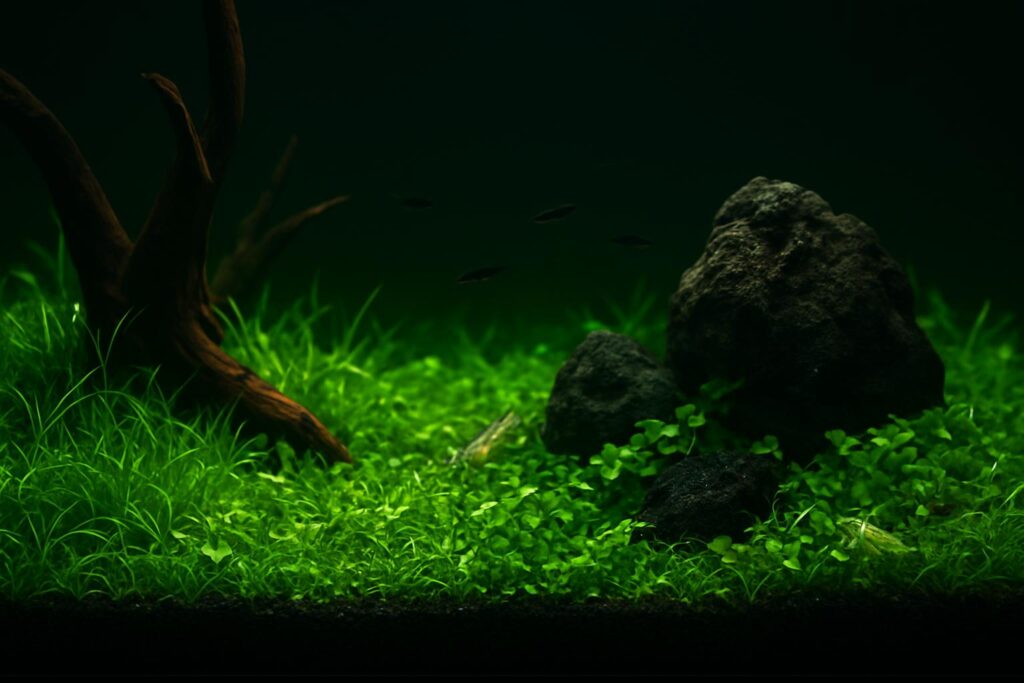
A lush carpet can transform a nano aquarium. It hides substrate, frames hardscape, and makes shrimp and micro fish stand out. In 2026, success comes down to picking a plant that fits your light, CO2, and maintenance routine. Below are five proven carpeting plants that scale well in nano tanks, from easy low-tech choices to high-impact showpieces.
Quick selection guide for 2026
Match plant demand to your setup
Low-tech tanks thrive with hardy runners like Dwarf Sagittaria or slow, shade-tolerant Marsilea hirsuta. Medium light and rich substrate make Monte Carlo reliable even without CO2. High light with stable pressurized CO2 unlocks dense lawns with Dwarf Hairgrass mini and the tiny-leaf Cuba.
Substrate and nutrients
Active soil or nutrient-rich substrate speeds rooting and spread. In inert sand or gravel, add root tabs under the carpet and dose a complete liquid fertilizer. Consistency beats spikes.
Trimming and upkeep
Frequent but light trims push lateral growth and keep leaves low. Control photoperiod to 6 to 8 hours when establishing to reduce algae pressure. Stable parameters matter more than chasing maximum growth.
Tropica 1-2-Grow Monte Carlo Micranthemum tweediei
At a glance
Compact, bright green leaves that form a soft, low cushion. Versatile in nano tanks and beginner friendly.
Why it helps
Monte Carlo scales perfectly to small scapes, covers soil quickly, and forgives minor swings. It adapts to medium light and does not mandate CO2, yet it becomes denser and flatter with gas.
Best for
First-time nano aquascapers who want a reliable carpet with or without CO2. Shrimp and small schooling fish displays.
Tank setup notes
Provide medium light and a nutrient-rich substrate. In low-tech, use root tabs under the initial planting line. With CO2, keep levels stable and surface agitation modest.
Planting tips
Rinse tissue culture gel off, split into many small plugs, and plant shallow every 1 to 2 cm. Trim runners lightly once they root to thicken the mat.
Potential downsides
Grows slower without CO2 and may lift if planted too deep or packed too tightly. Needs steady nutrients to avoid pale new growth.
Eleocharis acicularis mini Dwarf Hairgrass
At a glance
Fine, needle-like blades that create a clean, modern lawn with visible texture and depth.
Why it helps
The mini form stays shorter in nanos and builds a flowing grassland effect that highlights rocks and wood. It sends runners and fills gaps quickly under the right light and CO2.
Best for
High-energy nanos with pressurized CO2. Layouts that need crisp lines and open negative space.
Tank setup notes
High light, stable CO2, and rich substrate are the fast track. In lower energy tanks, expect slower spread and taller blades. Keep good flow to prevent detritus trapping.
Planting tips
Divide into tiny tufts and plant a grid 1 to 2 cm apart. Do not bury crowns. Early trims encourage horizontal runners rather than vertical growth.
Potential downsides
Prone to algae if light is strong but CO2 or nutrients are unstable. Requires regular grooming to prevent matting and debris buildup.
AquaLeaf Aquatics Dwarf Sagittaria Sagittaria subulata
At a glance
Hardy rosette that spreads by runners and tolerates a wide range of conditions, ideal for low-tech nanos.
Why it helps
Dwarf Sag powers through beginner mistakes and still builds a cohesive front carpet or midground field. It roots strongly and feeds from the substrate, so it thrives with simple care.
Best for
No CO2 or low-tech setups where resilience matters. Community tanks with active shrimp and snails.
Tank setup notes
Moderate light and root tabs are enough. If light is low, leaves may grow taller, so trim tops to push runners. Keep open planting to let runners spread.
Planting tips
Space starters several centimeters apart to encourage lateral spread. Avoid planting too deep; keep the crown just above the substrate.
Potential downsides
Leaf blades can exceed nano height under weak light, reducing the ultra-low carpet look. Color stays greener than the neon pop of finer species.
Greenpro Marsilea hirsuta
At a glance
Durable, clover-like leaves that form a compact, slow-growing carpet under modest light.
Why it helps
Marsilea tolerates shade, cooler rooms, and missed doses. It creeps steadily without constant trimming, perfect for busy aquarists and small volumes where stability is key.
Best for
Low to medium light nanos with shrimp. Scapes where a natural, slightly textured floor is preferred over a manicured lawn.
Tank setup notes
Active soil speeds establishment. In inert substrate, combine root tabs with a gentle liquid fertilizer routine. CO2 is optional and mostly reduces leaf size and height.
Planting tips
Plant small plugs just into the surface so runners can travel. Trim any taller emersed leaves after transition to encourage low submerged growth.
Potential downsides
Slower spread than Monte Carlo or Dwarf Hairgrass. If light is strong, leaves can vary in height until the patch stabilizes.
Greenpro Hemianthus callitrichoides Cuba Dwarf Baby Tears
At a glance
Tiny, bead-like leaves that create the most delicate nano-scale carpet when conditions are dialed in.
Why it helps
Cuba gives unmatched detail and scale in very small tanks. It hugs the substrate, highlights hardscape edges, and creates a premium look for competitions and show tanks.
Best for
High light, pressurized CO2 systems with experienced maintenance. Ultra-fine textures and shallow scapes.
Tank setup notes
Strong, even light and stable CO2 are non-negotiable for reliable spread. Use nutrient-rich substrate and keep water changes frequent during the first month.
Planting tips
Break tissue culture into many pinhead-sized tufts and plant tightly at the surface. Keep initial water height low or use a short dry start to root firmly.
Potential downsides
Most demanding of the list. Prone to floating if planted too deep or disturbed. Sensitive to swings in CO2, light, or nutrients.
Practical tips for a stable carpet
Dry start method in a nano
For Monte Carlo, Dwarf Hairgrass, and Cuba, a 3 to 6 week dry start locks roots before flooding. Keep substrate damp, cover to maintain humidity, and provide 8 hours of light. Flood gently and start filtration once you see runners.
Algae control during establishment
Use a 6 to 8 hour photoperiod, keep CO2 steady if used, change water 30 to 50 percent two to three times weekly at first, and feed fish lightly. Add more light only after the carpet is actively spreading.
CO2 or no CO2
No CO2 works well with Dwarf Sagittaria and Marsilea hirsuta. Monte Carlo can also work in medium light with a nutrient-rich substrate, but it is slower. Dwarf Hairgrass mini and Cuba strongly benefit from pressurized CO2 for tight, low growth.
Fastest low-tech pick
Dwarf Sagittaria is usually the quickest to carpet in low-tech when given moderate light and consistent nutrients.
Conclusion
The right nano carpet depends on your energy level and goals. If you want the simplest path, choose Dwarf Sagittaria or Marsilea hirsuta. If you prefer a manicured look without heavy demands, Monte Carlo balances ease and polish. If you run high light and CO2, Dwarf Hairgrass mini and Cuba deliver premium texture and scale. Plant shallow, keep parameters stable, trim early and often, and your foreground will lock in for the long term.
FAQ
Q: Which carpeting plant is best for no CO2 nano tanks
A: Dwarf Sagittaria or Marsilea hirsuta. Monte Carlo can also work in medium light with a nutrient-rich substrate, but it is slower.
Q: Which plant gives the smallest leaf look for tiny tanks
A: Hemianthus callitrichoides Cuba gives the most delicate nano-scale carpet. Monte Carlo is the next smallest and easier.
Q: What is the fastest carpeting plant in low-tech setups
A: Dwarf Sagittaria is usually the quickest to carpet in low-tech when given moderate light and consistent nutrients.
Q: How should I plant tissue culture carpeting plants
A: Rinse off the gel, split into many small plugs, and plant shallow 1 to 2 cm apart. Keep crowns above the substrate and trim early to push lateral growth.
Q: How do I prevent algae while the carpet establishes
A: Limit light to 6 to 8 hours, keep CO2 stable if used, do frequent water changes, and feed lightly until runners spread.