
We are reader supported. When you purchase through links on our site, we may earn an affiliate commission. Also, as an Amazon affiliate, we earn from qualifying purchases.
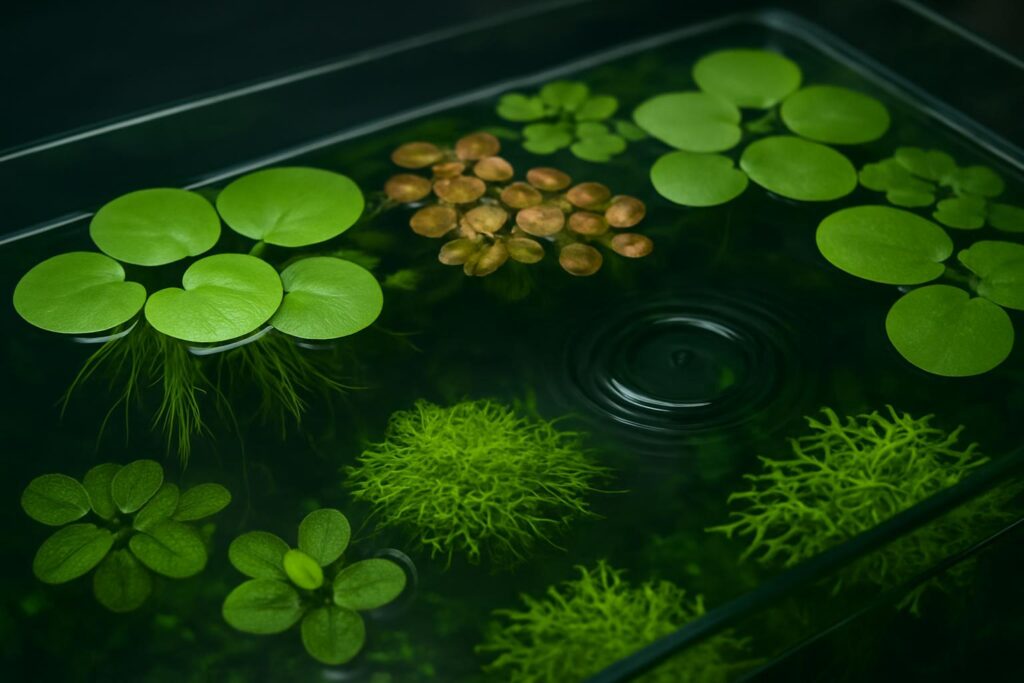
Floating plants transform a nano aquarium fast. They shade fish, soak up excess nutrients, calm surface flow, and soften light. The right species stay tidy, grow at a controlled pace, and are easy to thin. In this guide, you get five reliable floating plants for 2026 that suit bettas, shrimp, nano rasboras, and small community setups.
Before you choose, set simple targets that keep a small tank stable:
- Aim for 30–50 percent surface cover. This balances light, gas exchange, and aesthetics.
- Keep surface ripple gentle, not dead still. Light movement prevents film buildup and rot.
- Use a feeding ring or plant corral to stop plants from clogging a filter intake.
- Trim weekly. Remove old or yellowing leaves to prevent decay and nutrient spikes.
- Dose a small all-in-one fertilizer if leaves pale; CO2 is not required.
1. Amazon Frogbit (Limnobium laevigatum)
Amazon Frogbit is a staple for small tanks because it grows large enough to handle, yet not so fast that it takes over overnight. Its smooth round leaves and long white roots create a natural canopy for shy nano fish.
Why it helps: Broad leaves cut glare, roots shelter fry and shrimp, and steady growth mops up nitrate and phosphate.
Care and growth
Medium growth speed under moderate light. Leaves prefer to stay dry on top, so avoid splashing. Remove any leaves that get waterlogged. Thin runners to maintain open water.
Lighting and flow
Moderate light is ideal. High light increases growth but can cause calcium spots if water splashes onto leaves. Keep flow gentle; an airstone next to a feeding ring keeps edges clean without tossing plants.
Compatibility and use cases
Perfect for bettas, dwarf gouramis, endlers, and neocaridina shrimp. Roots give safe browsing areas and reduce stress in bright rooms.
Potential downsides: If left unchecked, Frogbit shades too much and can stunt rooted plants below. It can also snag on hang-on-back filter lips without a corral.
Best for: Beginner-friendly canopies with predictable growth and easy thinning.
2. Red Root Floater (Phyllanthus fluitans)
Red Root Floater brings color and texture to nano tanks. Under stronger light and good iron supply, roots turn deep red and leaves blush bronze, creating contrast against green stems and hardscape.
Why it helps: Fast nutrient uptake and a decorative red tone that signals healthy growth.
Care and growth
Medium to fast growth. It spreads by forming new rosettes. Remove crowded clusters to sustain airflow around leaves. Trim roots if they tangle in filter intakes.
Lighting and flow
Moderate to high light brings out color. Keep ripple minimal so leaves stay dry. Add small iron and trace elements weekly for best red tones.
Compatibility and use cases
Great for shrimp tanks and display betta setups where color pop matters. Also helps calm jumpy nano tetras by softening light overhead.
Potential downsides: In very small tanks, it can spread fast and block gas exchange if not thinned to 30–50 percent cover.
Best for: Aquarists who want nutrient control plus a premium look without complicated care.
3. Salvinia minima (Water Spangles)
Salvinia minima forms tidy chains of small oval leaves with a velvety texture. It is forgiving about water parameters and stays neater than tiny duckweed, which many keepers find messy.
Why it helps: Creates a stable, breathable mat that limits algae by outcompeting for nutrients.
Care and growth
Medium growth. It likes clean, stable water and low splash. Remove older, brownish fronds and thin dense mats to maintain oxygen exchange at the surface.
Lighting and flow
Low to moderate light is enough. Too much splash or strong current can sink or damage leaves. Use a floating ring to protect patches near filter outlets.
Compatibility and use cases
Works well in shrimp breeding tanks, rasbora nanos, and blackwater setups where dimmer light encourages natural behavior.
Potential downsides: Dense mats can trap food on the surface, so feed under the mat or clear a ring for feeding time.
Best for: Low-maintenance shading and algae control in compact tanks.
4. Riccia fluitans (Crystalwort)
Riccia is a classic floaters-moss hybrid. It forms bright green, forked cushions that trap microbubbles and glow under light. In nanos, it excels as a floating refuge and can be tied to mesh if you want a submerged carpet later.
Why it helps: Superb fry cover, strong oxygenation under light, and fast nutrient uptake.
Care and growth
Fast growth under moderate to high light. Break apart and re-float clumps every week or two to prevent compaction. Remove any browning mass to avoid decay.
Lighting and flow
Enjoys brighter light but tolerates moderate. Gentle circulation helps prevent dead zones within the mat.
Compatibility and use cases
Ideal for shrimp colonies, sparkling gouramis, and fry grow-outs. In breeding projects, it traps infusoria and microfoods that young fish graze on.
Potential downsides: Can shed bits that drift into filters. Use a sponge prefilter and a plant corral to confine it.
Best for: Breeders and scapers who want flexible use as both floating cover and tied-down greenery.
5. Giant Duckweed (Spirodela polyrhiza)
Giant duckweed retains the easy nature of common duckweed but has larger fronds that are easier to net and control. It forms a clean, uniform green layer that quickly improves water quality in overfed nanos.
Why it helps: Very fast nutrient removal and simple manual control thanks to larger leaf size.
Care and growth
Very fast. Start with a small portion and increase cover only as needed. Net out excess weekly. If fronds pale, add a small dose of all-in-one fertilizer.
Lighting and flow
Low to moderate light works. Keep ripple light so fronds do not sink. Use a feeding ring to keep an open spot for pellets and flakes.
Compatibility and use cases
Useful for tanks with heavy feeding or new setups fighting algae. Bettas appreciate the shade and calmer surface.
Potential downsides: If you neglect trimming, it covers the entire surface and blocks gas exchange. Maintain the 30–50 percent target.
Best for: Rapid stabilization of nutrient spikes in beginner nano tanks.
How to set up floating plants the right way
Start small and observe
Add a modest handful, wait a week, then adjust. Watch fish behavior and light levels on plants below. If stems start leggy growth, reduce surface cover.
Control with simple tools
Use airline tubing to make a floating corral or feeding ring. Add a sponge prefilter to the intake to keep roots safe. Skim overgrown sections with a fine net.
Fertilizer and maintenance
Floating plants get CO2 from air, so they do not need injected CO2. Dose a small all-in-one fertilizer if new leaves look pale or growth stalls. Remove yellowing leaves at every water change to avoid decay.
Conclusion
For a nano aquarium in 2026, these five floaters cover every need. Amazon Frogbit offers a classic, manageable canopy. Red Root Floater adds color and polish. Salvinia minima stays neat and steady. Riccia fluitans supports breeding and flexible scapes. Giant duckweed provides the fastest nutrient control and is still easy to net. Keep surface cover in the 30–50 percent range, maintain gentle flow, and trim weekly. Done right, floating plants turn a small tank stable, clear, and calm.
FAQ
Q: How much surface coverage should I keep in a nano tank?
A: Maintain 30–50 percent surface cover to balance light, gas exchange, and plant growth.
Q: Do floating plants reduce algae in small aquariums?
A: Yes, all five options outcompete algae by absorbing excess nutrients and by shading the water column.
Q: Which floating plant is best for a betta tank?
A: Amazon Frogbit and Giant Duckweed provide stable shade and calmer surface water that bettas prefer.
Q: Do I need CO2 or special fertilizers for floating plants?
A: CO2 is not required; a small all-in-one fertilizer helps if leaves pale or growth slows.
Q: How do I stop floating plants from clogging a filter?
A: Use a feeding ring or plant corral and add a sponge prefilter to protect roots and keep plants from the intake.