
We are reader supported. When you purchase through links on our site, we may earn an affiliate commission. Also, as an Amazon affiliate, we earn from qualifying purchases.
Nano tanks look better and run smoother when fish and shrimp have safe places to retreat. A well-chosen cave reduces stress, prevents fin nipping, anchors territories, and even boosts breeding success for shrimp and shy species. The challenge is picking a cave that fits tight spaces without stealing swim room or trapping debris. Below is a clear guide to what matters in 2026, followed by five dependable nano-friendly caves that keep fish calm and displays tidy.
How to choose a nano fish cave in 2026
Size and footprint
Pick compact designs that do not dominate 5–10 gallon tanks. A good rule is to keep any single cave under one-fifth of the tank’s floor area. Low, wide shapes are easier to place without blocking views.
Material and finish
Resin, ceramic, and natural coconut are reliable when made for aquariums. Avoid sharp seams. Run a fingertip test across entrances and sand rough spots with fine sandpaper if needed.
Entrance shape and flow
Openings should be smooth and just larger than the body of your fish. More than one entrance helps water circulation and gives timid fish multiple exit paths. Do not wedge a cave where detritus collects without flow.
Texture and stability
Textured surfaces encourage biofilm and shrimp grazing. Weighted bases or flat bottoms prevent tipping when fish dart inside. For stacked pieces, make sure they interlock securely.
Easy cleaning
Choose shapes you can lift and rinse quickly. One-piece designs with broad openings trap less waste and are simpler to brush. Rinse new decor to remove dust before first use.
5 best nano aquarium fish caves for 2026
1) Penn-Plax Deco-Replicas Granite Stone Hideaway Caves — Small
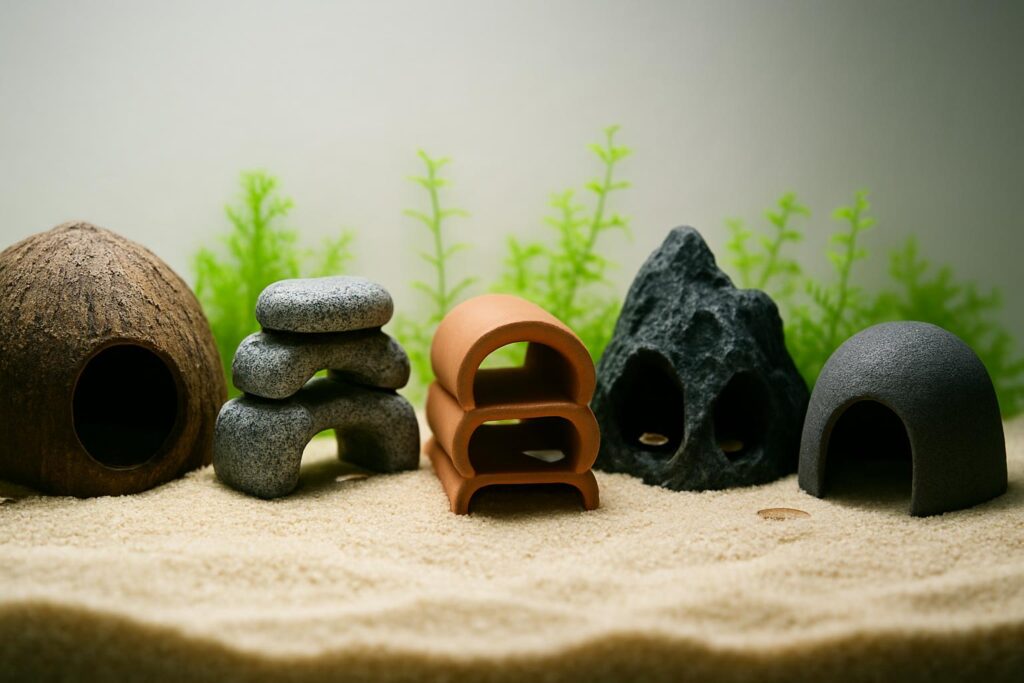
This stackable resin cave looks like natural granite, with smooth entrances and a low profile suited to nano aquascapes. It blends into planted layouts and can be rotated to find a perfect fit against rocks or wood. The design offers multiple entry points for better flow and escape routes.
Why it helps: Multiple hideouts reduce tension in small communities and give shrimp and fry cover during feeding times.
Best for: Shrimp colonies, small rasboras, ember tetras, and nano community fish that appreciate options without a big footprint.
Setup tips: Place slightly off-center near plants to create a sheltered corridor. If stacking, press gently to ensure stability and keep open water in front.
Potential downsides: Textured resin can grow algae under strong light; plan on a quick toothbrush pass during water changes.
2) SunGrow Betta Coconut Cave with Peekaboo Hole
A natural coconut shell cave that offers a dark, calm retreat. The small footprint makes it ideal for 5-gallon betta tanks and shrimp setups. The interior is shaded by default, which helps reduce flaring and stress for solitary fish.
Why it helps: Dark refuge reduces visual stress. The curved shape feels secure and encourages exploratory behavior without blocking swim lanes.
Best for: Bettas, dwarf shrimp, and timid microfish. Works especially well in low to medium light planted tanks.
Setup tips: Place on substrate near a gentle flow area so detritus does not accumulate. Tuck a small moss clump near the entrance for extra grazing surface.
Potential downsides: Being organic, surface texture can vary. Rinse thoroughly and avoid scrubbing with harsh tools that may fray fibers.
3) PIVBY Ceramic Shrimp Cave, 3-Layer Shelter
This terracotta-style ceramic tunnel stack creates micro-territories for shrimp and tiny fish. The layered design yields multiple entrances with solid stability, and the porous surface promotes biofilm growth that shrimp love to graze.
Why it helps: Stacked tubes turn a small footprint into several safe zones, reducing competition during feeding and molting.
Best for: Neocaridina and Caridina shrimp, juvenile endlers, and fry seeking tight cover.
Setup tips: Angle the stack slightly so light hits part of it and leaves the rest shaded. This creates a gradient of comfort zones and steady flow through the tubes.
Potential downsides: The multiple channels can trap debris if left in stagnant corners. Pair with gentle flow and quick swishes in old tank water during maintenance.
4) Uniclife Small Resin Rock Mountain Cave Ornament
A compact resin rock cave with a natural look and a stable, low-slung shape. Smooth openings reduce snag risks, and the piece fits easily against background plants or structures without demanding much space.
Why it helps: Provides a clear hideaway for shy fish while keeping front and midwater zones open. Multiple openings aid water exchange and escape routes.
Best for: Kuhli loaches, small corydoras varieties, and nano community fish that dart to cover when startled.
Setup tips: Position near the side glass to create a visual boundary that reduces chasing. Keep at least one entrance facing mild current.
Potential downsides: Resin can show spot algae under high light. A soft brush during water changes keeps it presentable.
5) Zoo Med Betta Hut
A small, purpose-built shelter for bettas that also suits microfish and shrimp. The dome-like structure provides a dim interior without overwhelming a nano scape. The entrance is sized to be inviting while limiting territorial disputes.
Why it helps: Offers a predictable, low-stress retreat that reduces flaring and allows bettas to claim a safe base.
Best for: Single betta tanks, pea puffers needing a quick bolt-hole, and shrimp that prefer shaded spots.
Setup tips: Place off the direct output of the filter to keep the interior calm. Combine with floating plants for a layered sense of security.
Potential downsides: The single main entrance concentrates traffic; avoid placing competing hides too close to prevent crowding.
Setup and maintenance tips for tiny tanks
Rinse and test
Rinse new caves in dechlorinated water and check edges with a fingertip. If any spot feels rough, smooth it with fine sandpaper and rinse again.
Place for flow and comfort
Do not block filter outputs. Aim to keep at least one opening in mild current to prevent detritus buildup while maintaining calm interior space.
Keep entrances safe
Openings should be a bit larger than your fish’s body. If your fingertip snags, fish fins can snag too. When in doubt, choose the next size up.
Clean lightly, regularly
During water changes, lift the cave, swish in removed tank water, and brush visible algae. Avoid soap or chemicals. Return to the same spot to maintain territories.
Conclusion
In 2026, the best nano fish caves combine compact footprints, smooth openings, stable shapes, and easy-clean designs. The five options above cover natural, resin, and ceramic builds that reduce stress without crowding your layout. Choose the piece that fits your species and scape, place it where flow stays gentle and debris won’t settle, and keep up with light maintenance. Your tank will look calmer, your fish will act more naturally, and your shrimp will thrive.
FAQ
Q: How big should a cave entrance be for nano fish and bettas
A: Openings should be just larger than the body of your fish, smooth to the touch, and positioned so at least one faces gentle flow.
Q: Are resin caves safe for nano aquariums
A: Aquarium-grade resin is safe when rinsed before use, with smooth edges and sealed surfaces that do not affect water parameters.
Q: How do I clean fish caves without harming livestock
A: Lift the cave during water changes, swish it in removed tank water, and use a soft brush on algae; avoid soap and harsh chemicals.
Q: Where should I place a cave in a small tank
A: Place it near plants or hardscape with at least one entrance facing mild current, avoiding strong outflow that can stress fish inside.
Q: Do shrimp benefit from multi-tube ceramic caves
A: Yes, layered ceramic tunnels create multiple micro-habitats, improve grazing surfaces, and reduce competition during molting and feeding.