
We are reader supported. When you purchase through links on our site, we may earn an affiliate commission. Also, as an Amazon affiliate, we earn from qualifying purchases.
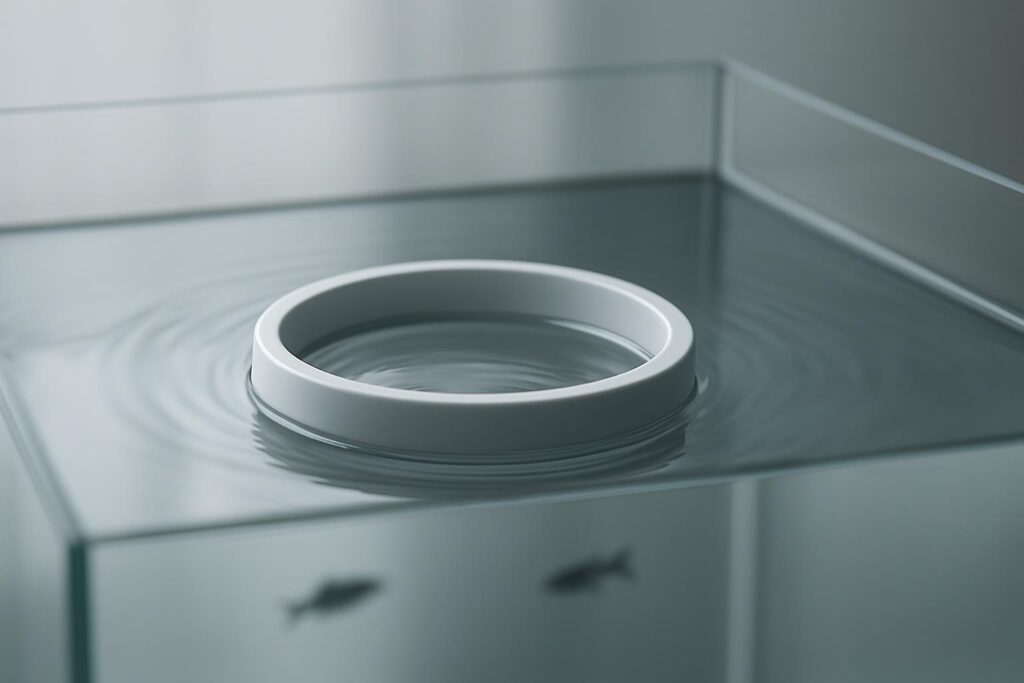
Nano tanks make every square inch count. Overfeeding or scattered flakes quickly foul water, clog intakes, and stress fish. A good feeding ring keeps food in one calm zone so fish can eat at their pace and you can dose precisely. It also trains fish to come to a single spot, reduces waste, and makes glass cleaning easier. Below are the five best nano aquarium feeding rings for 2026, chosen for stability, size, build quality, and day‑to‑day usability in tanks under 20 gallons.
How We Chose
Why feeding rings matter in nano setups
Small volumes magnify problems. A ring localizes floating food, prevents it from riding surface currents into the filter, and limits dead spots packed with uneaten flakes. You get cleaner water, steadier parameters, and clearer glass.
Key selection criteria
Size for nanos: Rings in the 2–3 inch range corral food without hogging surface space.
Stability: Buoyancy that resists tilting, plus hardware that stays put under modest surface flow.
Mounting options: Suction cups, brackets, or magnets that fit rimless and rimmed tanks, with or without lids.
Material safety: Inert plastics or silicone that do not leach and are easy to wipe clean.
Everyday practicality: Simple to set, place, and lift for maintenance. No fiddly parts that go missing.
5 Best Nano Aquarium Feeding Rings for 2026
1) Eheim Feeding Station
This is a compact platform with a floating ring that holds flakes or pellets in a calm pocket. The height-adjustable bracket fixes the station at a repeatable spot, which is ideal for tight nanos and for aligning an automatic feeder.
Why it helps: Stable positioning prevents food from drifting, even with surface ripple. The vertical guide funnels food straight down, so fish learn quickly and leftovers are easy to siphon.
Best for: 5–20 gallon tanks, open tops or hinged lids with a cutout. Excellent for auto feeder users and for tanks with moderate surface movement.
Potential downsides: Bulkier than simple rings. Needs a bit of clearance at the rim and under a lid. Occasional film can collect around the frame if you never disturb it.
Tips: Mount opposite the filter outflow or just off‑center to reduce turbulence in the ring. If using an auto feeder, test a few cycles to fine‑tune drop position.
2) Sera Feed A Ring
A minimalist classic that stays level with a small slider attached to a suction cup. It is compact, unobtrusive, and sized right for nano fish like bettas, endlers, chili rasboras, and celestial pearl danios.
Why it helps: The adjustable tether lets the ring ride the surface as water levels fluctuate. Food stays centered and accessible without chasing.
Best for: Rimless pico and nano tanks where clean lines matter. Also good in shrimp tanks to keep powder and micro pellets from smearing across the surface.
Potential downsides: Suction cups harden over time. Replace periodically or recondition with a hot water soak for better grip.
Tips: Place near a calm zone created by filter baffles or plant shelter. Rinse the ring each water change to prevent biofilm buildup.
3) Zacro Fish Feeding Ring
A simple float with a suction anchor that keeps the ring from roaming. Its small footprint fits tight scapes and nano lids, and the soft float rides well under gentle flow.
Why it helps: Creates a predictable feeding zone without hardware at the rim. Great for taming flake sprawl in betta and guppy tanks.
Best for: 3–10 gallon desktops where you want minimal hardware. Works well for surface feeders and mid‑water fish that quickly learn the spot.
Potential downsides: Foam-style floats can discolor with time if not wiped. The tether line can twist if you move it often.
Tips: Keep the tether short so the ring cannot wander into the filter intake. If your flow is stronger, trim the airline or use a stiffer line to reduce drift.
4) Pawfly Aquarium Feeding Ring
Offered as small square or round floats with a center guide and a basic suction anchor. Affordable, compact, and light, it is an easy upgrade for new hobbyists.
Why it helps: Corrals both flakes and micro pellets, limiting waste that would otherwise rot in corners or clog nano sponge filters.
Best for: Beginner nano tanks, community setups with livebearers, and shrimp tanks where overfeeding is a constant risk.
Potential downsides: Very light frames can tilt under brisk ripple. Place away from strong outflows or baffle the return.
Tips: Choose the square version if you want maximum surface area with the same footprint. Rinse after oily foods to keep it crisp and level.
5) SunGrow Betta Feeding Ring
Designed for small fish, this ring keeps floating pellets in a calm pocket so bettas and nano tetras can feed without chasing. The compact design sits neatly under many nano lids.
Why it helps: Predictable feeding area simplifies portion control. You can spot and remove leftovers quickly, keeping water quality stable.
Best for: 2.5–10 gallon betta or nano community tanks with light surface movement. Also handy for fry grow‑outs using small floating foods.
Potential downsides: Lightweight lines may tangle if moved often. Re‑seat the anchor after water changes to maintain position.
Tips: Feed tiny portions first so fish associate the ring with food, then scale up to full meals. Consistency accelerates training.
Setup and Daily Use
Placement for best results
Position the ring where surface movement is calm but not stagnant. Aim the filter outflow slightly away from the ring so food stays centered. Keep the ring accessible from the front for easy siphoning.
Portioning and routine
Start small. Add only what fish consume within two to three minutes. For new fish, drop a pinch first to build the habit, then complete the feeding at the ring. Remove leftovers promptly.
Maintenance
At each water change, lift the ring, swish in tank water, and wipe the float. Check suction cups and lines. Replace tired cups to prevent drift. If you see surface film collecting inside the ring, break it with a quick swirl or adjust flow slightly.
Which One Should You Pick
Choose the Eheim if you want fixed positioning or plan to pair with an automatic feeder. Pick the Sera for a discreet, adjustable ring on rimless glass. Go with Zacro or Pawfly for a budget float that just works in tight spaces. Select SunGrow for bettas and other nano fish that prefer calm, predictable feeding spots. Match the ring size to your tank and flow, keep portions tight, and your nano will stay cleaner and more stable.
FAQ
Q: Why use a feeding ring in a nano aquarium
A: It keeps food in one calm zone, reduces waste, prevents food from drifting into filters, and makes portion control easy, which helps maintain stable water quality.
Q: Which feeding ring works best with an automatic feeder
A: The Eheim Feeding Station, because its fixed bracket and centered drop zone align well with automatic feeders.
Q: How big should a feeding ring be for a 5–10 gallon tank
A: A compact 2–3 inch ring is ideal, giving enough space for fish to gather without taking over the surface.
Q: Where should I place a feeding ring for best results
A: Put it in a calm surface area, slightly away from the filter outflow, and keep it accessible from the front for easy cleaning and siphoning.
Q: How do I maintain a feeding ring
A: Rinse and wipe it at each water change, check and replace tired suction cups, keep tethers short, and break any surface film that forms around the ring.